

Diarylide Yellow HR
PY83
Alternate Name
Diarylide Yellow HR-70 (A different pigment formulation with the same pigment code- refer to notes)
Pigment Description
A pigment with two natures- and two lightfastness readings to match. Interestingly, there is only one lightfastness published for most PY83 paints, so a person may need to do their own lightfastness testing if it's a color one really loves. Aside from the lightfastness confusion there are also health warnings so be sure to research that as well.
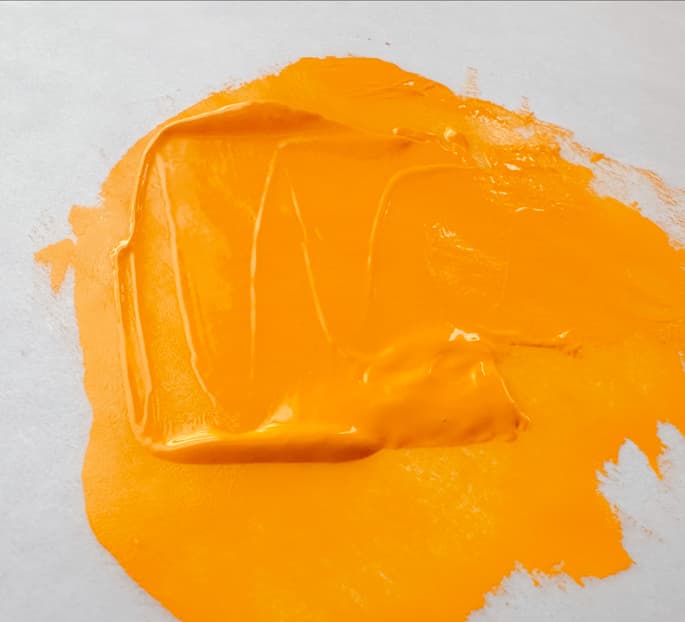
Sennelier Bright Yellow, PY83, possibly the more opaque version of the pigment
This warm orange-yellow is a very tricky pigment with two varieties which fly under the same pigment code. The problem is that the two distinct kinds of PY83 vary a lot in lightfastness. One version is more opaque while the other is more transparent. Unfortunately the sub-type of pigment is rarely listed on the paint tube. One must make inferences based on relative opacity and transparency.
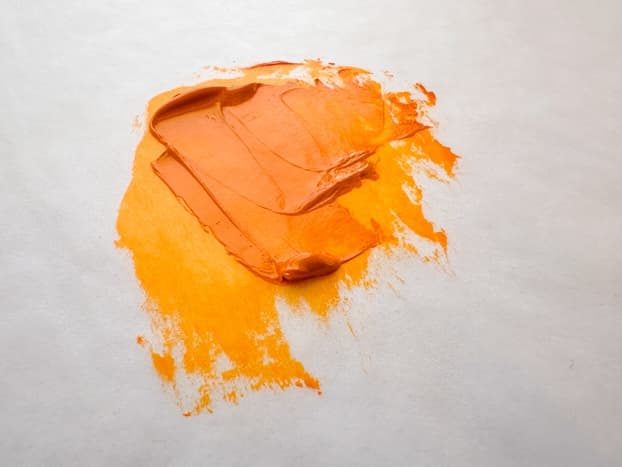
Williamsburg India Yellow, a transparent PY83, with LF III. We are grateful that Golden did their own testing and raised awareness about PY83
In regard to PY83's lightfastness issues, we're grateful to Golden for illuminating the differences. Some types of PY83 are said to have excellent lightfastness and this is associated with the more opaque version (the PY83 HR70 sub-type). The other form, which is a gorgeous transparent kind of PY83, has poor lightfastness. Unfortunately the current ASTM only ascribes one lightfastness code, the excellent one, which is applied by paintmakers in a blanket sort of way. So, the fading transparent version of PY83 is frequently mis-ascribed an excellent lightfastness rating. It seems that the good lightfastness only belongs to some of the opaque kinds of PY83. The transparent, fugitive version has a lovely look to it, but terrible lightfastness. In the case of Golden, who made this discovery, they opted to keep the transparent version in their blends and adjust the low lightfastness rating to match. Golden, who makes Williamsburg Oils, shared a discussion of PY83 in their paint lines, as well as an illustration of how the transparent version compares to other pigments in the same color space.
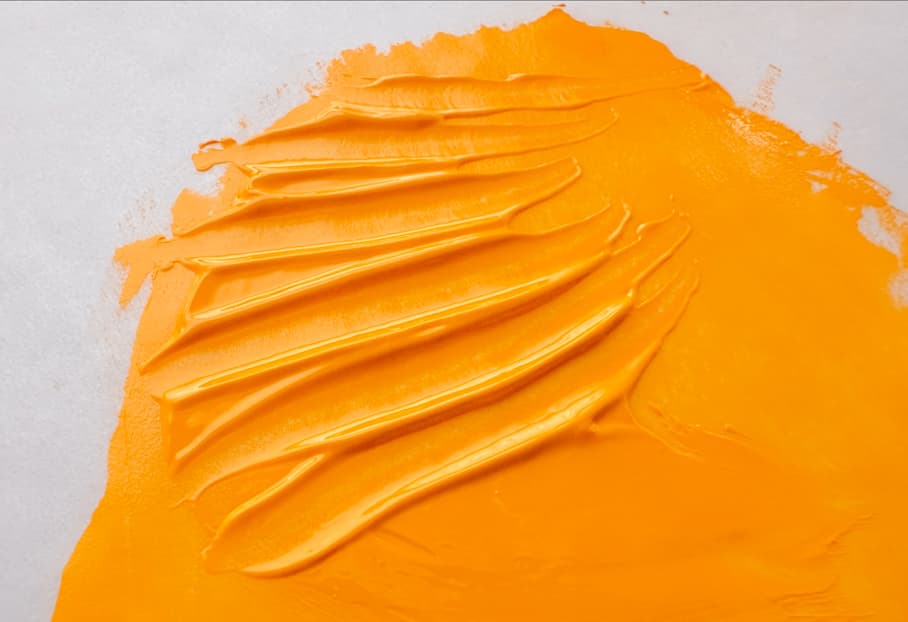
Sennelier Bright Yellow, may be the opaque PY83
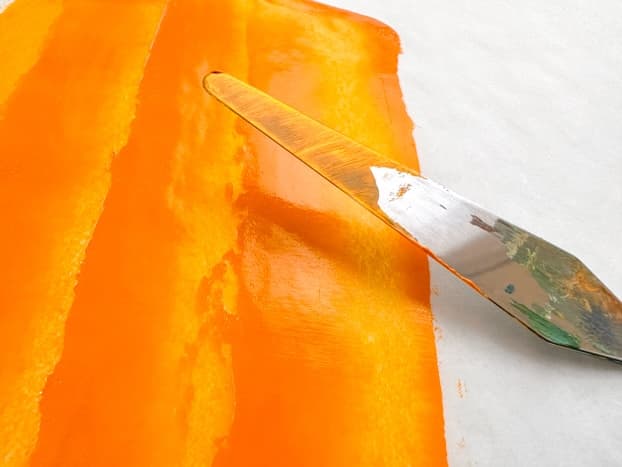
Transparent version of PY83 by Williamsburg
In terms of health and safety, we were shocked to hear this is a problematic pigment due to benzidine (we advise all artists to research toxicity and benzidine in their pigments). This pigment metabolizes to a carcinogen-- Monona Rossol alerted us to this in her writing, more of her materials can be found here. It sounds like heating also creates a carcinogen. Additionally, contamination with PCBs is likely as well. There are also thresholds for limiting the dust so please consult proper handling.

Sennelier Bright Yellow, PY83, on left, Williamsburg India Yellow on right, PY83 Transparent
Unfortunately, regarding the lightfastness confusion, it is hard to tell at a glance which of the two versions may be in any given tube of PY83. One hint may be to look at single pigment paints marked PY83 and assess whether the paintmaker lists them as transparent or very transparent. If so, they may be the fugitive kind, regardless of the lightfastness reading given by the manufacturer.
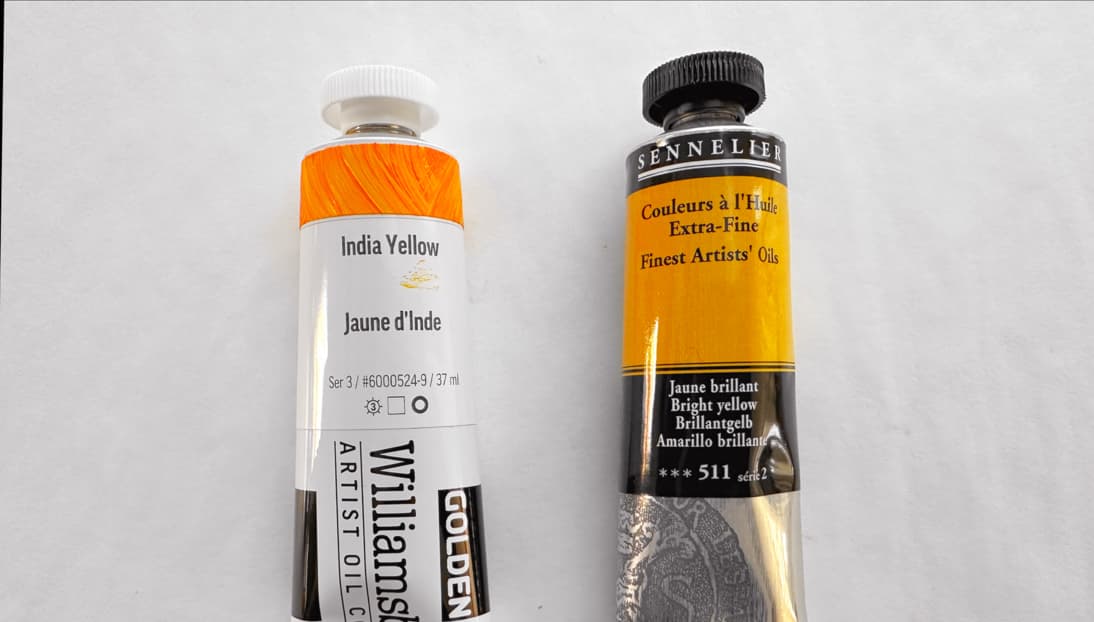
Possibly two different versions of PY83. The Williamsburg transparent version is PY83 but is LFIII. We have not tested the Sennelier PY83
Resources
PY83 pigment data from David G. Myers, The Color of Art Pigment Database, Artiscreation.com
Information about PY83 from Bruce MacEvoy, Handprint Guide to Watercolors, General information about this class of pigments from Handprint,
Sands, Sarah (2015, October 1). Beauty and the Best, Wrestling with Changes at Williamsburg https://justpaint.org/beauty-and-the-best-wrestling-with-changes-in-williamsburg/. Just Paint, Golden Artist Colors,
Rossol, Monona. The Artist's Complete Health and Safety Guide. New York, NY : Allworth Press, 2001. The book is rather dated, updated information is available from her website.
Stats
Lightfastness
Varies- two kinds of the pigment with very different lightfastness
This is a fascinating pigment with a dual nature— one version is lightfast and another is not. Paint companies may not list the right information on their tubes, but it is not really their fault. An update needs to be made to the tables they use to assign lightfastness, as the table doesn’t quite differentiate between the versions. The opaque version (HR-70) is given LFI- Excellent by the ASTM. The transparent version, which is not differentiated on the ASTM table, was found to be the equivalent of ASTM III- Fair in tests done by Golden. Interestingly, problems have been reported with the lightfastness as far back as the 1980s. The NPIRI tests for the pigment did not distinguish the varieties, so whatever they tested showed slight change in masstone and appreciable change in tints for outdoor exposures. It would be advisable to do one's own lightfastness testing.
Transparency
Varies, Transparent, Opaque
Two versions, one opaque (HR-70) and the other transparent
Toxicity
Hazard, Previously thought to be in the category of Low Concern, new research suggests this pigment may metabolize to a carcinogen and may also have toxic contaminants (PCBs)
This pigment metabolizes to a carcinogen. It also releases carcinogens when heated-- Monona Rossol alerted us to this in her writing, more of her materials can be found here. It sounds like contamination with PCBs may be likely, which is noted elsewhere. There are also stringent and serious thresholds for limiting the dust (as it is also related to causing cancer) so please consult experts for proper handling. This pigment is related to the serous toxin benzidine. Monona Rossol wrote, “Benzidine is known to cause bladder cancer. And all benzidine pigments and dyes that metabolize or decomposed to release free benzidine are expected to cause this disease…” We are not toxicology experts, so please consult SDS as well as third party experts for best practices. Acute toxicity said to be low.
Chemical Name
Disazo
DISCLAIMER: Please note that we are not experts in health and safety and we are not toxicologists, please consult the proper experts. We are not liable for any issues that may arise from the use of our website or its contents. The information contained in this site is provided without warranty or guarantee of any kind. We do not necessarily endorse any other website that are linked from our site. For any important pigment specs, please reference the manufacturer details. If you discover errors or omissions, please reach out through our contact form. Thank you.
