

Top Pigment
Synthetic Yellow Iron Oxide
PY42
Alternate Names
Mars Yellow
Mars Orange
Iron Oxide Yellow
Iron Oxide Orange
Pigment Description
Once upon a time some of the finest natural ochres had depth and transparency. Luckily some of these qualities are found in the modern synthetic versions. The tradeoff with synthetic versions are a softness that is often only found in regular yellow ochres. We love both for different purposes.
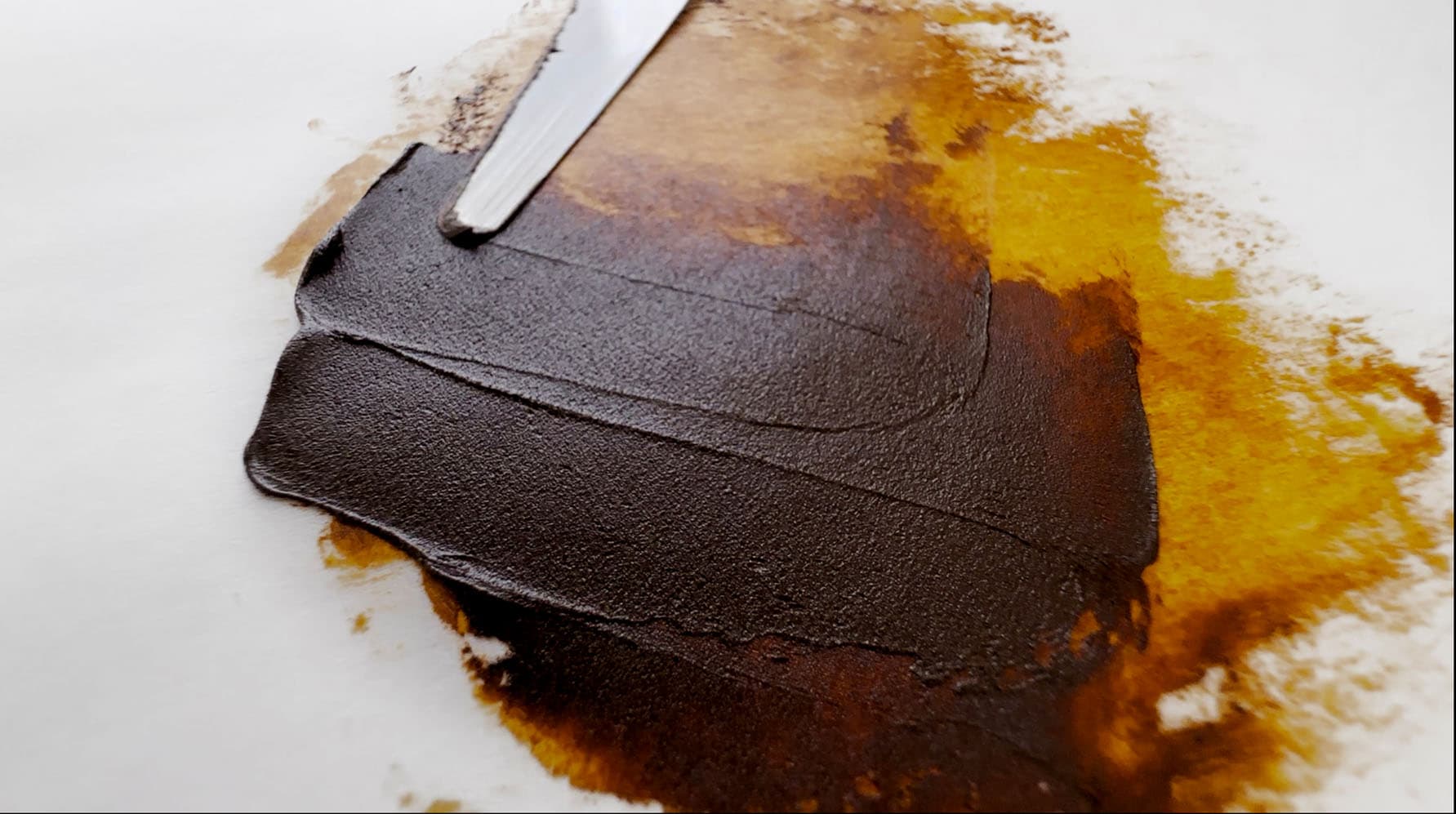
A transparent version of PY42. Williamsburg Stil de Grain, a specialty PY42 Yellow Iron Oxide, has a larger particle size
Synthetic Yellow Ochre and Mars Yellow earths have different pigment codes than the natural earthtones. Synthetic ochres are labeled PY42, while the natural kinds are PY43. This is a pigment code with a ton of variety in color and particle size. The synthetic earths are generally more intense than the natural ones, and it’s common to find paint names like Transparent Yellow Oxide or Mars Yellow. Colors extend into the oranges and browns so there is a variety of colors that are found within PY42. These tend to be extremely lightfast and reliable pigments, though Bruce MacEvoy found some anomalies in watercolor.
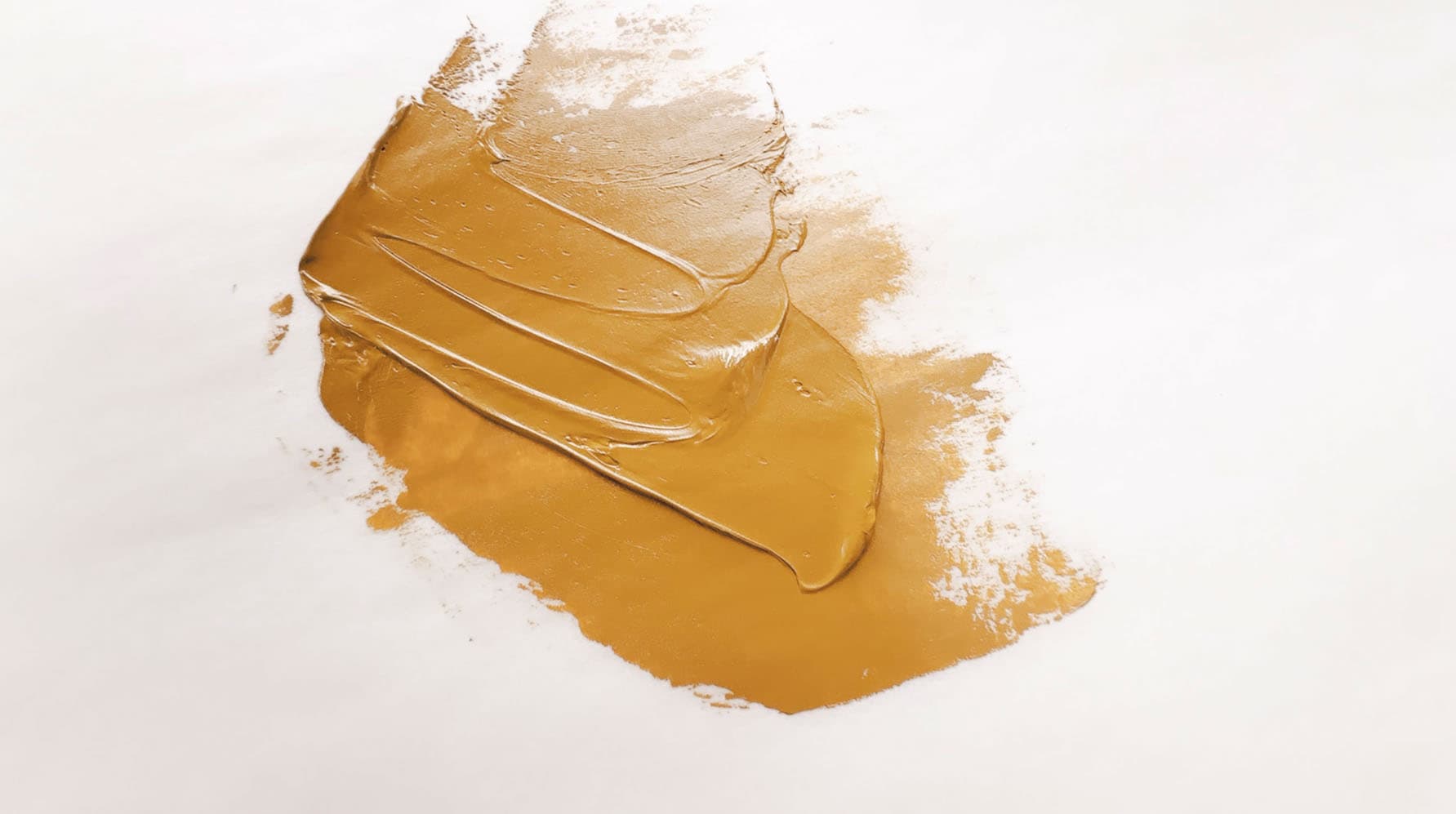
Michael Harding Yellow Ochre, PY42
There is a disturbing trend in the paint world wherein earthtones are being emulated by a handful of pigments. Such imitations will not have the handling and permanency of iron oxides. High quality earthtones will not have organic pigments mixed in (we're not talking about convenience blends like the Sap Greens that contain an earth tone-- rather we're not into the synthetic organic blends that try to replace an Iron Oxide). For the standard earth tone notes on our palettes we select paints that only contain earth tone pigments.
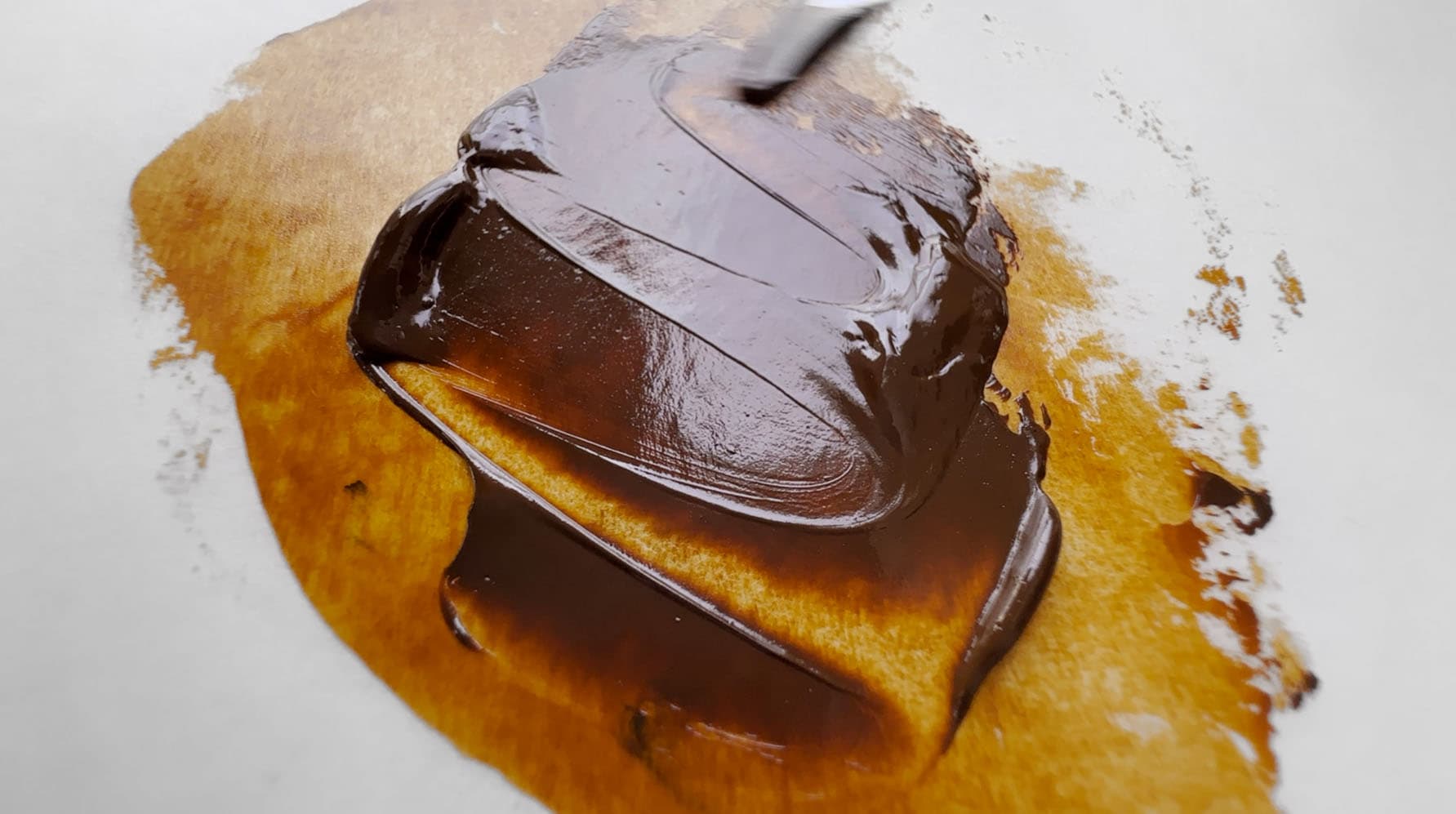
A fairly typical PY42, M Graham Transparent Yellow Iron Oxide, PY42
Resources
PY42 pigment data from David G. Myers, The Color of Art Pigment Database, Artiscreation.com,
Spurgeon, Tad. Living Craft: A Painter's Process. Mt. Airy, Philadelphia, PA: Zoetrope, 2018. Newer version available here: https://www.thomaskitts.com/page/36804/tad-spurgeons-living-craft,
Elliott, Virgil. Traditional Oil Painting. Echo Point Books & Media, LLC, 2019. https://amzn.to/4nwIdzq,
Information about PY42 from Bruce MacEvoy, Handprint Guide to Watercolors, General information about this class of pigments from Handprint, More from Handprint
Stats
Lightfastness
Excellent
Considered to be of the highest lightfastness, solid 8’s on the BWS. However we were shocked to read that Bruce MacEvoy discovered some problems in watercolor. His comments can be found here. In his tests several PY42s greyed, and one blackened in masstone. It may be worthwhile to do one's own lightfastness tests.
Transparency
Varies, Opaque, Transparent
Ranges from Transparent to Opaque in oil paints with most of them listed as either transparent or opaque (contrast with PY43)
Toxicity
Lower concern, however may contain hazardous impurities
If there are no impurities (hard to guarantee) then the pigment would be low concern. However, there has been a trend of reclaiming ochre from various processes. Pigment can contain various elements which may not even be looked for with testing. For example, Gamblin had a series of reclaimed Iron Oxide pigments that made the tube explode.
Tinting
Varies, some are strong
PY42 tends to be more strongly tinting than PY43 but it is difficult to generalize sometimes as this is pigment code with a lot of variety
Dry Time
Varies, Fast to Medium
2-7 Days is fairly common, some dry in 1-2. Oxides do have a slight drying effect
Oil Content
Varies, Medium to Medium High to High
Varies depending on the qualities of the pigment. Some Transparent Yellow or Orange Oxides require high amounts of oil by volume. This can vary depending on the particulars of the pigment, so we wish more brands would publish oil by volume categories for their paints. Williamsburg has listed their colors. PY42 colors vary in particle size and color as well as oil requirements. One of their colors has moderately low oil, while another of the Transparent Yellow Oxides is listed in the highest category for oil by volume.
Particle Size
Varies
Chemical Name
Synthetic hydrated iron oxide
DISCLAIMER: Please note that we are not experts in health and safety and we are not toxicologists, please consult the proper experts. We are not liable for any issues that may arise from the use of our website or its contents. The information contained in this site is provided without warranty or guarantee of any kind. We do not necessarily endorse any other website that are linked from our site. For any important pigment specs, please reference the manufacturer details. If you discover errors or omissions, please reach out through our contact form. Thank you.
