

Top Pigment
Hansa Yellow 10G
PY3
Alternate Names
PY3-10G
Arylide Yellow 10G
Hansa Yellow Light
Pigment Description
The greenest hansa yellow. Often referred to as just PY3, however the 10G indicates a quite lemony yellow color, with the G meaning green. This is one of the brightest Lemon Yellows, with super high chroma and a yellow-green bias to it. Despite its popularity, Hansa Yellow's lightfastness is only moderate in tints. Even so many paint manufacturers list it as "Excellent" for lightfastness, which can be a bit concerning. Hansa Yellow PY3 is one of the pigments which inspired new research into lightfastness testing, since older testing methods did not account for changes which have been happening in the pigment industry. Additionally, the older testing methods did not account for the effects of various mixing whites in oil paint.
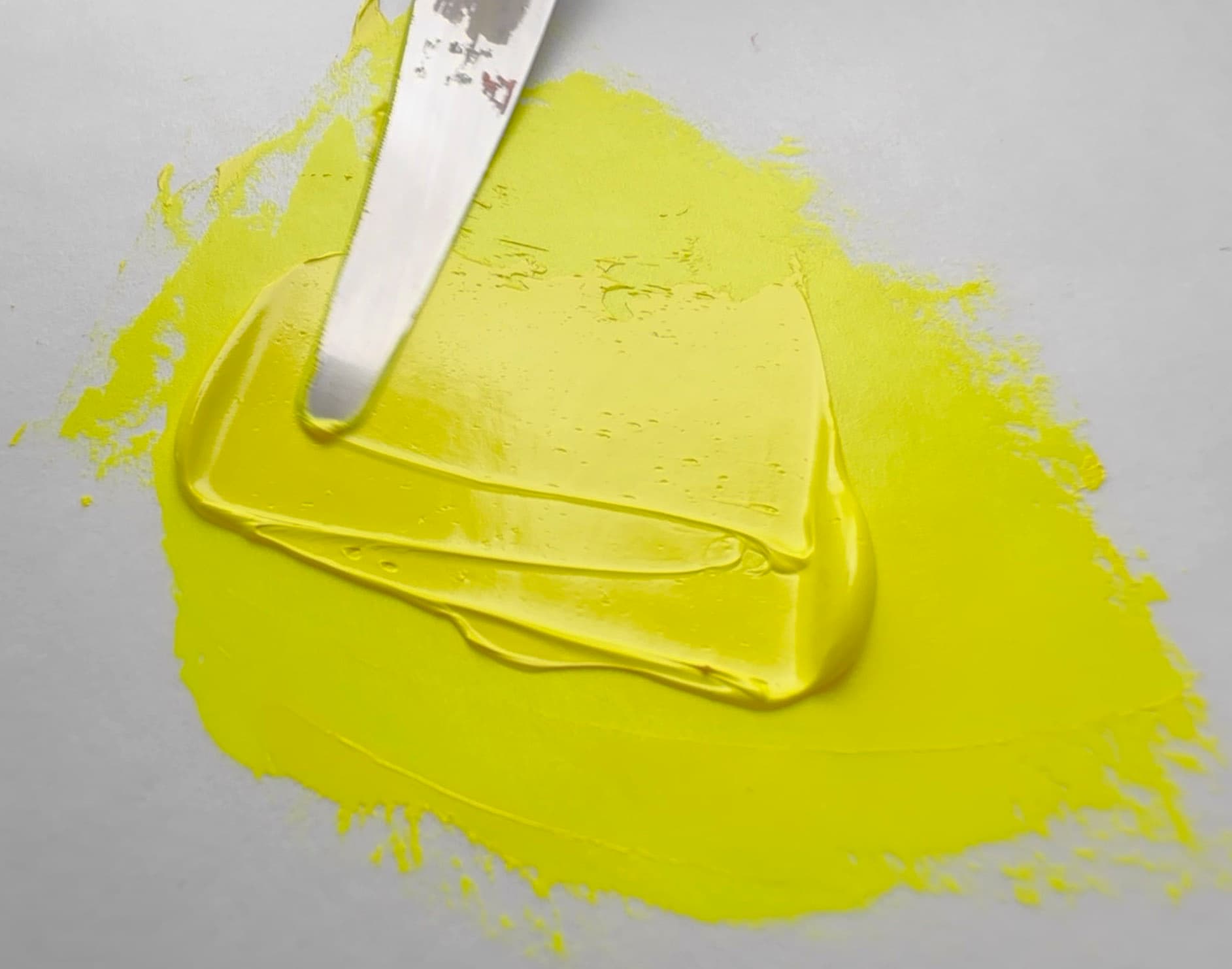
Old Holland Scheveningen Yellow Lemon, PY3
There has been some variability in the lightfastness of Hansa Yellow pigments over the years, depending on the way they are manufactured. Unfortunately, the old assignment of ASTM II may not reflect the current pigment market (which may contain PY3 pigment that may perform worse than ASTM II). Artiscreation mentions "PY 97 or PY 154 are similar and more light fast, PY175 is a nice lemon yellow too."
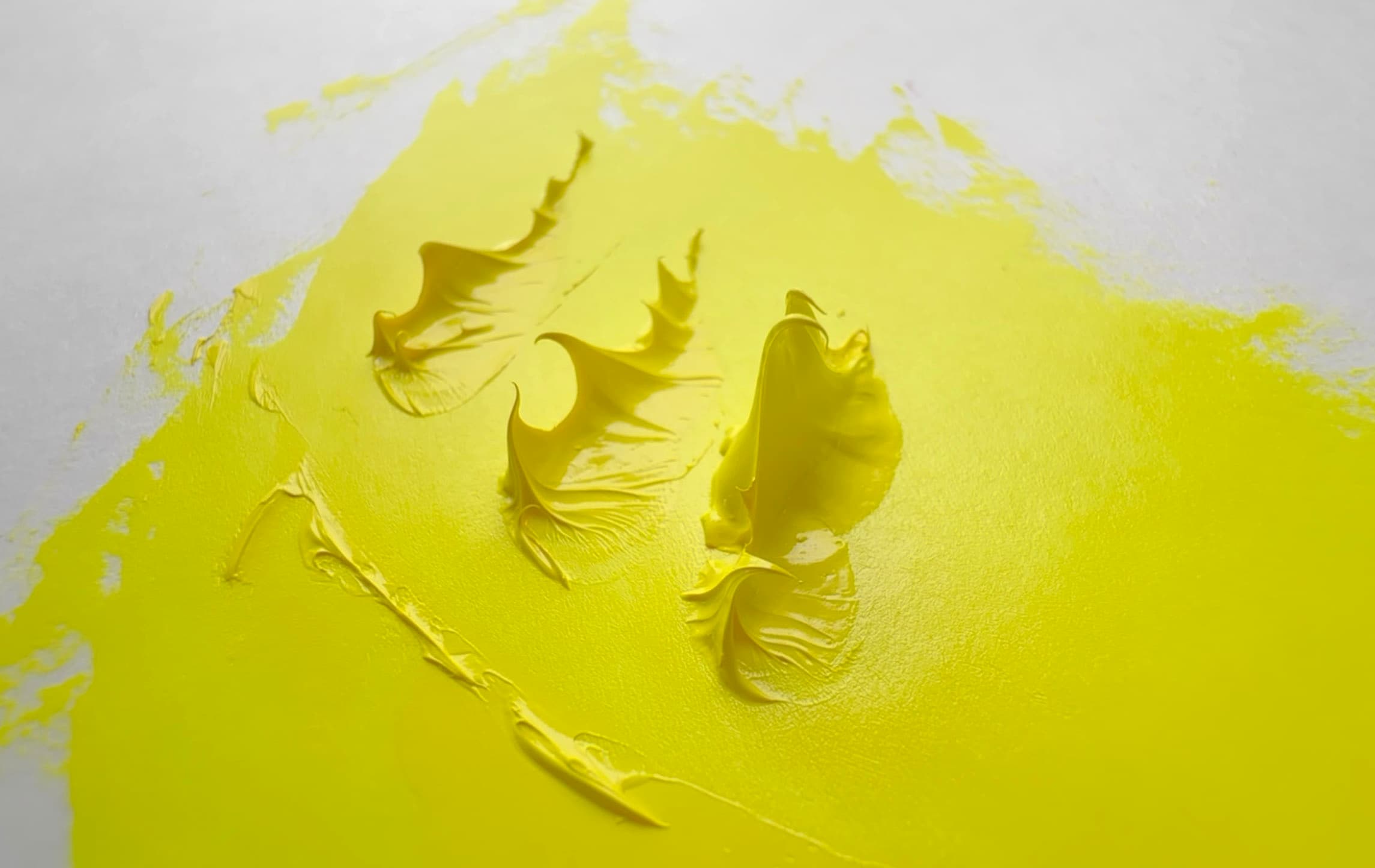
Hansa Yellow, PY3, by Old Holland, Scheveningen Yellow Light
We were surprised to hear that this is suspected to be a carcinogen. Additionally, it may possibly cause methemoglobinemia. Monona Rossol's research has more information.
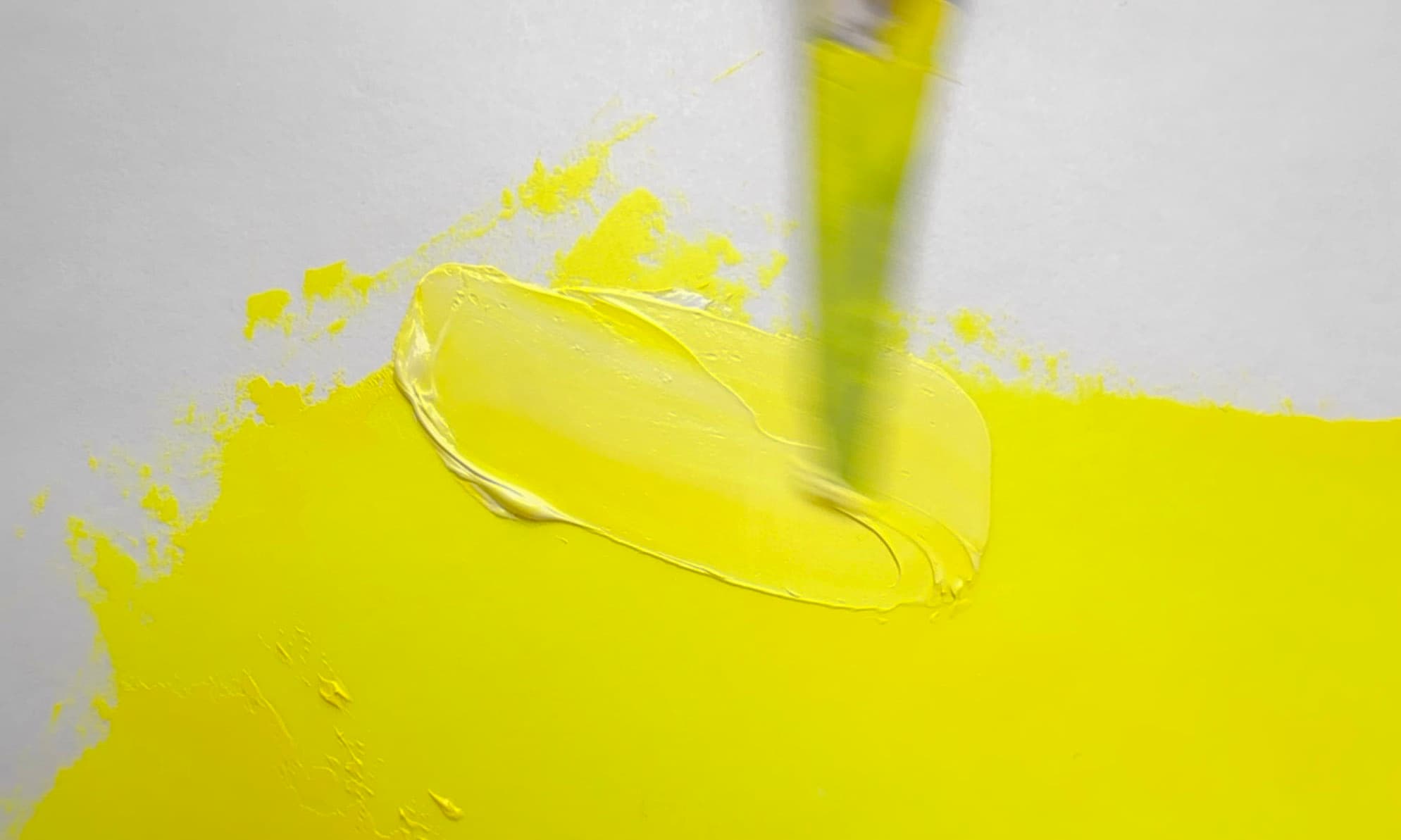
Old Holland Scheveningen, PY3
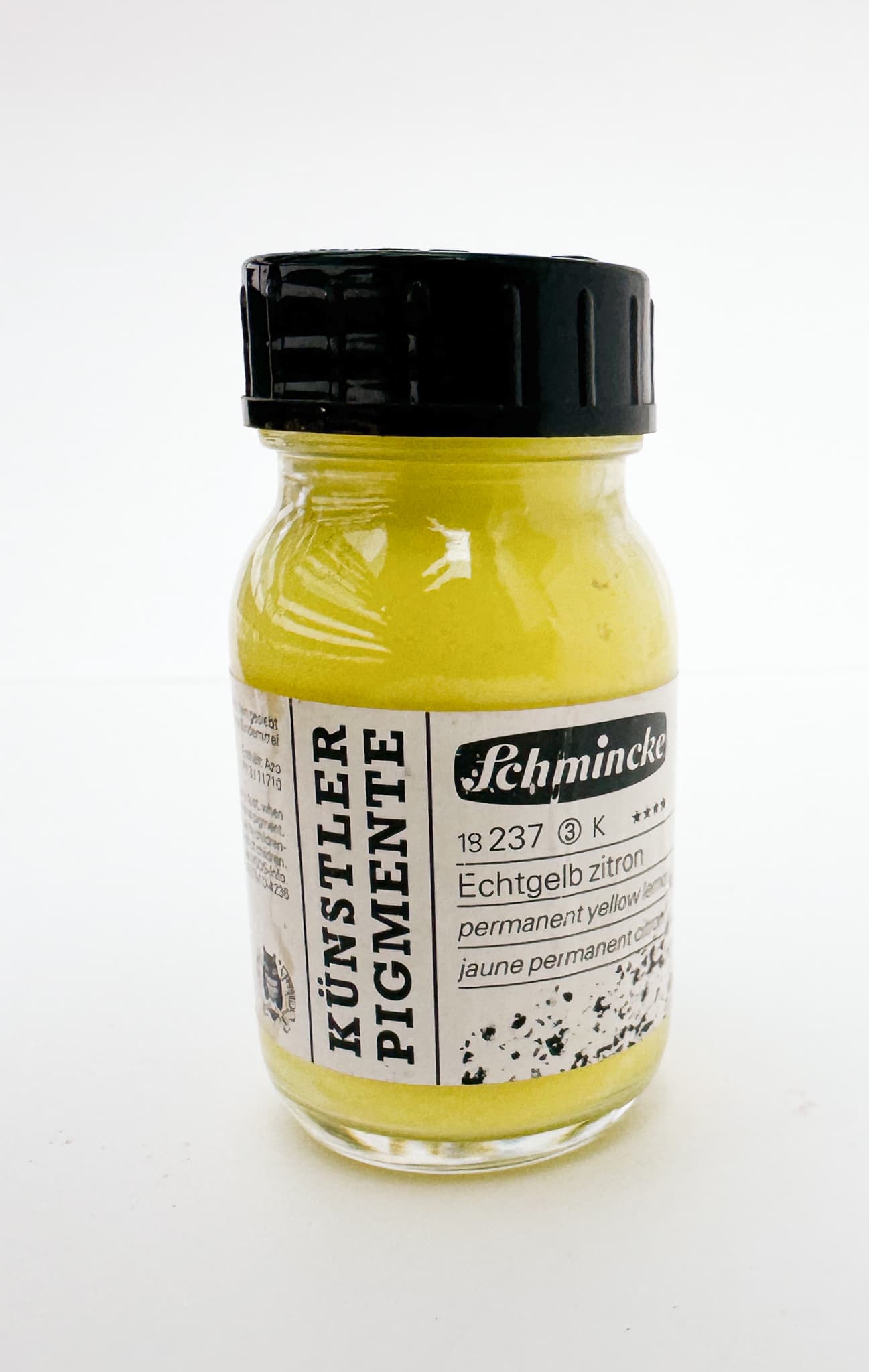
Schmincke Permanent Yellow Lemon, dry pigment PY3
Resources
PY3 pigment data from David G. Myers, The Color of Art Pigment Database, Artiscreation.com
Information about PY3 from Bruce MacEvoy, Handprint Guide to Watercolors, General information about this class of pigments from Handprint,
Cultural Heritage Science Open Source (CHSOS) (n.d. Accessed June 2025). PY 3 – hansa yellow 10G https://chsopensource.org/py-3-hansa-yellow-10g/.
Fischer, Scott (2023, August 10). Recent QoR Lightfast Testing https://justpaint.org/recent-qor-lightfast-testing/. Just Paint, Golden Artist Colors.
Sands, Sarah. "Not So Fast: The Often Seen but Rarely Told Issues with ASTM Lightfastness Ratings." Intersociety Color Council, Munsell Centennial Presentation, 2018. Internet Archive,
Rossol, Monona. The Artist's Complete Health and Safety Guide. New York, NY : Allworth Press, 2001. The book is rather dated, updated information is available from her website.
Stats
Lightfastness
Variable
Golden found previously that this color may vary depending on the pigment supplier, and its lightfastness appears to have changed over the years due to fluctuations in the pigment industry. Golden found in their lightfastness testing in oils that the choice of mixing white may also dramatically affect the lightfastness as well. It performed poorly in pure zinc white as well as lithopone in safflower oil. In several mixes it performed at ASTM I and in others it slid to ASTM II, but these results may vary with other brands. It may be worthwhile to do your own lightfastness testing. Sometimes an ASTM II (very good but not excellent) rating is given for oil and acrylic. However moderate scores in tints (BWS 5’s and 6’s) are fairly common. The Hansas are an area where it’s important to keep an eye on the lightfastness. They can vary from brand to brand, and the variety chosen by Golden for their QoR line performed very well.
Transparency
Varies, Semi-Transparent, Semi-Opaque
In oil, we have seen PY3 listed as everything from opaque to transparent. In higher-end brands it tends to be transparent.
Toxicity
Previously thought to be in the category of Low Concern, new research suggests this may be a potential carcinogen and also metabolize to cause a serious health condition.
While PY3 has “low acute toxicity” there may be other problems. This is a suspected carcinogen. It may also metabolize to substances which can cause methemoglobinemia. See Monona Rossol's research here for more information.
Tinting
Good
Dry Time
Very Slow to Slow. Some list as medium, may contain driers
This seems to be a naturally slow-drying pigment (6-18 days), but some manufacturers list 2-4 days or 2-7 days, in which case driers may have been added.
Oil Content
Medium to Medium High
Medium by volume, but when made into a paint sometimes it is medium-high.
Particle Size
Very Fine
Chemical Name
Monoazo (one of many), acetoacetyl, 10G
C₁₆H₁₂Cl₂N₄O₄
DISCLAIMER: Please note that we are not experts in health and safety and we are not toxicologists, please consult the proper experts. We are not liable for any issues that may arise from the use of our website or its contents. The information contained in this site is provided without warranty or guarantee of any kind. We do not necessarily endorse any other website that are linked from our site. For any important pigment specs, please reference the manufacturer details. If you discover errors or omissions, please reach out through our contact form. Thank you.
