

Top Pigment
Titanium White
PW6
Alternate Names
Titanium Dioxide
Anatase
Rutile
Pigment Description
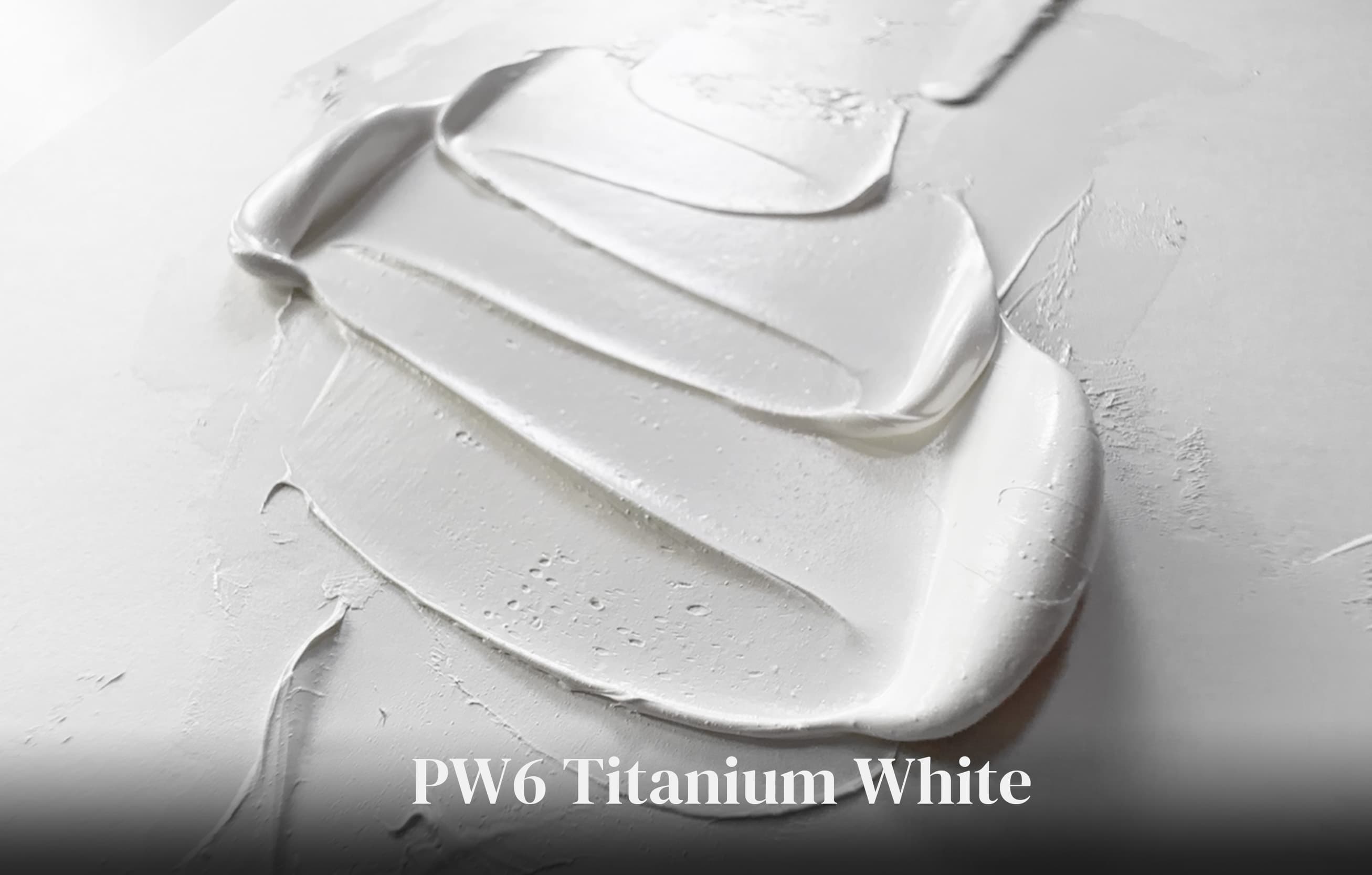
Titanium White: Love it, hate it, but could oil painters live without it? This powerhouse pigment is one of the most commonly used pigments in oil painting, and few painters would truly wish to part with it. Titanium White is associated with coolness and opacity, which is why we love it, but sometimes a person wants warmth and transparency, and that's where the frustration with titanium comes in. However, it's really good at being slightly bluish and super-opaque, so for what it does well, we love it.
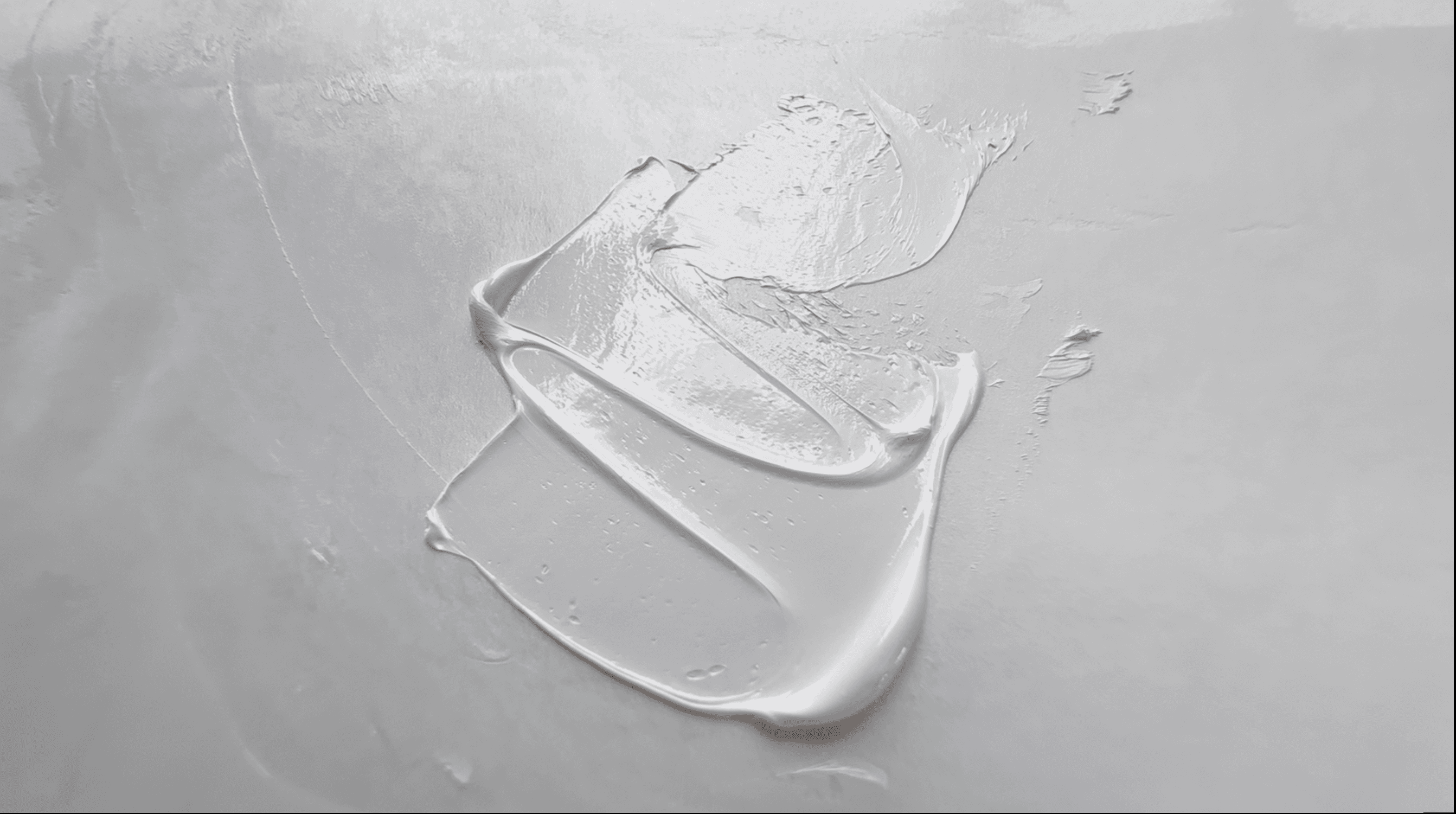
Old Holland Titanium White in linseed oil
When choosing a Titanium White in oil, one of the big questions is which binding oil to use. Different oils have different properties, so a brand may make more than one Titanium (one in linseed, one in safflower, etc). In oil painting white tends to get mixed into everything so the choice of Titanium White paint will affect most aspects of a painting.
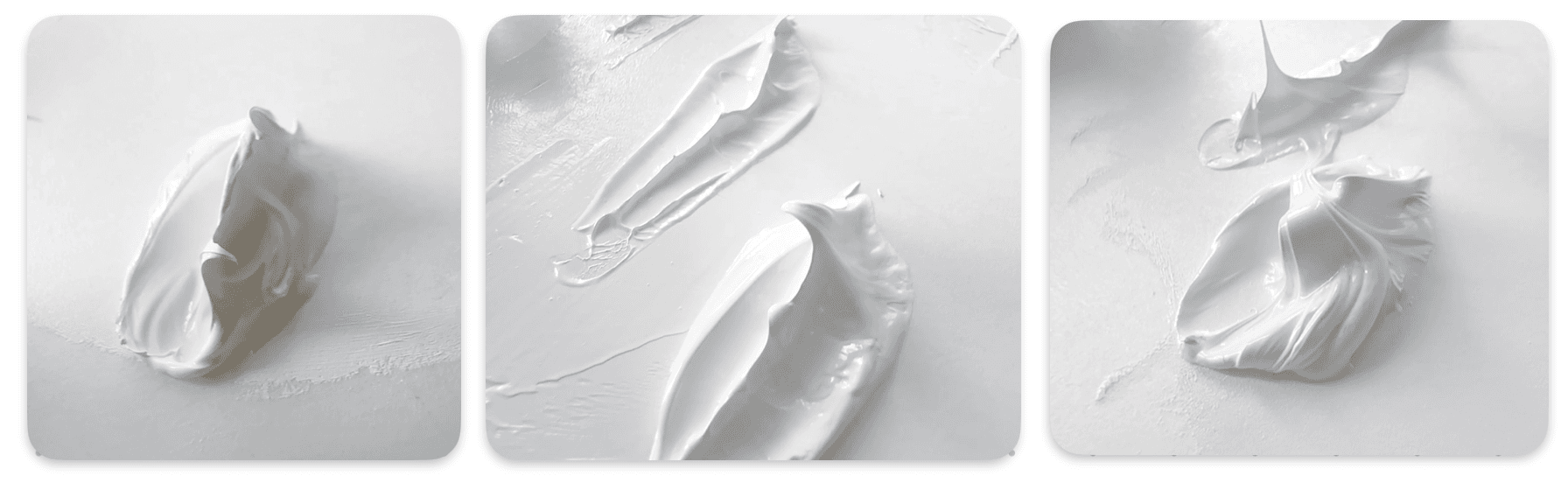
Three different Titanium Whites by Gamblin. The standard Titanium White is crisp and defined, the Radiant White is soft and fluffy like whipped cream (it's made with safflower oil), and the Flake White Replacement aims at trying to emulate the feel of Lead White
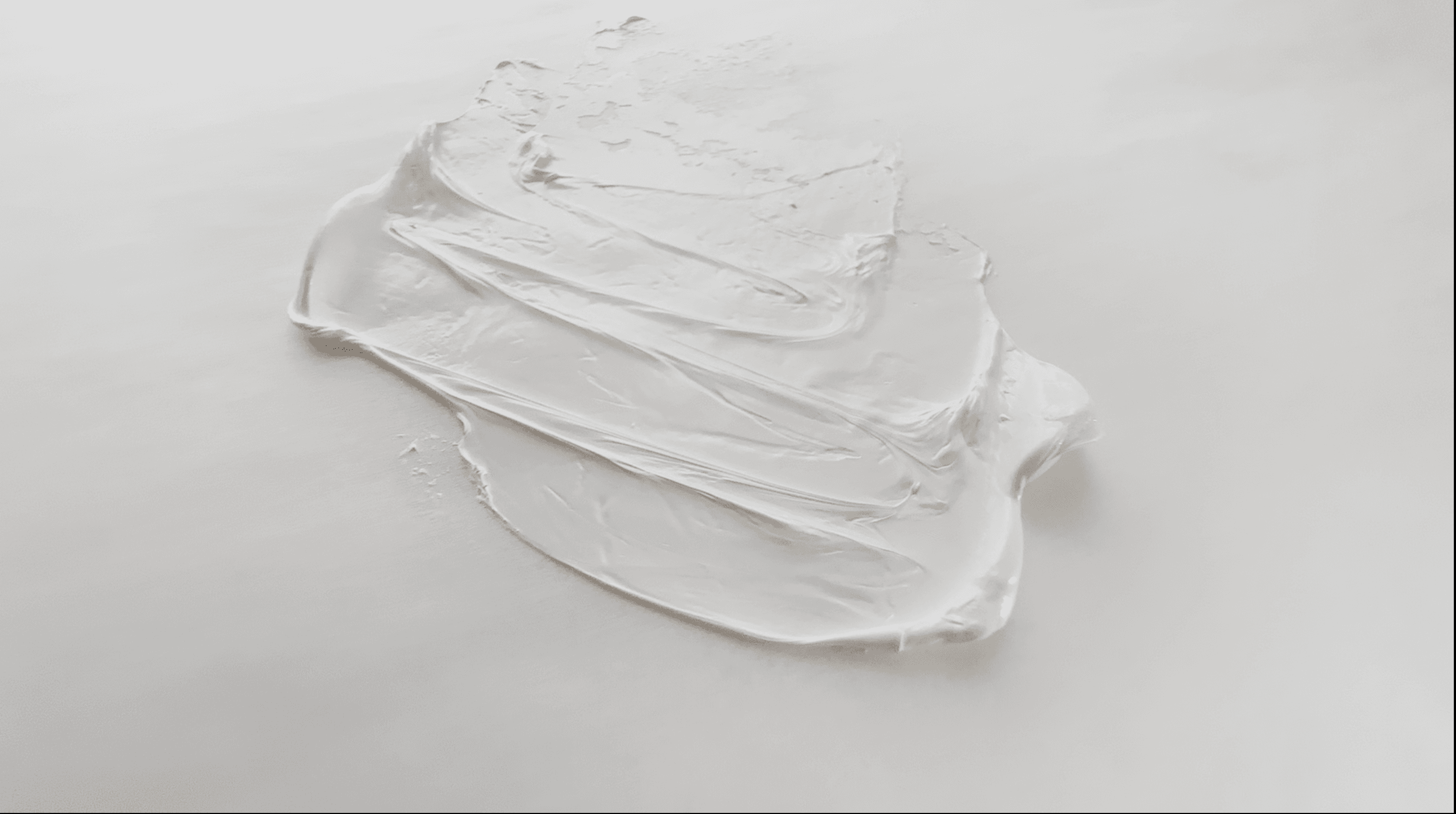
Michael Harding Titanium White No. 1 in Safflower Oil
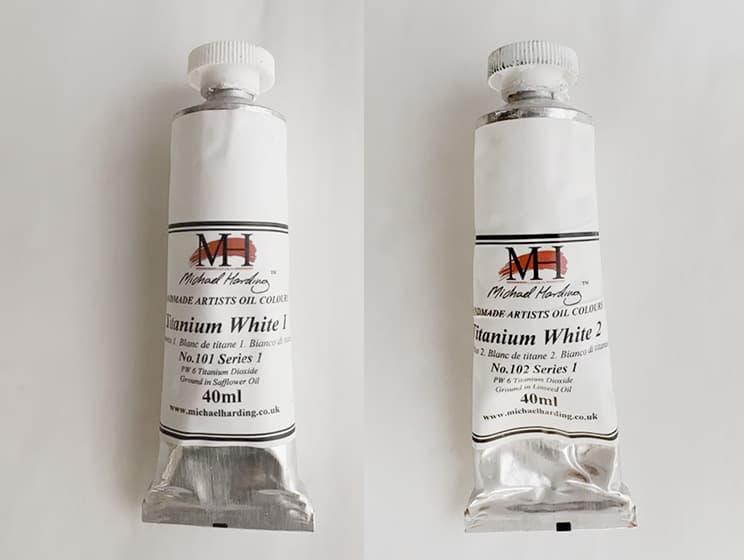
Many brands will offer a Linseed Oil Titanium White as well as a white in another binding oil, such as safflower oil. Michael Harding's Titanium White No. 1 and Titanium White No. 2 in Safflower Oil and Linseed Oil. He also makes a No. 3 which contains driers (not shown)
When selecting a Titanium, watch out for Zinc! Many brands in the past mixed some Zinc White, PW4, into their Titanium to modulate its tinting strength (and other reasons), but recent research suggests that Zinc can have some problems in oil. While more research needs to be done, early embrittlement and even delamination have been linked to Zinc White. This is a deeper discussion than we go into here, but it is something to research and also to watch for when choosing a Titanium White.
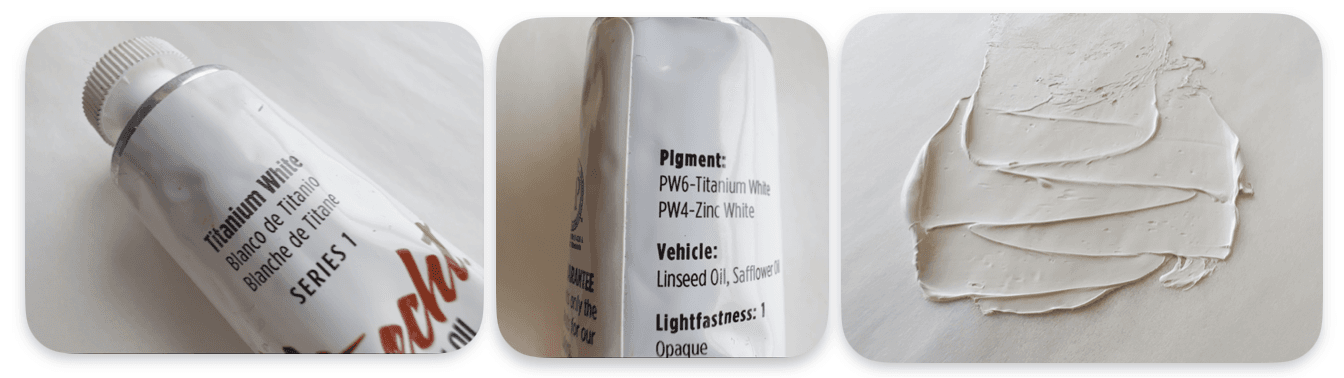
Some paints titled Titanium White actually include zinc. Check for Zinc, PW4, on the back of the paint tube. This version of Utrecht Titanium White also includes Zinc White
Titanium White is so powerful that in oils, sometimes the opacity is cut with fillers, extenders, and zinc to make it behave in a bit more nuanced manner in mixes with other colors. Otherwise it may have a tendency to overpower.
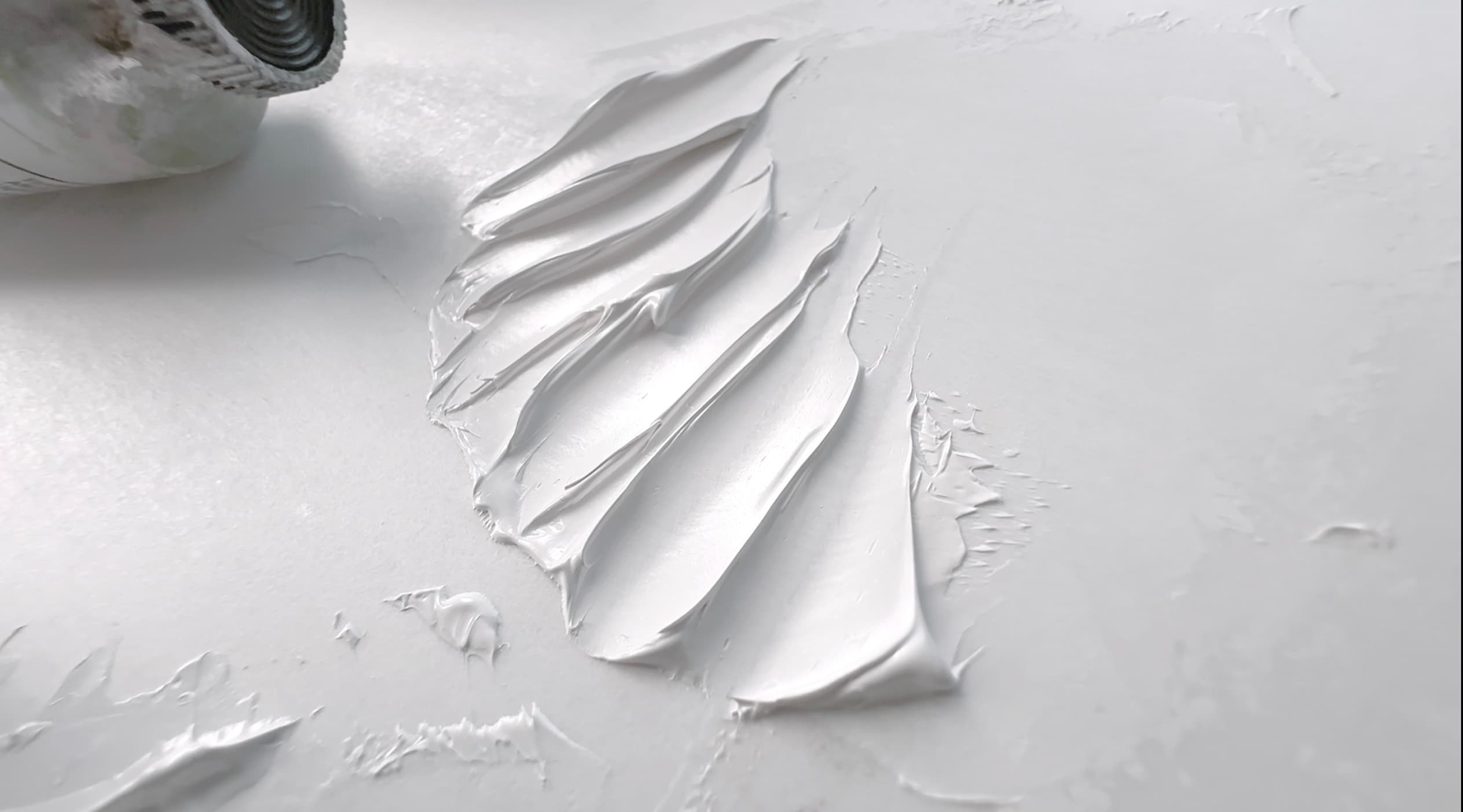
Gamblin has taken great care in formulating their specific take on Titanium White, which is stiff and crisp. They also offer different other formulations of Titanium using various binding oils and other extender pigments.
In oils Titanium White makes a buttery paint. Titanium also has a reputation for high tinting strength as well as a "chalkiness" in tints that some consider overpowering as it lends a blue tone to mixtures. On the other hand, what would we use for the brightest highlights and speculars if not Titanium White?
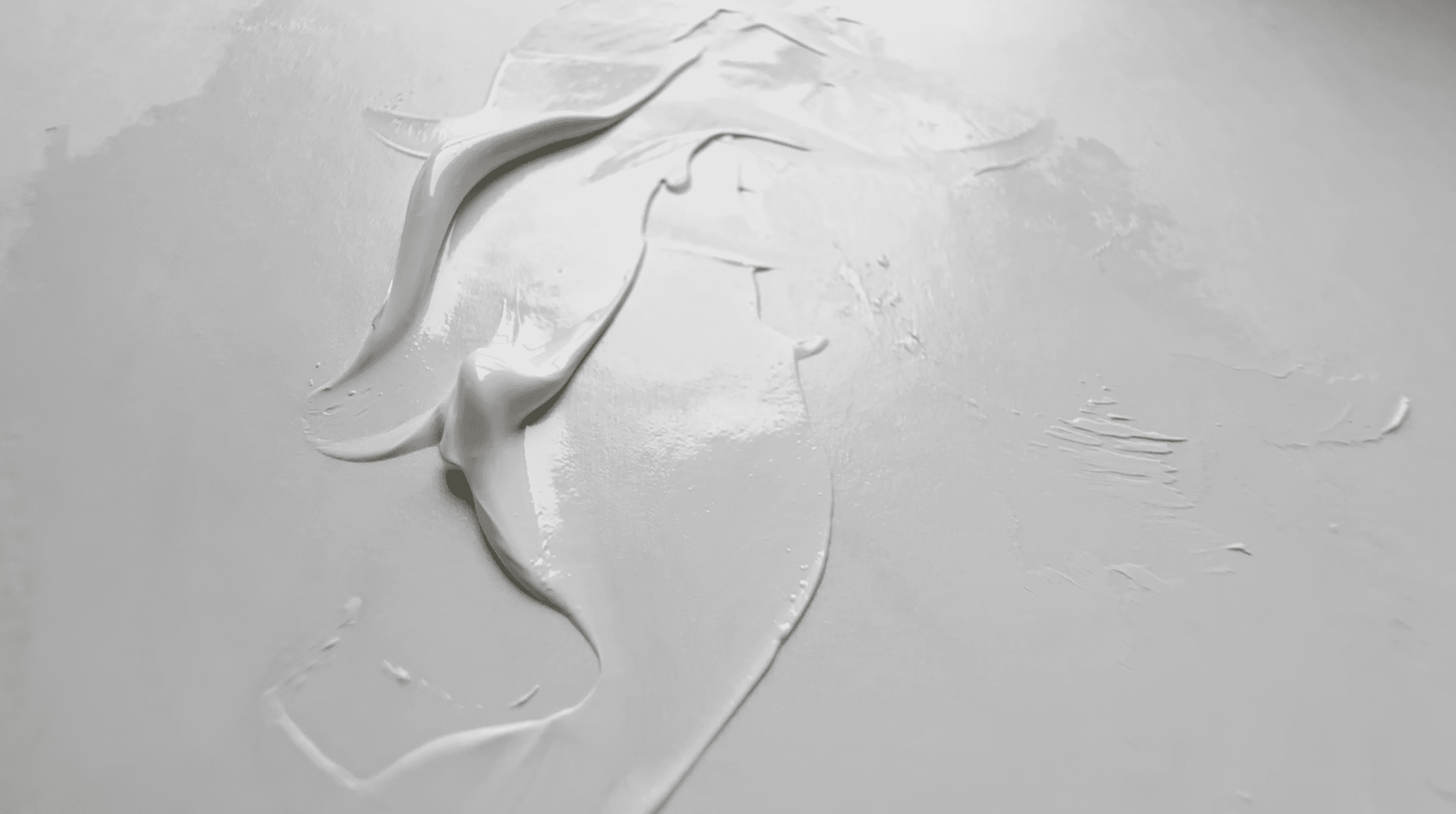
Vasari Titanium White
The differences in binding oils will matter a fair amount to oil painters as will the effect of additives. Just take a look at pure Titanium White in Linseed oil in the pictures found here to appreciate the helpful effects of just a little bit of chalk and beeswax. Extensive interest in this over the years reveals that the question of how to formulate Titanium White in oil paint is a complicated matter, but here are some more results from Golden on the binding oil specifically: On the Yellowing of Oils.
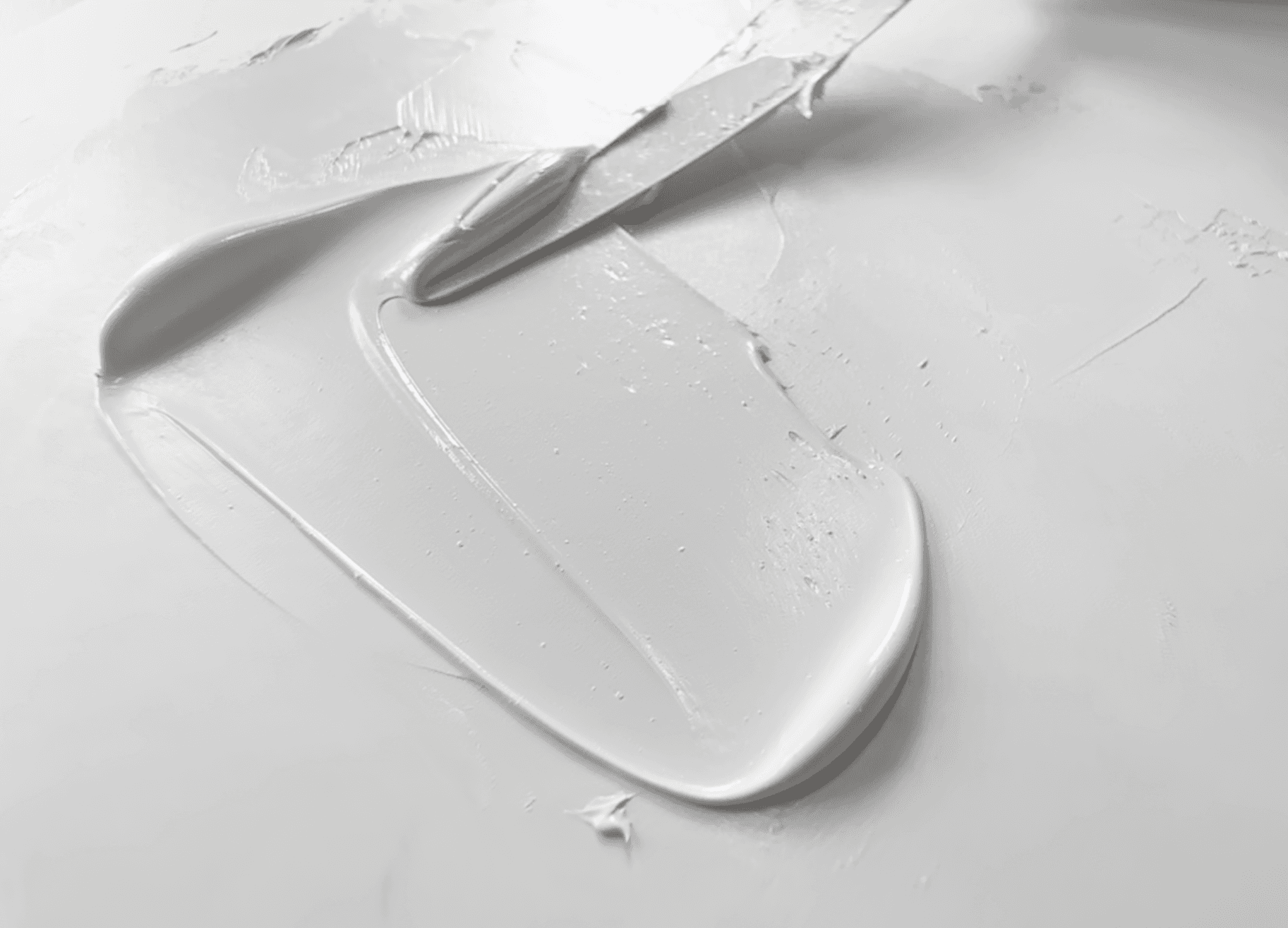
Williamsburg Titanium White in Safflower Oil
The chalkiness associated with Titanium White can be amended by the addition of other pigments, and titanium is popular in many convenience blends which are tints of other colors. The high tinting strength can partially be cut with fillers, modifiers, or other pigments. Also a person can employ mixing strategies which counteract the usual effect of adding Titanium White. Some versions of Titanium White, such as the specialty Atelier version below by RGH are warmer.
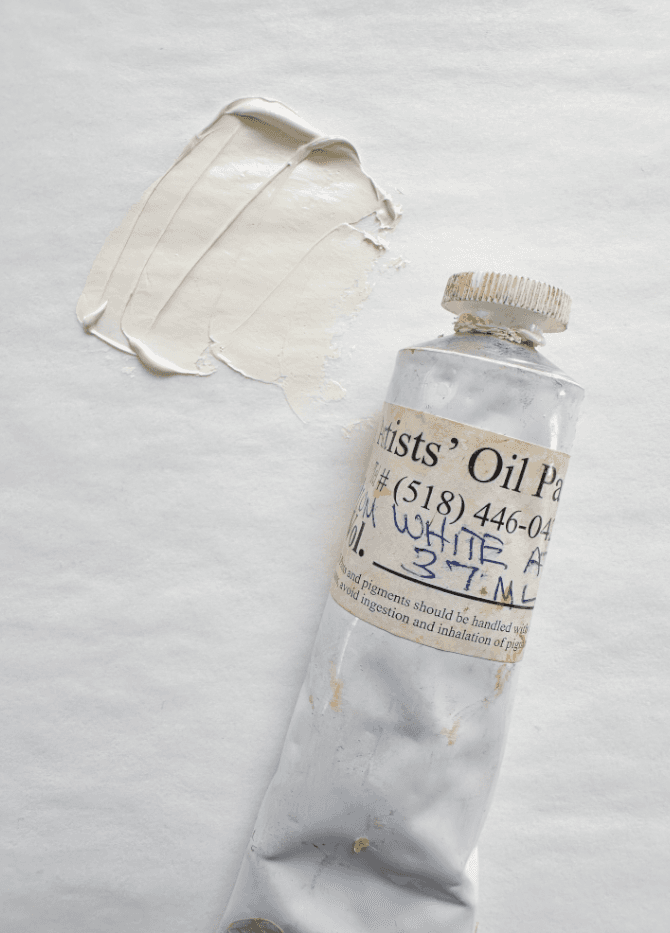
RGH Atelier Series. This Titanium White is *not* their regular Titanium White, rather it is a specialty version made with washed oils. The choice of oil treatment changes the flow and feel of the paint
A discussion of binding oils goes beyond the scope of this pigment article. However, a mention of poppyseed oil is appropriate here as it tends to yellow less. Poppyseed oil can also be associated with super-slow drying as well as cracking in paint films, so it must be used carefully. Titanium White is one of the pigments where the natural yellowing of oils is the most noticeable, so some painters opt to use sparing bits of poppyseed oil Titaniums, such as this one by Blockx.
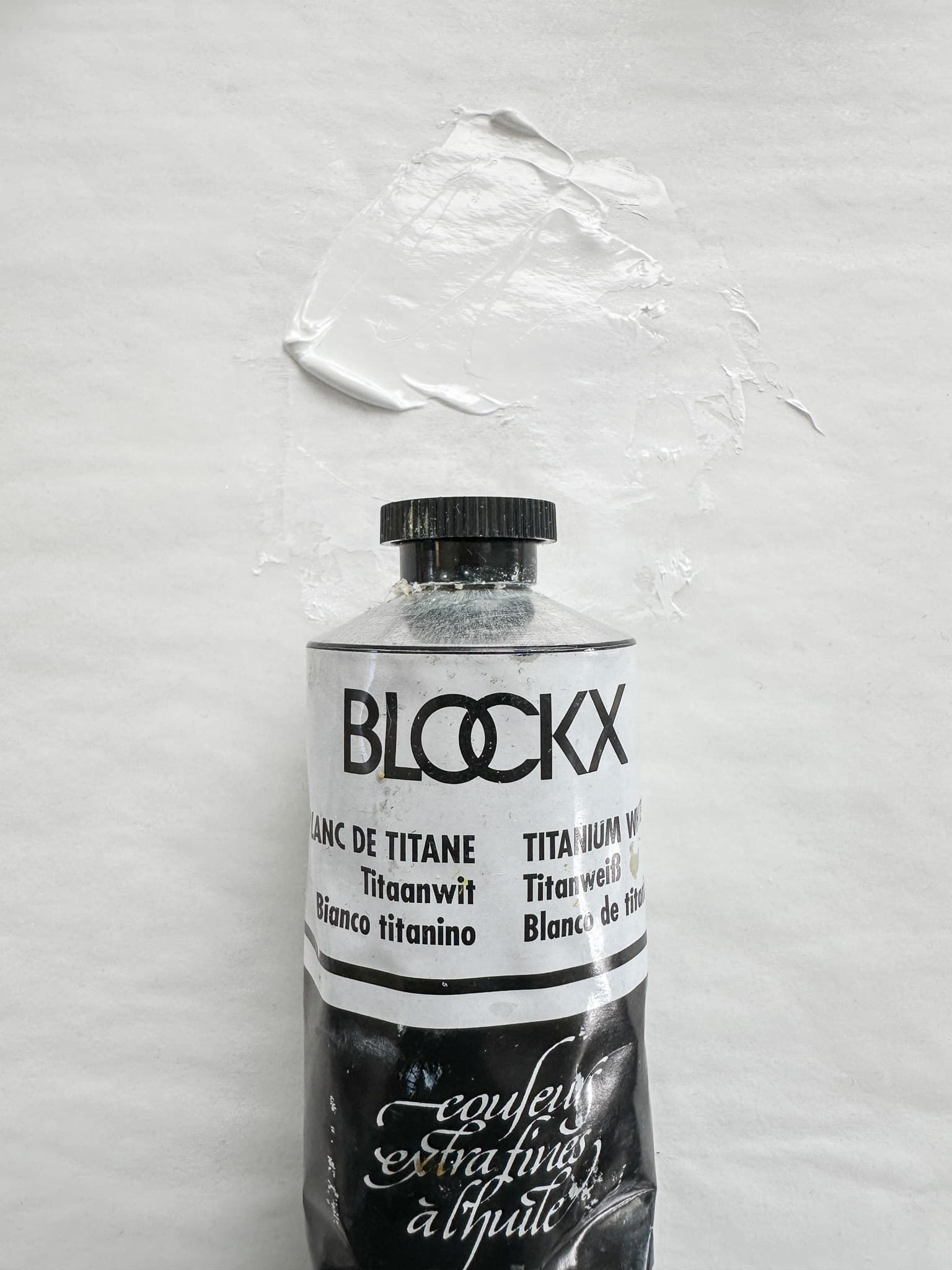
Blockx Titanium White is bound in Poppyseed oil. There are benefits and drawbacks to every oil, and poppyseed oil is best used judiciously. However it does not yellow as readily
We're not health and safety experts, so consult them for that part. Sanding or breathing PW6 can be dangerous-- our understanding is that it can be carcinogenic if the dust is breathed ("cancer hazard by inhalation"), so consult those health and safety experts and protect yourself with the proper gear. We were interested to find out that Titanium White can sometimes contain undisclosed contaminants-- PW4 and lead-- so consult Monona Rossol's work for more information.
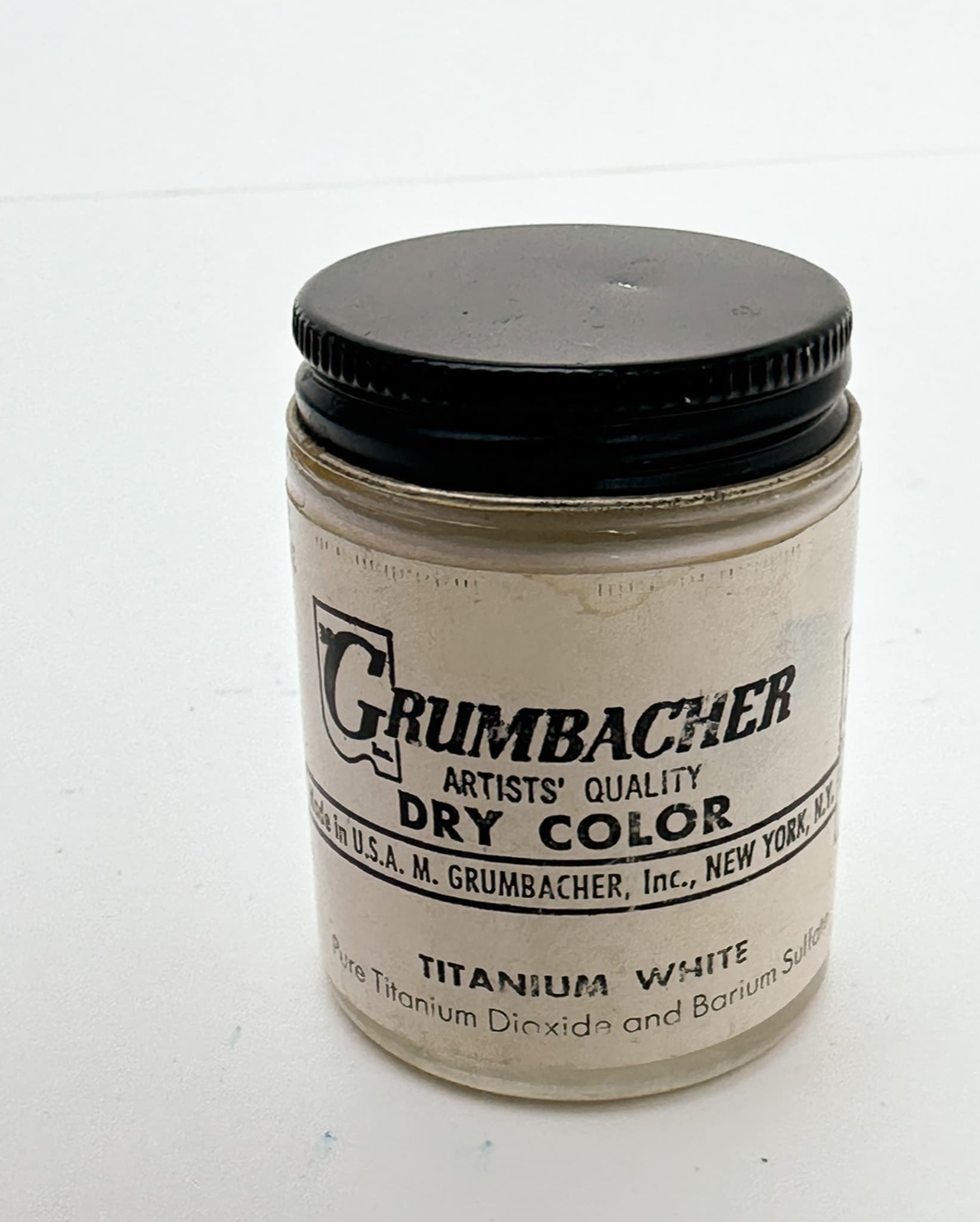
A vintage jar of Grumbacher Titanium White dry pigment with Barium Sulfate mixed in
Titanium White is widely used in so many other art applications like Gesso and grounds. When we need to cover a surface with an opaque white acrylic paint, we reach for Titanium White. In oils, perhaps the greatest drawback for titanium is the less-strong paint film that it forms. In a way we would describe this as softer, but in the way that something crumbles, so some people describe it as more brittle in comparison to pigments which form a stronger film, such as toxic lead white, PW1. However, lead white tends to yellow.
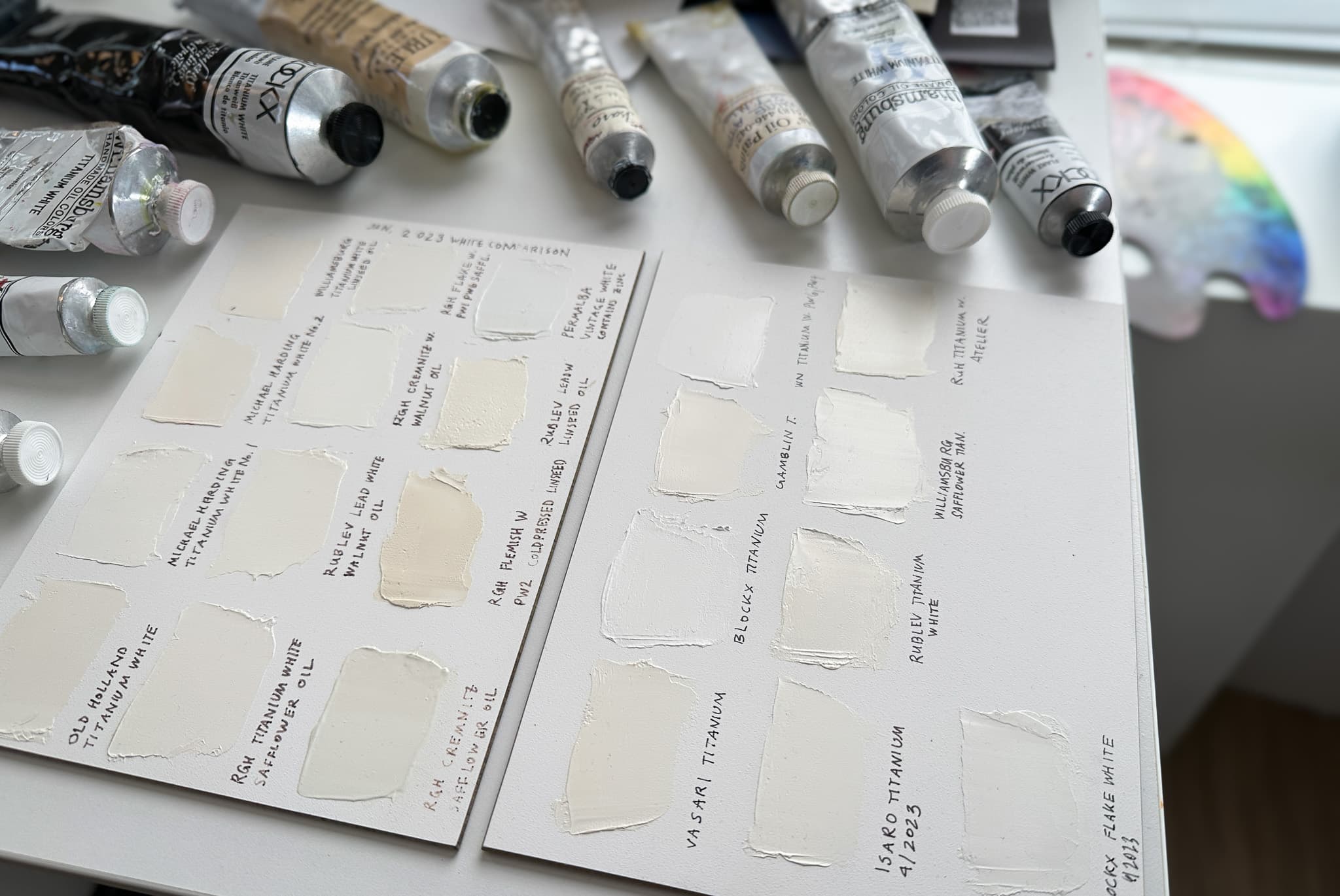
For more about the yellowing of various Titanium White paints over time, be sure to check out our in-depth article on Titanium White
Titanium white comes in two kinds, rutile and anatase. The Rutile kind is more common, the Anatase kind is seldom found as it is somewhat deleterious to oil binders.
Check out our Full-Length Article on Titanium White for more.
Resources
PW6 pigment data from David G. Myers, The Color of Art Pigment Database, Artiscreation.com
Information about PW6 from Bruce MacEvoy, Handprint Guide to Watercolors, General information about this class of pigments from Handprint
Read an in-depth article
Stats
Lightfastness
Excellent, refer to notes on mixing whites
Among mixing whites that were [tested] by Golden, Titanium White seemed to be a solid choice. A few pigments fared slighly better in titanium-zinc blends, but the reverse was also true at times for other pigments.
Transparency
Opaque
Toxicity
Previously thought to be in the category of lesser concern, but does have some hazards
Do not breathe dust (i.e. think about pigment but also sanding). Specifically this is a carcinogen if inhaled. We were shocked to find out that "Some grades contain significant amounts of zinc oxide and lead." Monona’s Rossol’s work, available on request, has more information. The NPIRI also suggests to contact supplier for zinc content. Treat all pigments and paints with studio safety protocols.
Dry Time
Slow, likely to contain driers.
Some dry in 2-7 days, others in 1-2 days, likely contains driers.
Oil Content
Low
Oddly enough, oil content by volume can be pretty low. A chart may be found here. In his 1970 edition, Mayer assigns it a medium with a score of 87 for the low oil type- on the upper edge of his medium category.
Particle Size
Very Fine
Chemical Name
Titanium Dioxide, rutile or anatase
TiO₂
DISCLAIMER: Please note that we are not experts in health and safety and we are not toxicologists, please consult the proper experts. We are not liable for any issues that may arise from the use of our website or its contents. The information contained in this site is provided without warranty or guarantee of any kind. We do not necessarily endorse any other website that are linked from our site. For any important pigment specs, please reference the manufacturer details. If you discover errors or omissions, please reach out through our contact form. Thank you.
