

Alizarin Crimson
PR83
Alternate Names
Madder Lake (Calcium)
Alizarine Red B
Alizarin Red
Pigment Description
Now discontinued, previously a star of 20th century palettes, and unfortunately doesn't have great lightfastness. Sometimes synthetic PR83 is known as Alizarin Crimson (Genuine). The "genuine" part must now be added as the pigment is now discontinued and imitations already abound.
%2520Lake%2520Deep%2520Extra%2520Kraplak%2520PR83%2520%25202025-09-29%2520at%252012.54.15%2520PM52%2520Paint%2520List%2520Artist%2520Paint%2520Reviews%2520Pigment%2520Red%252083.jpg&w=3840&q=75)
Old Holland Madder Crimson Lake Deep Extra, PR83:1
The natural form of Alizarin Crimson is madder root, NR8, and the Alizarin pigment discussed here is the newer synthetic version, PR83. It feels a bit counterintuitive to call PR83 a "genuine synthetic" version but as it is being discontinued both terms do apply. So synthetic Alizarin Crimson itself, PR83, is a replacement for the older pigment pigment, NR8. For example, the naming for Old Holland's PR83 paint gestures to this older history in the paint name. Old Holland's Madder Crimson Lake Deep Extra contains the label "Extra" -- their word for imitation hue, as synthetic genuine PR83 imitated the old NR8. Now PR83 is on the way out, and in general, the synthetic version, which may be referred to as "Genuine Alizarin" is becoming harder to find.This is a rich gem-like crimson that is has been incredibly difficult to replace with other pigments. It is baffling that it is so difficult to imitate exactly by a blend of different colors.
%2520Lake%2520Deep%2520Extra%2520Kraplak%2520PR83%2520%25202025-09-29%2520at%252012.54.30%2520PM57%2520Paint%2520List%2520Artist%2520Paint%2520Reviews%2520Pigment%2520Red%252083.jpg&w=3840&q=75)
A variation of genuine synthetic Alizarin Crimson Genuine, PR83:1. Old Holland Madder Crimson Lake Deep Extra
Alongside its beauty, painters have been plagued with a quandary: what does one do about its terrible lightfastness? PR83 is often used as a fading pigment by which to judge the lightfastness of other colors- unfortunately Alizarin tends to loose its lightfastness that reliably. In addition to the fading this pigment has issues with cracking, which is less often discussed, but nonetheless reported to be an issue. It requires a lot of oil to turn it into an oil paint
%2520Lake%2520Deep%2520Extra%2520Kraplak%2520PR83%2520%25202025-09-29%2520at%252012.54.55%2520PM61%2520Paint%2520List%2520Artist%2520Paint%2520Reviews%2520Pigment%2520Red%252083.jpg&w=3840&q=75)
Old Holland Madder Crimson Lake Deep Extra, PR83:1
Another issue which many never thought to consider is that chemically, both artificial and natural alizarins are actually incredibly similar to cancer-causing anthraquinones. It may also cause allergies. Monona Rossol's work on pigments contains more information.
%2520Lake%2520Deep%2520Extra%2520Kraplak%2520PR83%2520%25202025-09-29%2520at%252012.54.26%2520PM55%2520Paint%2520List%2520Artist%2520Paint%2520Reviews%2520Pigment%2520Red%252083.jpg&w=3840&q=75)
Old Holland Madder Crimson Lake Deep Extra
Alizarin Crimson was beloved in the 20th century as the choice for a blue-leaning red, and many painting books recommended it despite its poor lightfastness. The lightfastness issue seems to be even worse in watercolor than in oil. So, due to its poor performance, genuine Alizarin Crimson cannot be recommended, but in any case it is now in the process of actually disappearing by way of discontinuation.
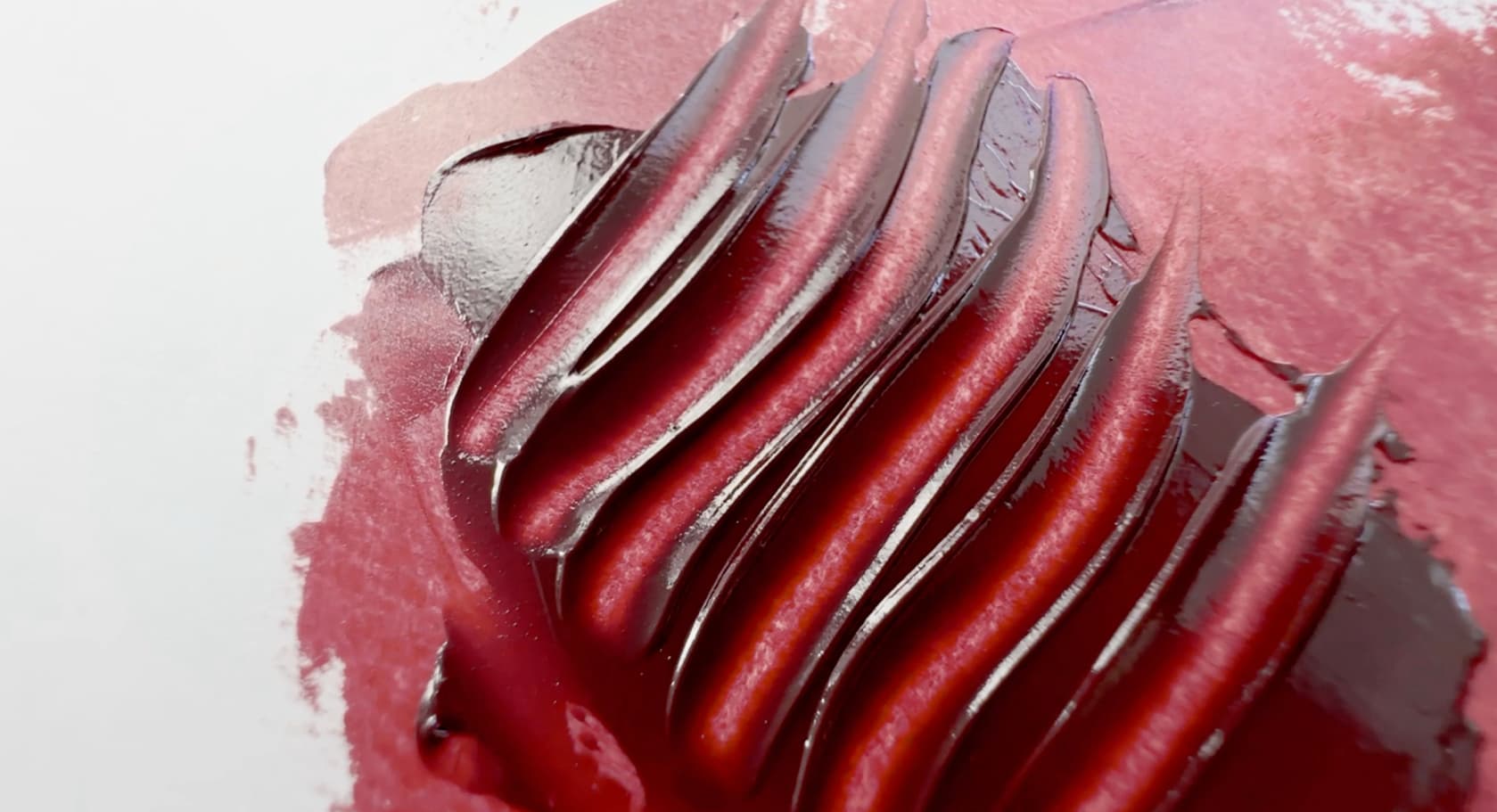
Gamblin PR83 Alizarin Crimson
In 2023 or 2024 it was phased out by pigment makers, however some paint companies still have supplies of this traditional mainstay. It is incredibly difficult to replicate this pigment, and part of its mystery is a brown note hidden in the crimson. Alizarin Crimson a deep dark red, which is an area of the palette where painters can always use more pigments. Many companies have turned to PR177 as a permanent Alizarin. However, Virgil Elliott's tests revealed that in time PR177 also fades, despite the name "Permanent."
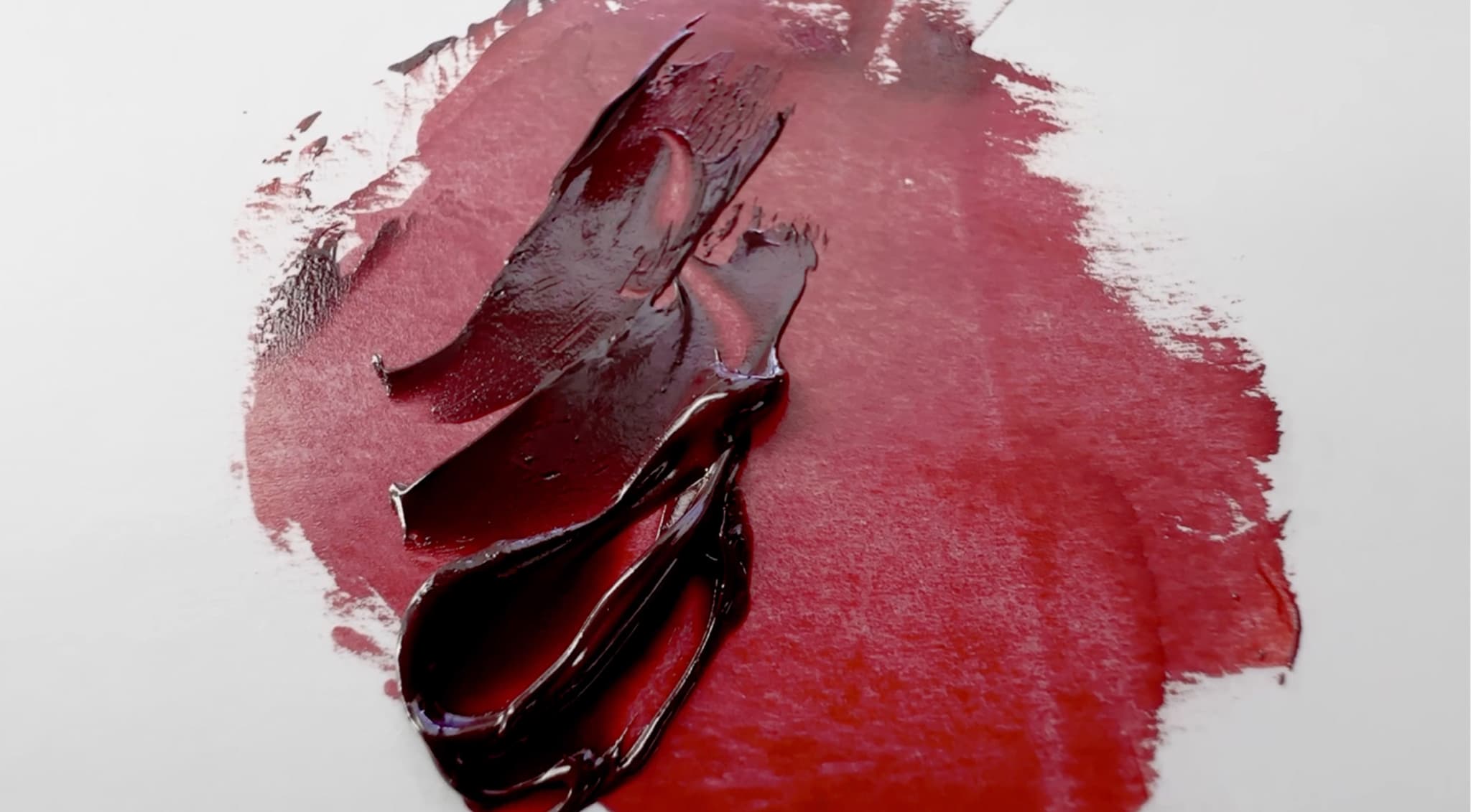
Genuine Alizarin Crimson PR83 by Gamblin
Some recommend PR264 Pyrrole Rubine as a replacement. Old Holland also has an interesting imitation blend to approximate genuine Alizarin.
%2520Lake%2520Deep%2520Extra%2520Kraplak%2520PR83%2520%25202025-09-29%2520at%252012.55.27%2520PM65%2520Paint%2520List%2520Artist%2520Paint%2520Reviews%2520Pigment%2520Red%252083.jpg&w=3840&q=75)
Old Holland Madder Crimson Lake Deep Extra, PR83:1
Part of the complexity of genuine Alizarin is that it has two natures, the Alizarin and Purpurin. Oddly, the purpurin refers to an orangy note that fades out of natural madder preparations rather quickly. We have read that many versions of synthetic madder PR83 have had the purpurin (orange component) removed already, however some PR83s could theoretically have this. After the purpurin fades out the bluer red crimson will fade out as we are accustomed to seeing in lightfastness testing. In oils, this fading happens rather rapidly. Golden did some advanced lightfastness testing which studied concentration-dependent fading for Alizarin Crimson in particular.
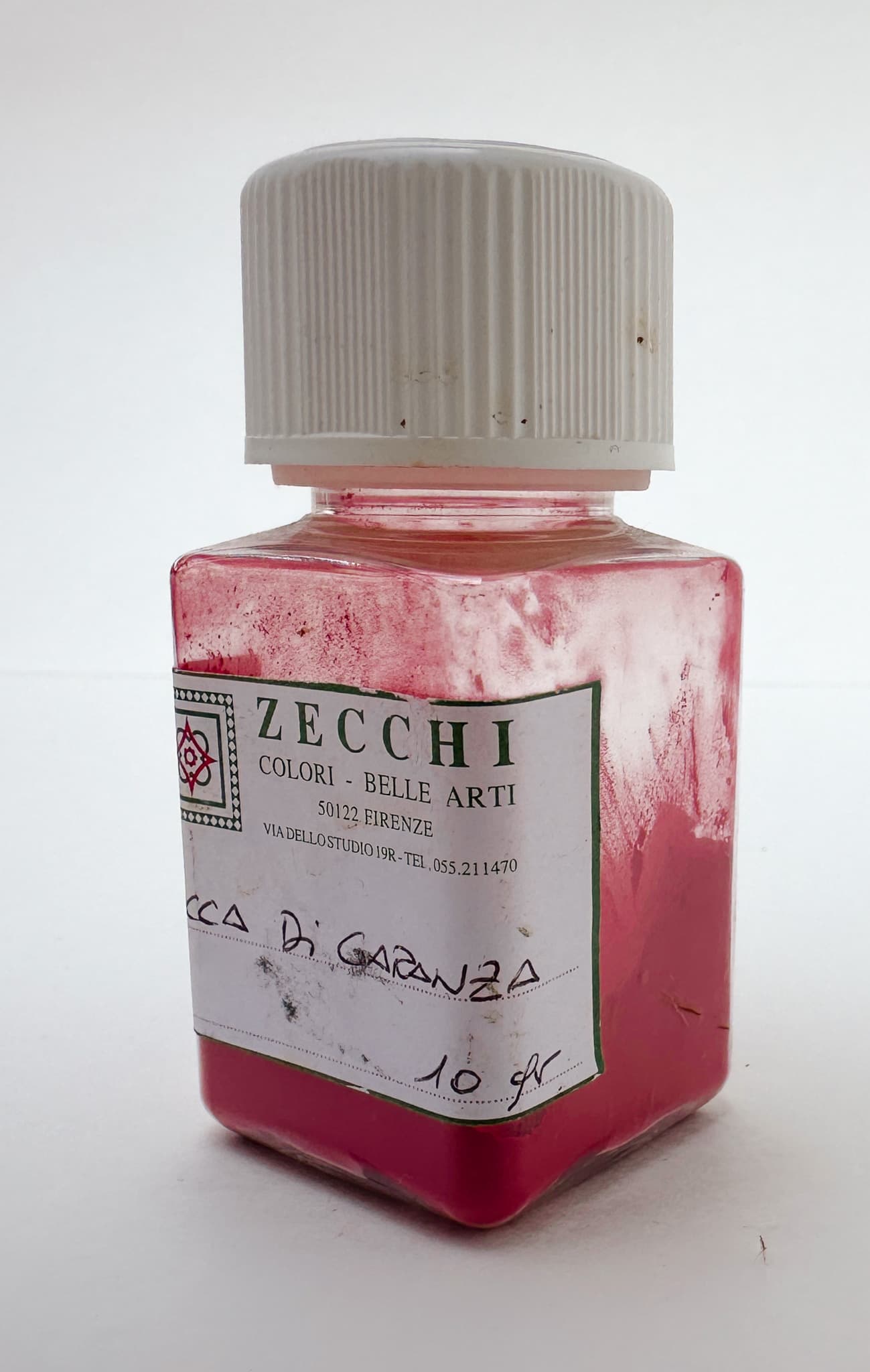
Zecchi pigments, Alizarin Crimson genuine, dry pigment
Resources
PR83 pigment data from David G. Myers, The Color of Art Pigment Database, Artiscreation.com
Elliott, Virgil. Traditional Oil Painting. Echo Point Books & Media, LLC, 2019. https://amzn.to/4nwIdzq,
Information about PR83 from Bruce MacEvoy, Handprint Guide to Watercolors,
Rossol, Monona. The Artist's Complete Health and Safety Guide. New York, NY : Allworth Press, 2001. The book is rather dated, updated information is available from her website.
Stats
Lightfastness
Varies, Poor
At ASTM III, some call Alizarin Crimson the lowest that artists colors should go in terms of lightfastness, while others think it’s too low to consider. In Golden's lightfastness testing Alizarin Crimson did not perform well (which was expected) and they also reported some interesting details on its relationship to concentration and a few other elements. Their research contains more on this topic. A 1980s NPIRI report shows slight changing in tints even in indoor tests, and appreciable change in outdoor tests for both masstone and tints.
Transparency
Transparent
Toxicity
Hazard, Use more caution
Bears similarity to cancer-causing anthraquinones. While acute toxicity is thought to be low, may also cause allergies. Monona Rossol's pigment datasheets, available on request, contain more information. Treat all pigments and paints with studio safety protocols.
Dry Time
Very Slow
Some paintmakers list 10-21+ days, others cite 6-18 days. Very slow. May impede drying of oil. We have read that the pigment Alizarin Crimson may interfere somewhat with the drying process in oils
Oil Content
Some sources say high, but by volume it may only be moderately high.
Chemical Name
Anthraquinone: 1,2-dihydroxy anthraquinone lake, Anthraquinone dye fixed onto a base, some refer to it as Anthraquinone: Salt of Acid Dye
C₁₄H₈O₄
DISCLAIMER: Please note that we are not experts in health and safety and we are not toxicologists, please consult the proper experts. We are not liable for any issues that may arise from the use of our website or its contents. The information contained in this site is provided without warranty or guarantee of any kind. We do not necessarily endorse any other website that are linked from our site. For any important pigment specs, please reference the manufacturer details. If you discover errors or omissions, please reach out through our contact form. Thank you.
