

Vermillion (Genuine Historical Pigment)
PR106
Alternate Names
Cinnabar
Mercuric Sulfide
Pigment Description
The stuff of legends-- the fire of an alabaster cheek and the red of Rembrandt, with all the toxicity of a volcanic hot spring. But alas, in addition to toxicity it is not quite as lightfast as we would hope. Still, some samples have survived. The natural mineral is called Cinnabar whereas the synthetic form is called Vermilion.
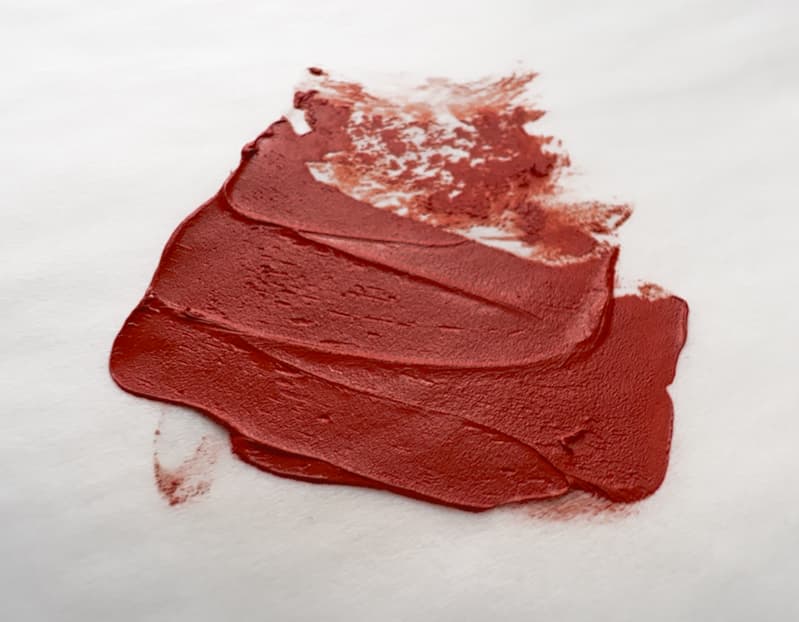
Genuine Cinnabar by Gazo
A bright red indistinguishable in masstone from some cadmium reds, however it mixes a bit differently and tends to be semi-opaque. Debate about its lightfastness has tended to be one of those things which "springs eternal". We were fascinated to see lightfastness tests from the legendary Gunzorro (one can find his vermilion tests here). Similar findings were echoed independently by Virgil Elliott. Unfortunately this pigment which has captivated painters does indeed seem to darken with enough light exposure. Whether the darkening is due to mode of manufacture (wet or dry process— with the dry process seen as better) or whether the darkening may be due to adulteration with another pigment would require lab testing to determine.
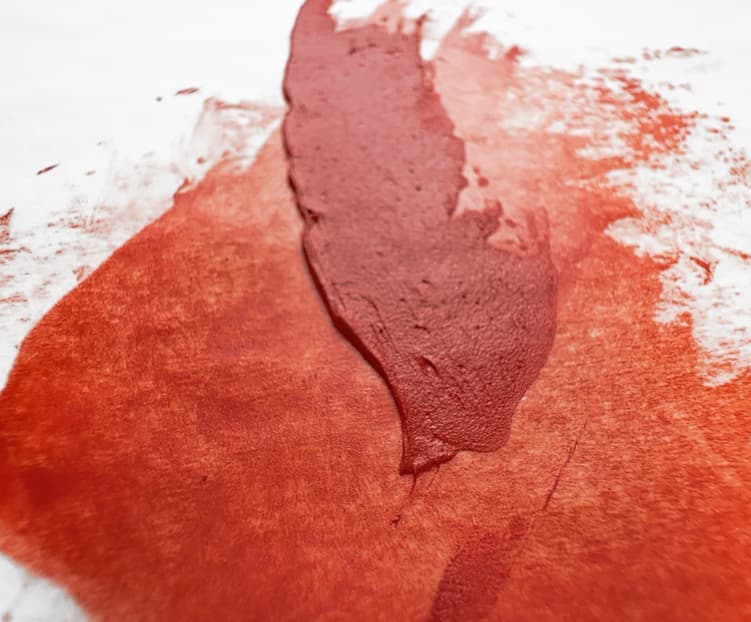
Gazo's Genuine Cinnabar
We have heard that the sometimes-quoted ASTM designation of ASTM I has to do with the length of time the ASTM requires for the exposure, and that perhaps were the exposure requirements a bit longer vermilion would undergo the blackening that it so often exhibits in the studio tests done by painters. Perhaps notably, Natural Pigments mentions that glazing madder lakes over Vermilion may help to mitigate this tendency to darken. There is discussion that the way it is manufactured may make a difference to its lightfastness as well as a note that the natural mineral may fare better than the manufactured versions.
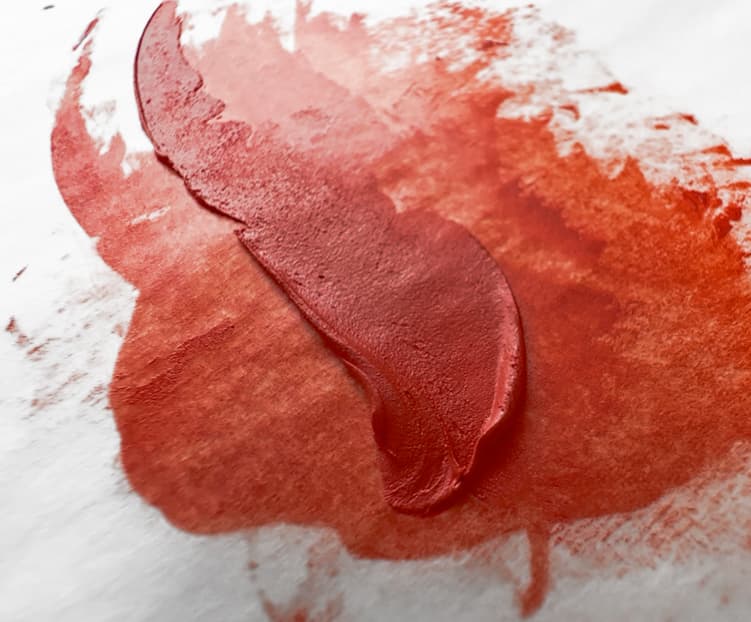
Oil paint made with Cinnabar
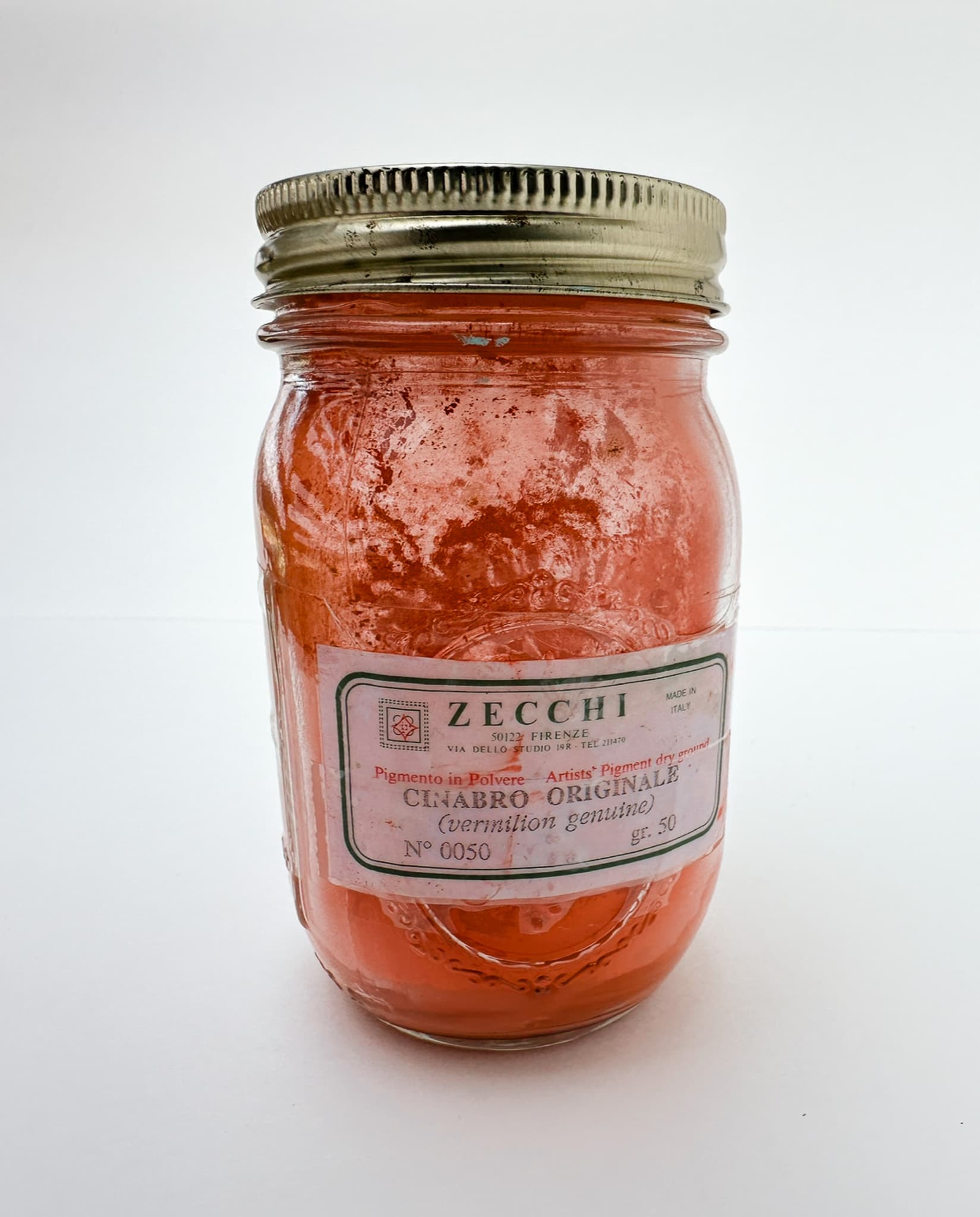
Zecchi genuine Cinnabar (genuine Vermilion) dry pigment
Controversy also (strangely) rages over just how toxic it is, but we would err on the side of caution and list this as a toxic pigment. Furthermore, Monona Rossol in her work on pigments notes that it may sometimes be contaminated with red lead, which is extremely toxic. More information on hazards from mercury as well as lead pigments can be found in the Artist's Guide to Health and Safety. Even Rublev notes Danger! in its health statements.
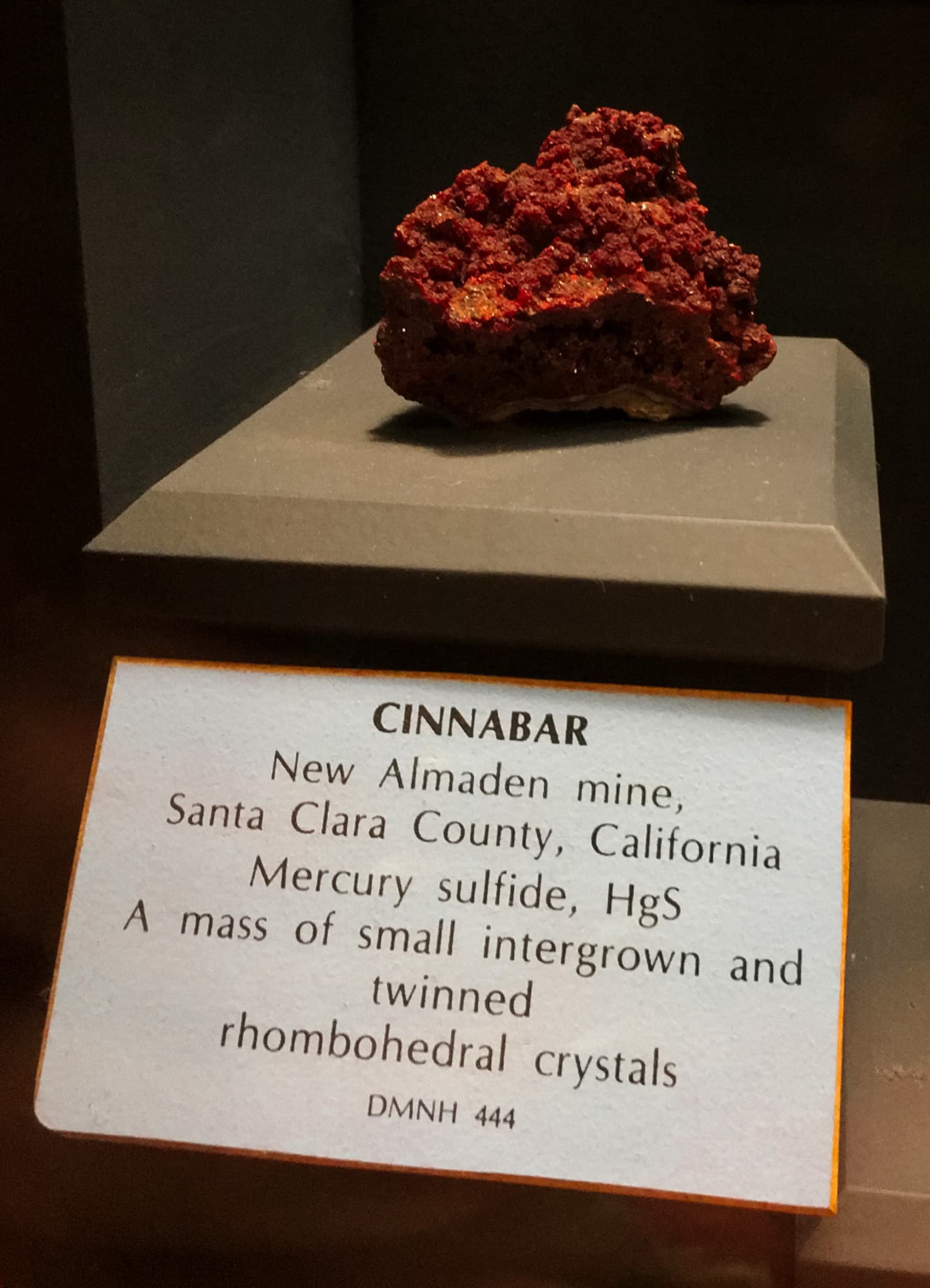
A museum specimen of Cinnabar from the New Almaden mine, California
Several different color varieties of this pigment may be found depending on where it was mined or how it was manufactured. Famous mines were in Monte Amiata. It is rumored that the finest qualities of real vermilion have not been available for a very long time, at least not since the closing of the famous Monte Amiata mines in Spain. The Monte Amiata versions seem to be on the oranger side whereas other varieties may be a cooler red.
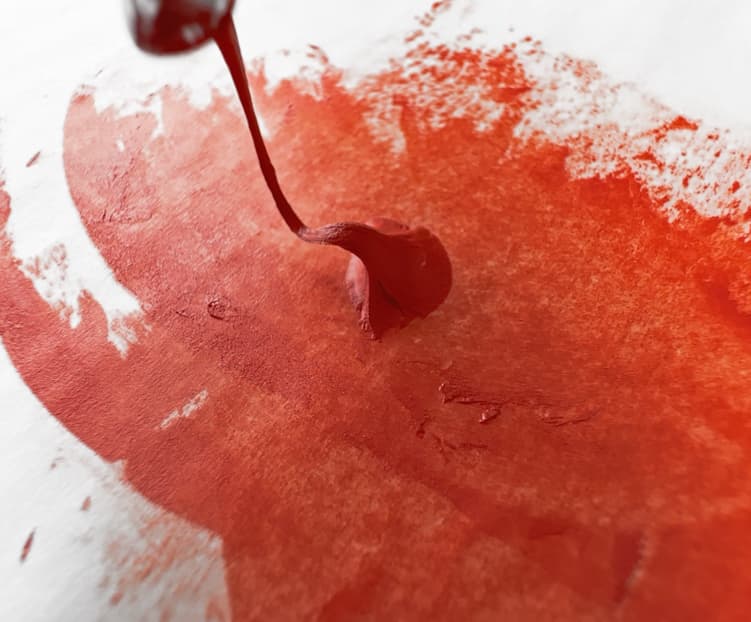
Gazo's Cinnabar has a long quality in oil paint
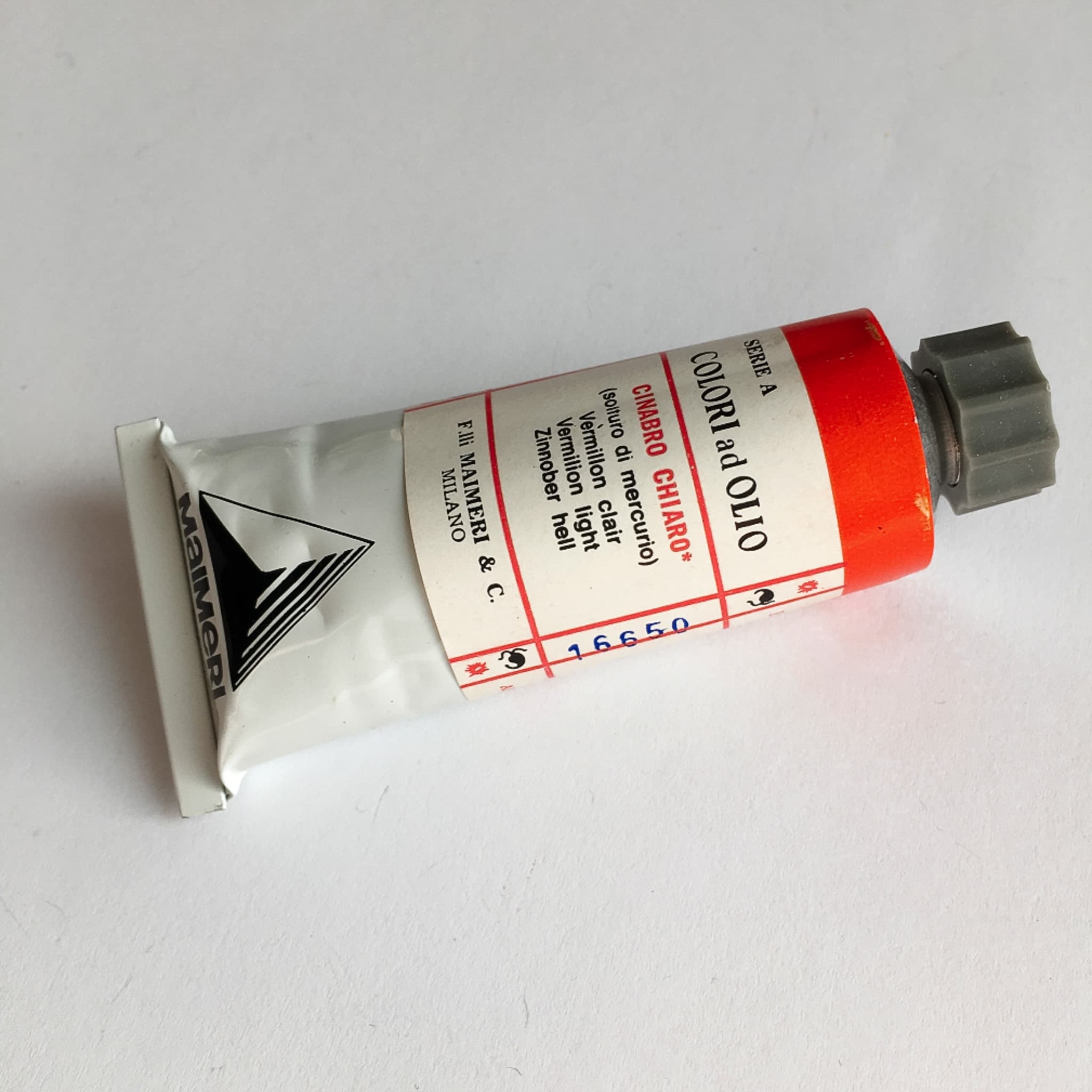
Sometimes with older paints it is difficult to determine whether they are genuine Vermilion, since the name may be used to describe several other pigments as well. Older tubes may not have pigment data printed on the label
It has become difficult to ascertain the quality of various tubes of Vermilion as they are sometimes cut with fillers or may even have Cadmium Red standing in for the genuine pigment. It's said that some of the duller versions of vermilion may be substandard representations of what this pigment can be, or perhaps used to be. On the other hand there are some brilliant cadmiums that are difficult to distinguish from the better versions of vermilion which poses a different challenge. There may be some simple studio tests for distinguishing genuine vermilion from cadmium.
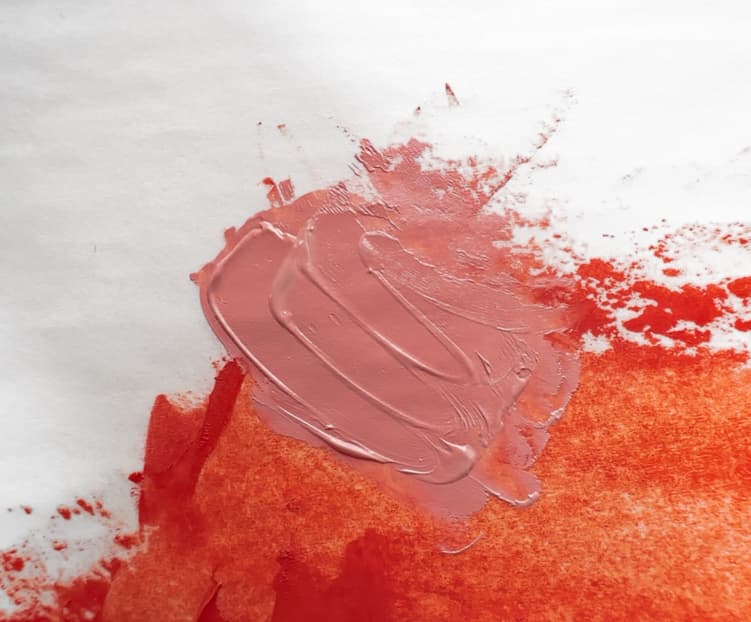
A tint with Titanium White made with Gazo Cinnabar in oil
Also it is said that genuine vermilion is very slow drying, which is interesting because it has rather lean oil requirements when made into a paint, according to Virgil Elliot's book In Traditional Oil Painting.
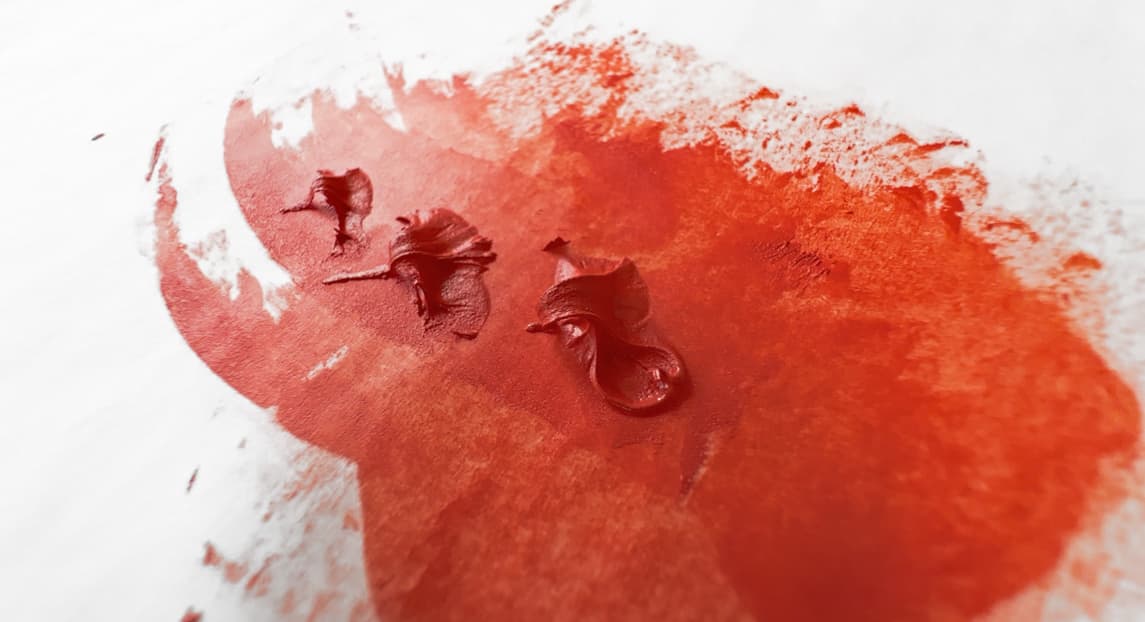
Cinnabar oil paint by Gazo
In terms of hue, the great Gunzorro once described PR106 as somewhere between red earths and the cadmiums.
There are at least two different main color groupings within Vermilion. There are two varieties of Vermilion which tend to be the orangey kind, and these are in contrast with the Chinese version, which is a cooler red. The former types—the orangey ones— are associated with the Imperial kind (or Monte Amiata Imperiale) form of vermilion, which also makes warmer pinks when used in tints.
Resources
PR106 pigment data from David G. Myers, The Color of Art Pigment Database, Artiscreation.com,
Bomford, David, et. al,. Impressionism. London: The National Gallery, in association with Yale University Press,1990. Internet Archive, Web. Accessed June 2025. https://archive.org/details/impressionism0000unse_z3w3
Church, A. H.. The Chemistry of Paints and Painting. London : Seeley, Service, 1915. Internet Archive, Web. Accessed June 2025. https://archive.org/details/chemistryofpaint00churuoft
Field, George. Field's Chromatography : a treatise on colours and pigments for the use of artists. London : Windsor and Newton, 1885. Internet Archive, Web. Accessed June 2025. https://archive.org/details/Fieldquotschrom00Fiel,
Gettens, Rutherford J.. Painting materials : a short encyclopaedia. New York : Dover Publications, 1966. Internet Archive, Web. Accessed June 2025. https://archive.org/details/paintingmaterial0000gett,
Information about PR106 from Bruce MacEvoy, Handprint Guide to Watercolors, General information about this class of pigments from Handprint,
Keune, Katrien and Jaap J. Boon (2005, June 22). Analytical Imaging Studies Clarifying the Process of the Darkening of Vermilion in Paintings https://pubs.acs.org/doi/abs/10.1021/ac048158f. Analytical Chemistry. Vol 77, Issue 15
Spurgeon, Tad. Living Craft: A Painter's Process. Mt. Airy, Philadelphia, PA: Zoetrope, 2018. Newer version available here: https://www.thomaskitts.com/page/36804/tad-spurgeons-living-craft,
Rossol, Monona. The Artist's Complete Health and Safety Guide. New York, NY : Allworth Press, 2001. The book is rather dated, updated information is available from her website.
Stats
Lightfastness
Variable
Vermilion tends to darken when given enough light exposure. Proponents of vermilion will cite the works of the old masters which have not darkened as proof that it can be stable, however it is probably fair to say that more research must be done to fully alleviate concern about its darkening. In tests done by painters, genuine vermilion was shown to darken given enough light exposure. Debate continues as to whether the mode of manufacture (or in the case of natural cinnabar the locale and methods of production) make a significant difference or if the darkening may be due to an adulterant in the paint.
Transparency
Opaque
Toxicity
Toxic, may also include adulterants
There is some debate about just how toxic this is or isn’t, however we are on the side of caution and treat this as a very toxic pigment. We are not health and safety experts so please consult the manufacturer SDS as well as third party research. Artiscreation gives this a "C" meaning "Hazardous, use appropriate precautions for handling toxic substances, especially if working with the dry powder; Do not ingest; Avoid dust & spray." We have read that sometimes genuine vermillion is adulterated with Red Lead, which is extremely toxic, since Red Lead was cheaper.
Oil Content
Low/Lean
Sources describe this as Low/Lean, meaning it does not take a comparatively large amount of oil to make this into a pigment. Low by volume
Particle Size
Fine-Grained
Chemical Name
Synthetic Mercuric Sulfide, Cinnabar is natural Mercury Sulfide
DISCLAIMER: Please note that we are not experts in health and safety and we are not toxicologists, please consult the proper experts. We are not liable for any issues that may arise from the use of our website or its contents. The information contained in this site is provided without warranty or guarantee of any kind. We do not necessarily endorse any other website that are linked from our site. For any important pigment specs, please reference the manufacturer details. If you discover errors or omissions, please reach out through our contact form. Thank you.
