

Verdigris, Copper Acetate (Genuine Historical Pigment)
PG20
Alternate Names
Spanish green
Van Eyck green; copper green;
Pigment Description
Verdigris is an extinct pigment, and for good reason. It is not very stable in artists' applications. Specifically, Verdigris is not that good for oil painting, though it was used throughout art history and holds a few mysteries. This color is toxic, and also changes color wildly in oil paints.
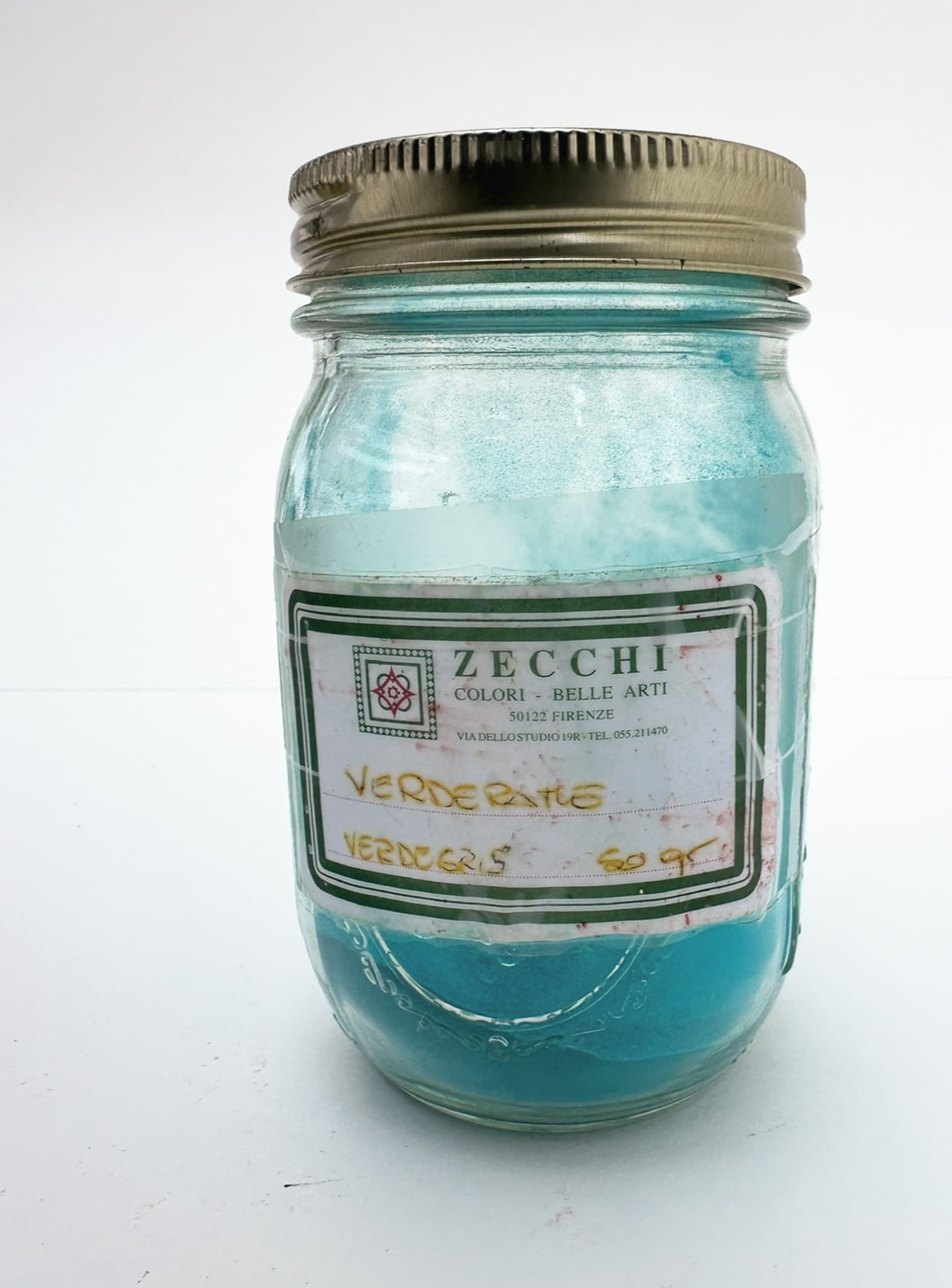
Verdigris pigment, PG20, from Zecchi
An interesting exploration of this paint in oils was done by an artist who goes by the name Yellow Oxide here. Their explorations show a dramatic darkening when mixed with Cadmium Yellow. The sample also changed color noticeably without mixing- from a cobalt-teal green to a minty phthalo-like color. Even the dry pigment undergoes color change, eventually settling to a deeper green as is seen here.
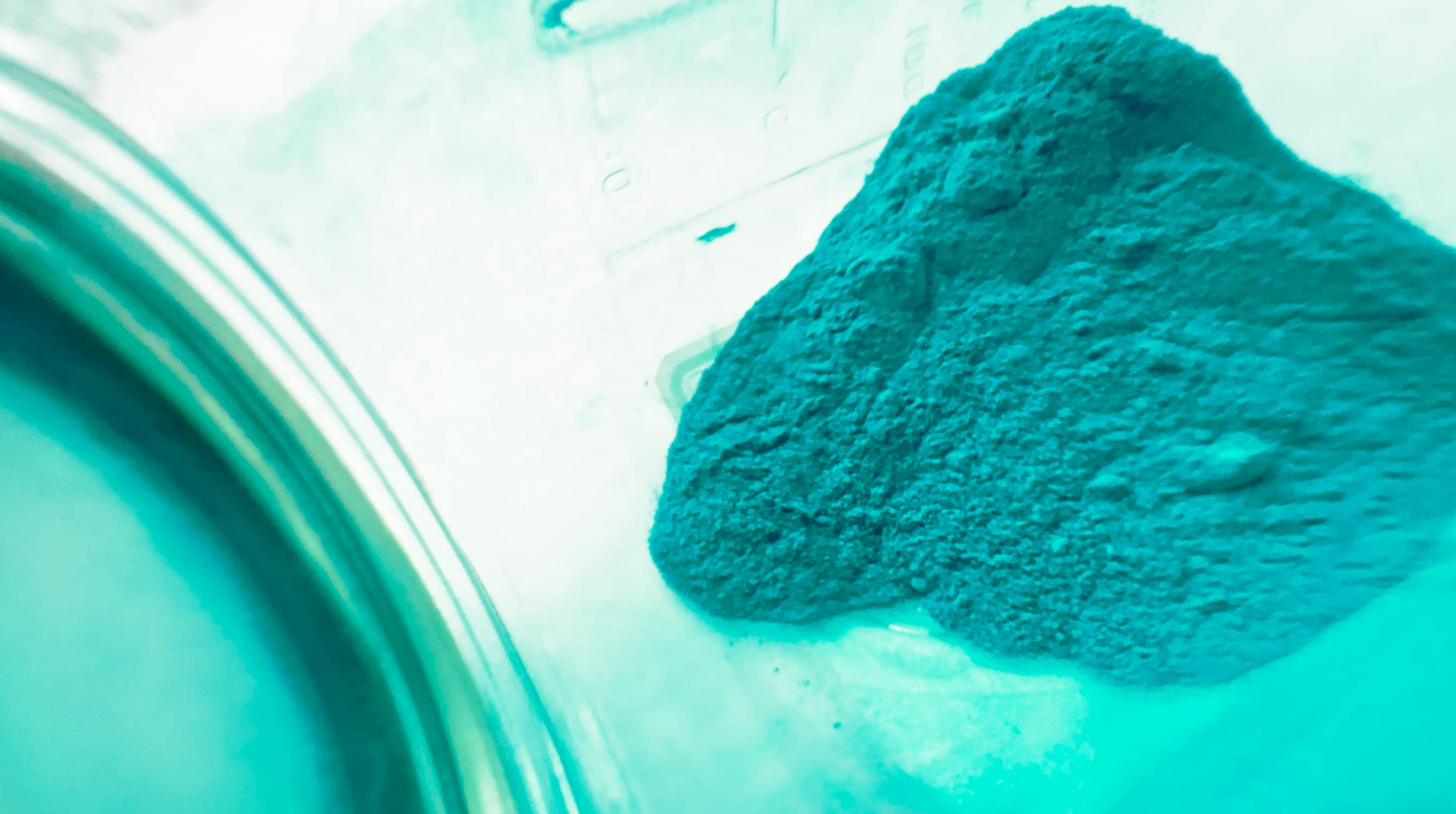
Closeup of some Verdigris pigment, PG20
This color is associated with toxicity and Artiscreation assigns a B. We treat it as though it were more toxic than that. Monona Rossol has information in her books on health and safety considerations for working with copper pigments.
Resources
PG20 pigment data from David G. Myers, The Color of Art Pigment Database, Artiscreation.com
Information about PG20 from Bruce MacEvoy, Handprint Guide to Watercolors,
CAMEO Materials Database: Conservation & Art Materials Encyclopedia Online, Museum of Fine Arts Boston. (Accessed June 2025). Verdigris https://cameo.mfa.org/wiki/Verdigris. Museum of Fine Arts Boston.
L. Cornelissen & Son (Accessed June 2025). Viridian Pigment https://www.cornelissen.com/verdigris-pigment.html. L. Cornelissen & Son
Douma, Michael (Accessed June 2026). Verdigris https://www.webexhibits.org/pigments/indiv/overview/verdigris.html. Web Exhibits, Pigments through the Ages,
Mayer, Ralph. The Artist's Handbook of Materials and Techniques, 5th ed. New York, NY, Penguin Group, 1991. https://amzn.to/44OzBN9
Stats
Lightfastness
Very Poor, Dramatic color change in oils
Leonardo DaVinci bemoaned the fading of this color. In oil, blue to green shifts are noticed quickly and in some scenarios it turns brown or black over time. While not related to lightfastness, due to its instability, not recommended in oils as it undergoes a massive color change.
Transparency
Transparent
Toxicity
Toxic, Copper
CAMEO has notes on this pigment’s toxicity. See CAMEO as well as MSDS. Treat all pigments and paints with studio safety protocols.
Dry Time
Fast
Particle Size
Coarse
Chemical Name
basic copper acetate
Cu(C₂H₃O₂)₂-₂Cu(OH)₂
DISCLAIMER: Please note that we are not experts in health and safety and we are not toxicologists, please consult the proper experts. We are not liable for any issues that may arise from the use of our website or its contents. The information contained in this site is provided without warranty or guarantee of any kind. We do not necessarily endorse any other website that are linked from our site. For any important pigment specs, please reference the manufacturer details. If you discover errors or omissions, please reach out through our contact form. Thank you.
