

Top Pigment
Bone Black, Ivory Black
PBk9
Pigment Description
Deep, transparent, mysterious, and best only used sparingly in oil paint. Its origin is a bit melancholy as it is made from the charred bones of other animals, though thankfully this color is no longer made of real ivory. While none of the versions on the market these days are going to be made of charred ivory, needless to say this color is not vegan.
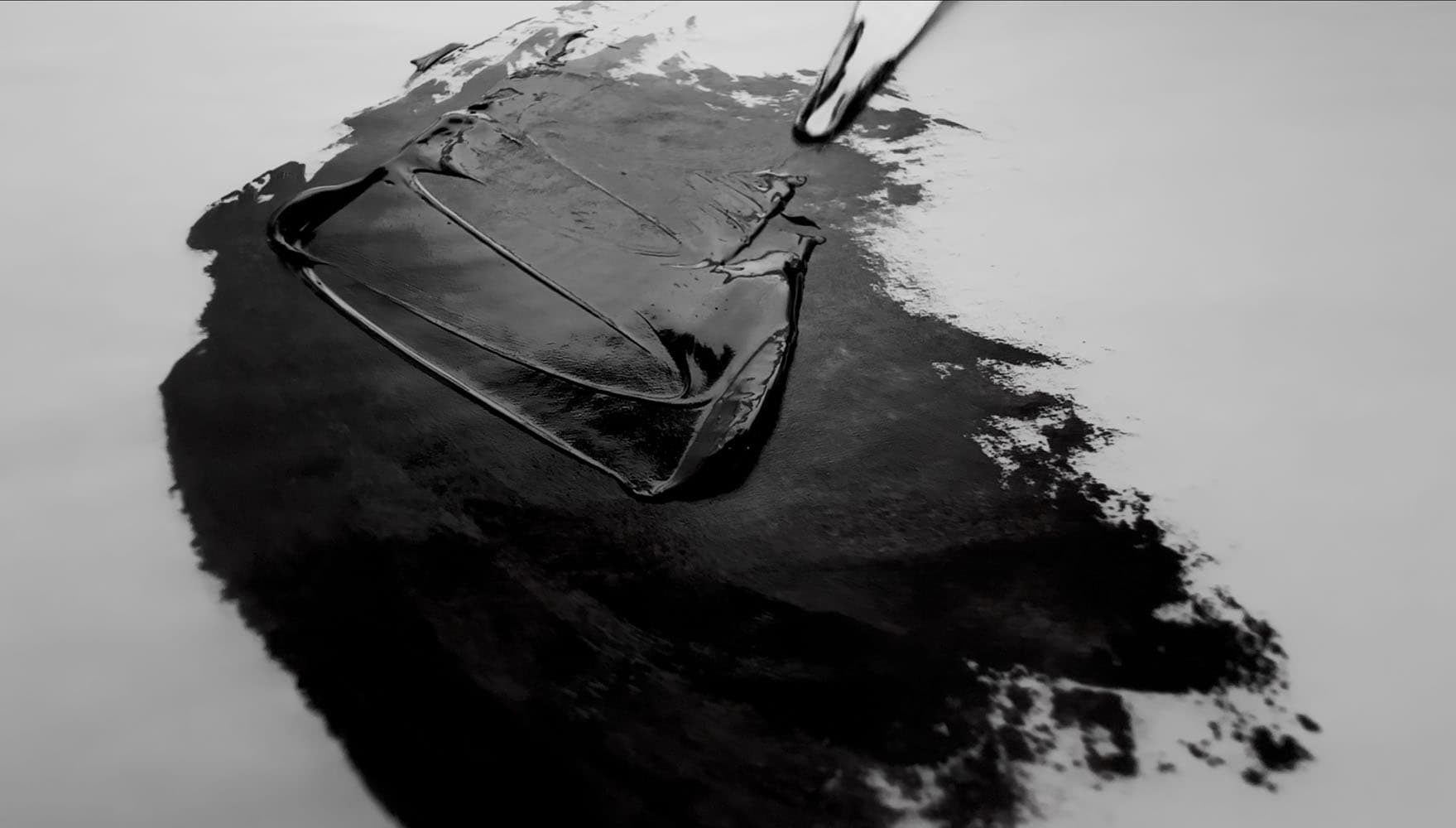
Michael Harding Ivory Black, made with PBk9
Ivory Black is a bit of a warmer black and has some transparency, though Mars Black is also warm, and differs in most respects. Ivory Black is lovely in glazes, but it is oil rich, and can have drying problems.
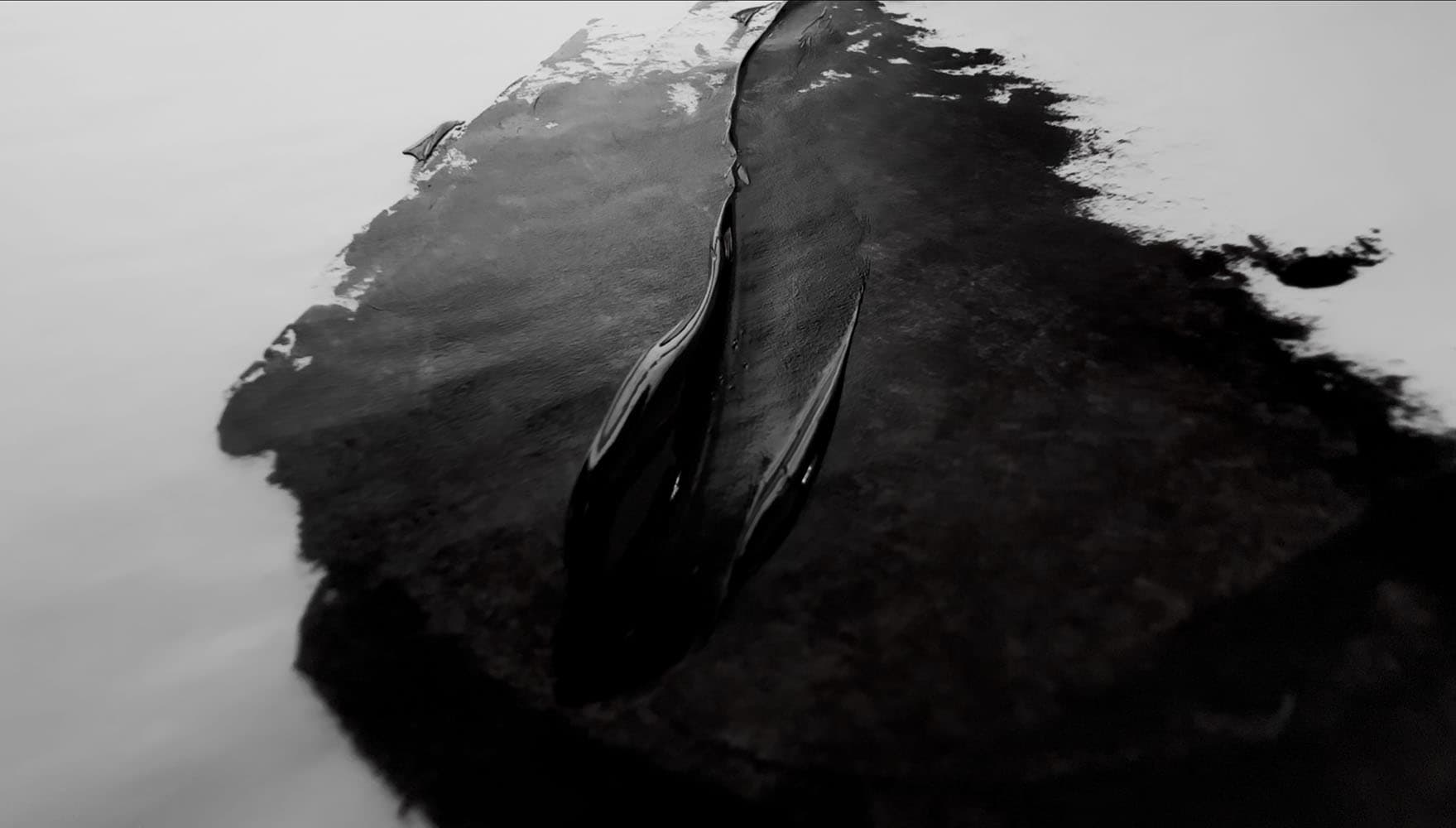
Michael Harding Ivory Black, made with PBk9 pigment
There can be some confusion regarding names for this pigment. Most paintmakers call their PBk9 bone black by the name of Ivory Black, but at least one also labels this Lamp Black, so here the pigment code helps in making an identification.
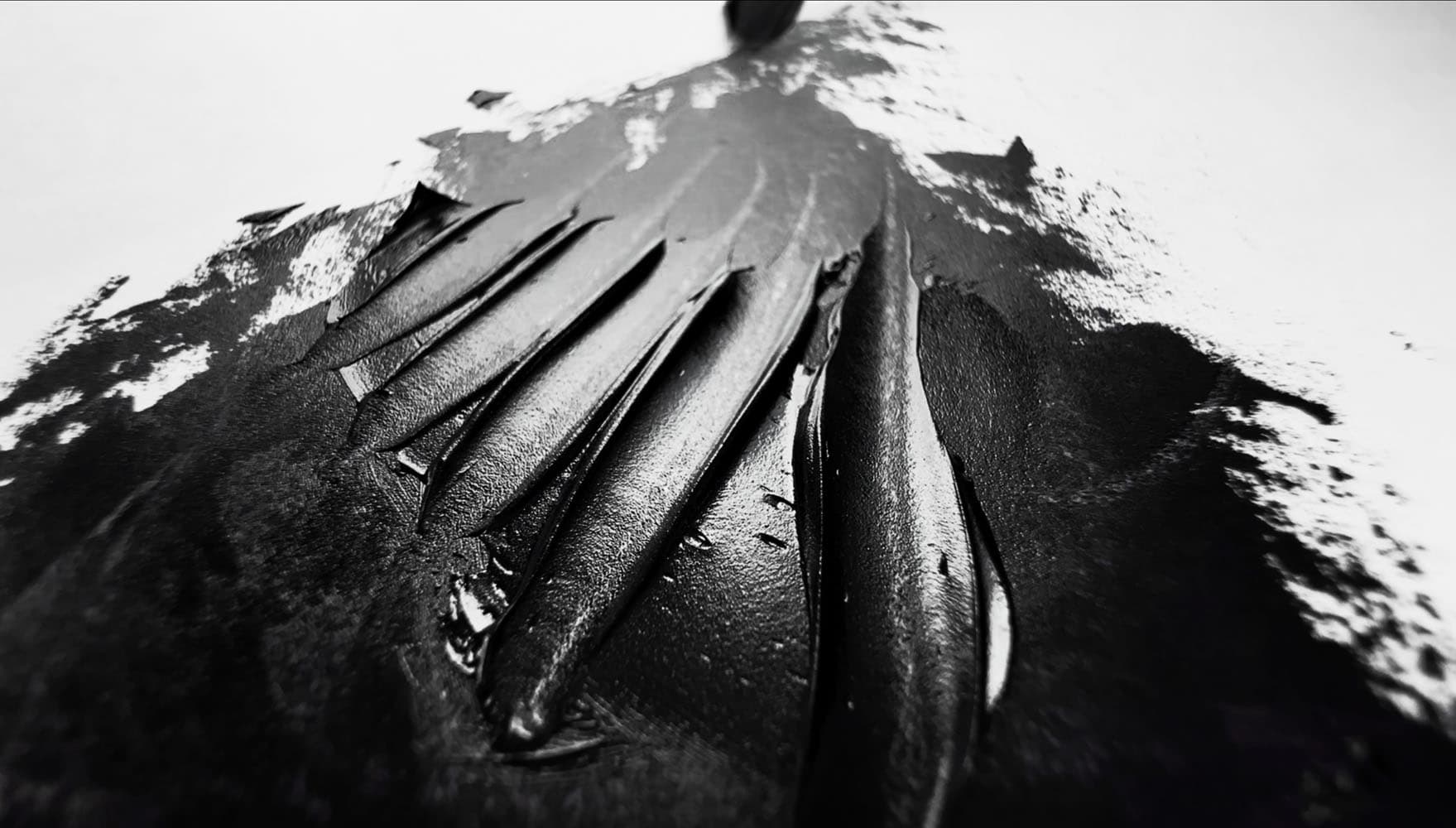
Old Holland Ivory Black Extra, made with pigment PBk9
As a pigment, this color requires a high amount of oil and tends to be a slow drier.
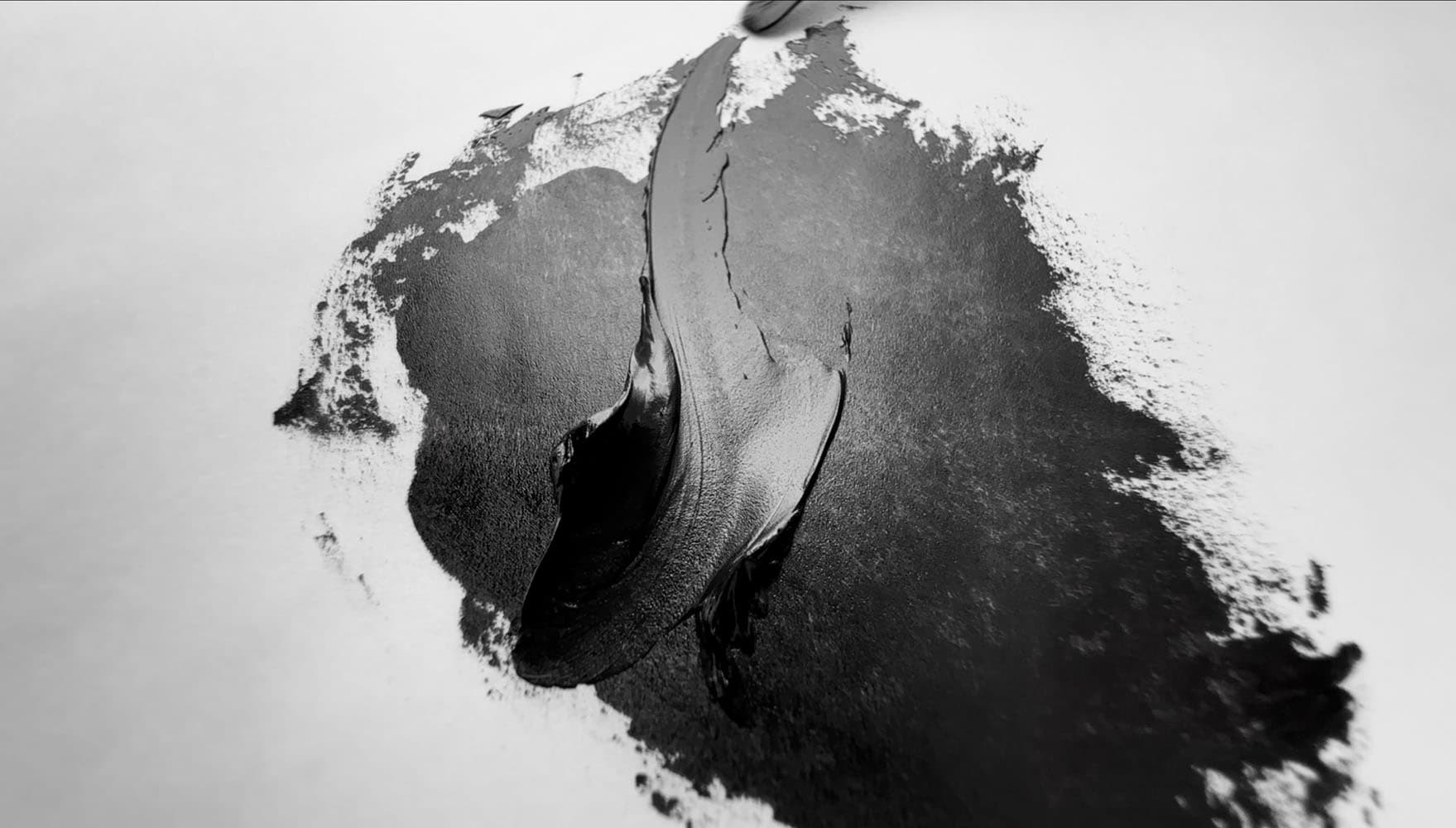
Old Holland Ivory Black Extra, made with PBk9. Old Holland labels their Ivory Black as a hue (Extra means imitation hue for Old Holland colors) since it is not made of real ivory
Something very surprising that we found in Monona Rossol's work was a note that there could be some concern of prion exposure through PBk9, which makes a lot of sense due to the sources for the bones to be burned. There is also a note for limits of respirable dust called PNOS limits, please see her work.
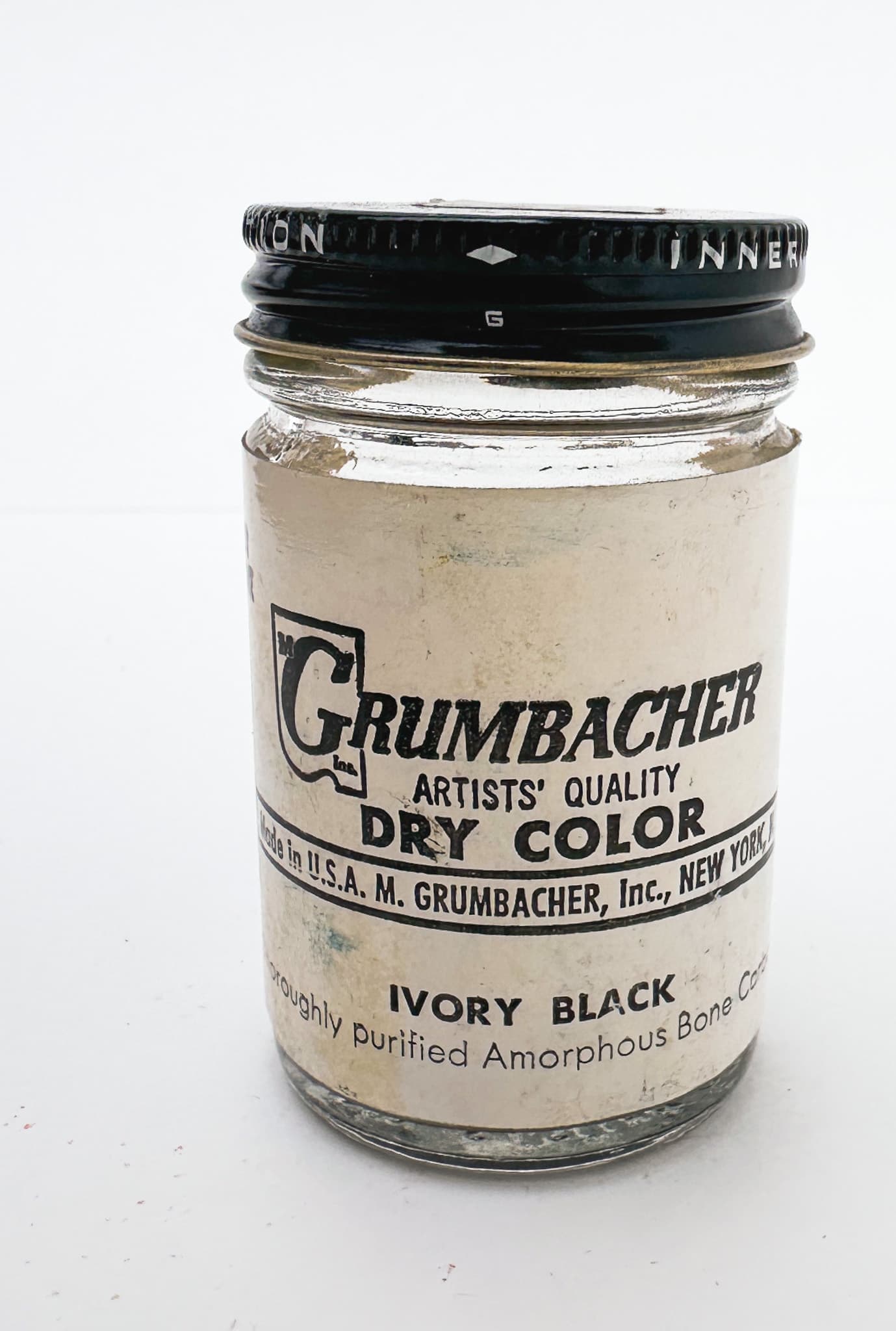
A vintage jar of Grumbacher Ivory Black, PBk9, dry pigment
Resources
PBk9 pigment data from David G. Myers, The Color of Art Pigment Database, Artiscreation.com,
Elliott, Virgil. Traditional Oil Painting. Echo Point Books & Media, LLC, 2019. https://amzn.to/4nwIdzq,
Information about PBk9 from Bruce MacEvoy, Handprint Guide to Watercolors,
Rossol, Monona. The Artist's Complete Health and Safety Guide. New York, NY : Allworth Press, 2001. The book is rather dated, updated information is available from her website.
Stats
Lightfastness
Excellent
Generally considered to be among the most lightfast pigments, ASTM I.
Transparency
Semi-Transparent, Opaque
More transparent than Mars black or Carbon Black (PBK7)
Toxicity
Previously thought of in a category of low concern, however could have potential for prion exposure as it is made of burned animal bones, may contain carbon black
Carbon Black is itself a possible carcinogen. See Monona Rossol's work for more information and consult SDS.
Dry Time
Slow to Very Slow
When paintmakers list short dry times (like 2-7 days) it probably contains driers. Mayer lists this as a pigment with a Very Slow dry time. It also forms soft paint films.
Oil Content
Varies, Medium to High
Probably high. Some sources list it as medium by volume, however it has a reputation for being an oily oil paint. We wish more paint manufactures would classify their paints by oil volume. Williamsburg lists theirs as moderately high for oil content. Mayer categorizes its oil volume as high with a score of 101, and at least one other source agrees.
Chemical Name
Carbon (Amorphous) made from charred bones of animal origin
DISCLAIMER: Please note that we are not experts in health and safety and we are not toxicologists, please consult the proper experts. We are not liable for any issues that may arise from the use of our website or its contents. The information contained in this site is provided without warranty or guarantee of any kind. We do not necessarily endorse any other website that are linked from our site. For any important pigment specs, please reference the manufacturer details. If you discover errors or omissions, please reach out through our contact form. Thank you.
