

Smalt (Genuine Historical Pigment)
PB32
Alternate Name
Potassium Cobalt Silicate
Pigment Description
Historical Smalt is a gorgeous, gritty deep blue glass that has been colored by cobalt. Unfortunately it has a general tendency toward yellowing when bound in oil paint.
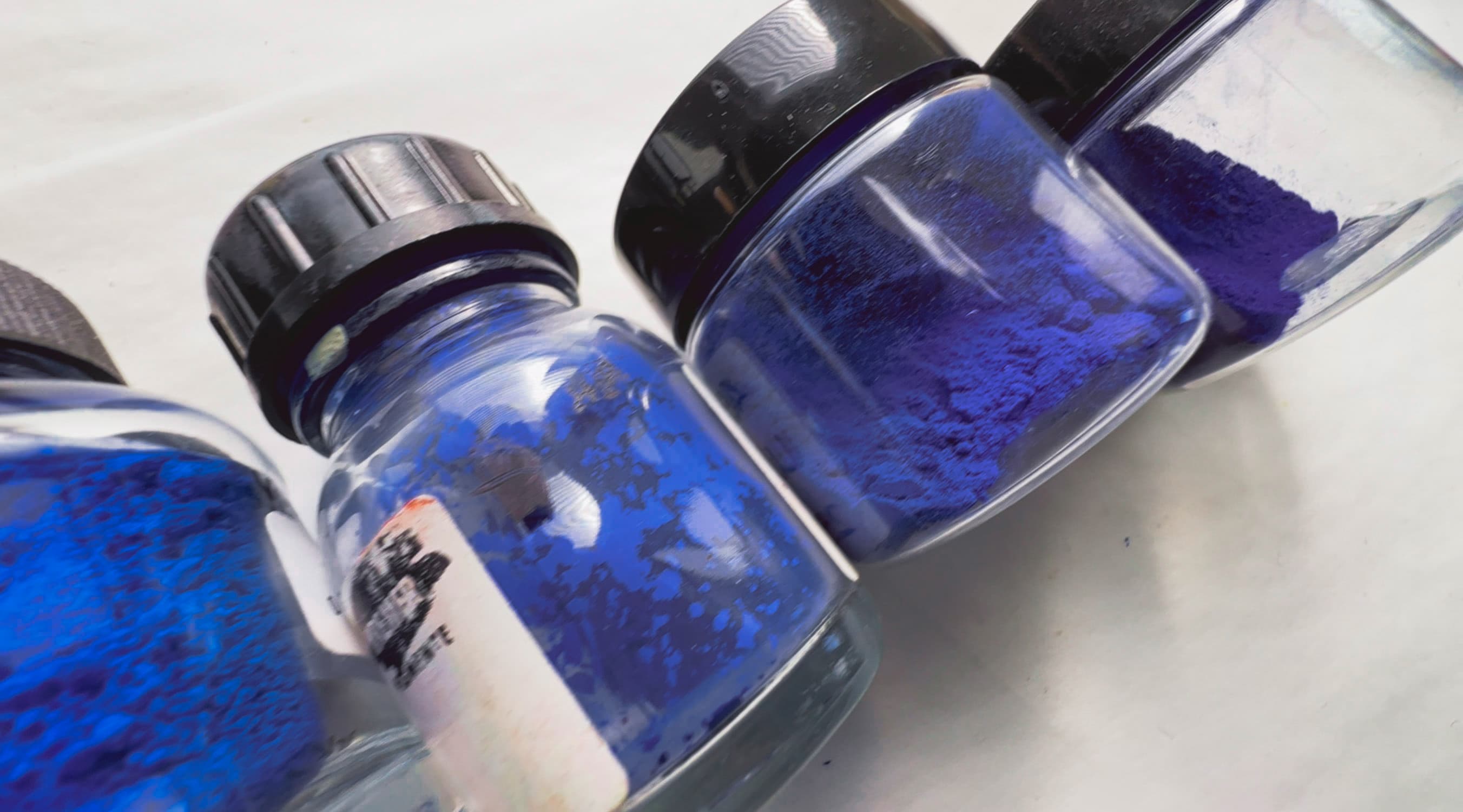
Comparison between Synthetic Ultramarine pigment and Smalt. On the far left, Ultramarine Blue PB29, followed by three forms of Smalt to the right.
Smalt can be thought of as a broken blue. In the making of smalt, when the molten glass contacts water it shatters. Another way to describe smalt, according to Artiscreation.com, is "Pulverized and ground potassium glass colored blue by cobalt." There is a different, separate pigment called Cobalt Blue which is distinct from Smalt. As a pigment Smalt can vary in terms of particle size and color.
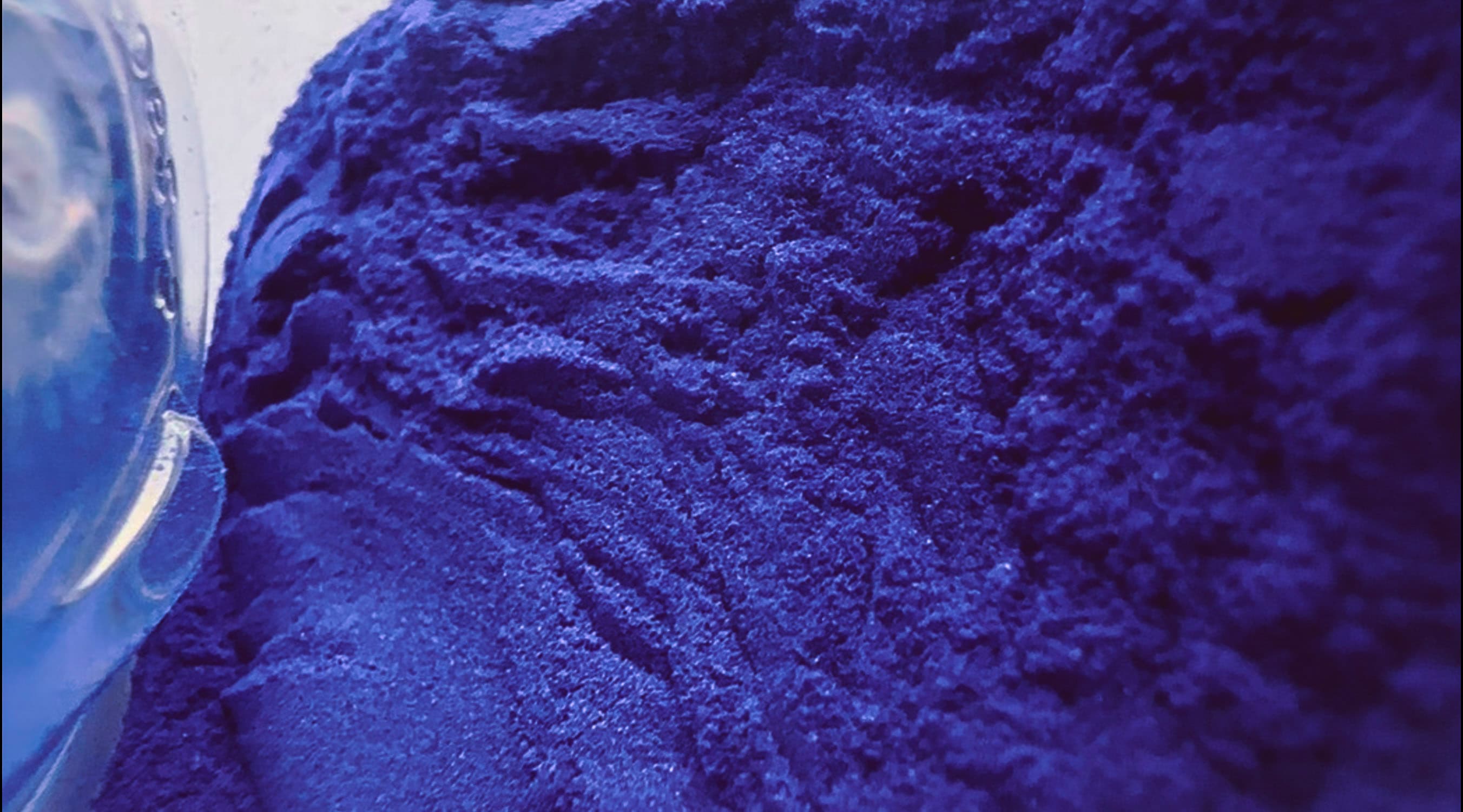
Royal Smalt, by Natural Pigments. Royal Smalt is one of the darker more indigo forms of Smalt.
Unfortunately, smalt may darken in an oil painting. There are several different grades of smalt as well as different colors. One deep blue variety is currently called Royal Smalt.
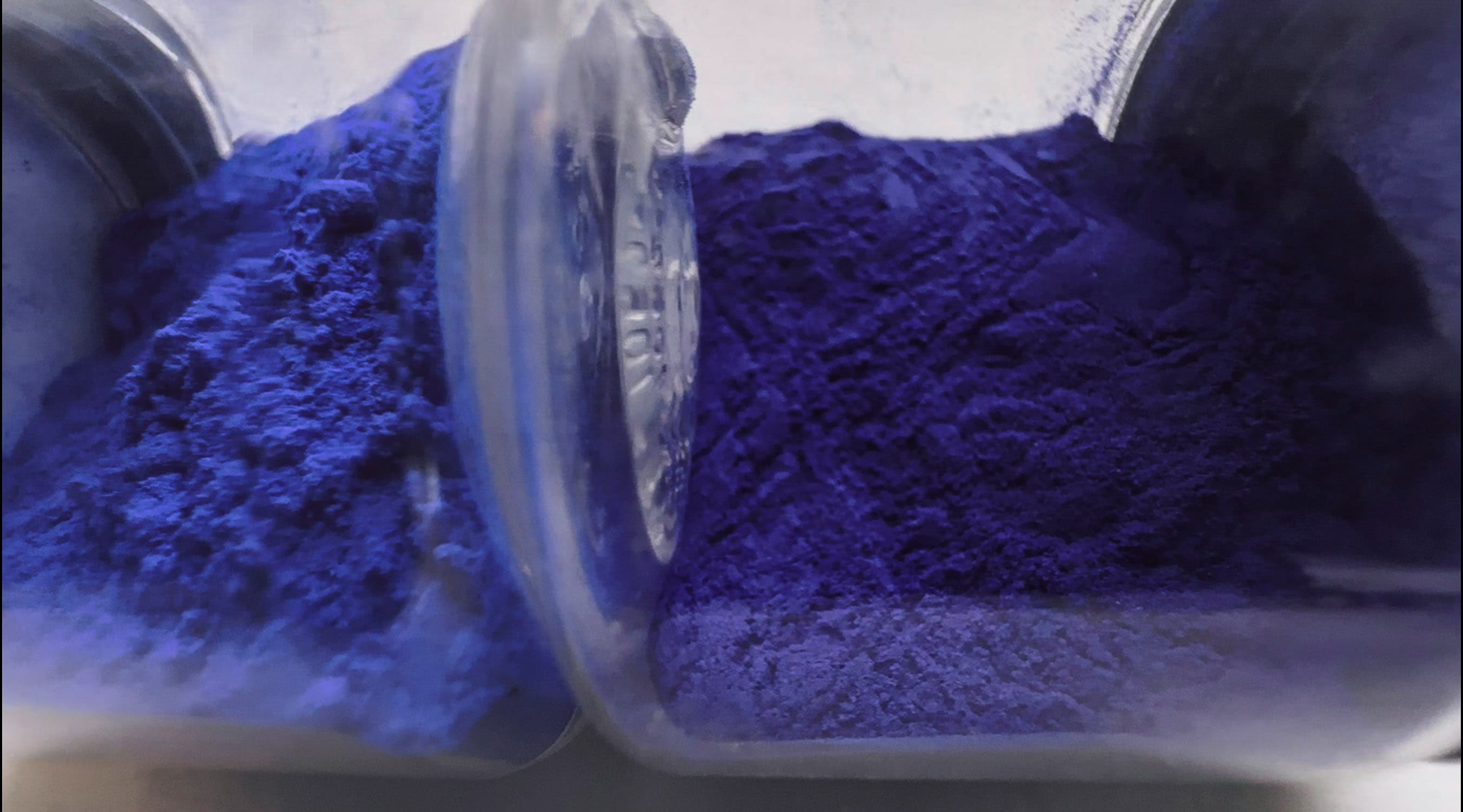
The pigment is rated B for toxicity, so use with caution and use protective gear. We are not health experts but we have heard it is extremely dangerous/hazardous to breathe. Additionally, these pigments contain cobalt. Please see the Artist's Guide to Health and Safety for information about the hazards associated with cobalt pigments in general.
Resources
PB32 pigment data from David G. Myers, The Color of Art Pigment Database, Artiscreation.com
O'Hanlon, George (n.d., accessed June 2025). Smalt Pigment https://www.naturalpigments.com/smalt-pigment.html. Natural Pigments.
O'Hanlon, George (n.d., accessed June 2026). Royal Smalt Pigment https://www.naturalpigments.com/royal-smalt-pigment.html. Natural Pigments.
Stats
Lightfastness
Reactive
Not a note on lightfastness, but rather color-change due to other issues. Does not have great long-term stability in oil paint; due to chemical processes over time it looses its color and becomes off-white.
Transparency
Transparent
Somewhat unsatisfying in oil.
Toxicity
Hazard
Very hazardous to breathe. Please see the Artist's Guide to Health and Safety for information about the hazards associated with cobalt pigments in general. Treat all pigments and paints with studio safety protocols.
Tinting
Low
Dry Time
Very Fast
Oil Content
Low/Lean
Art is creation and other sources list approx. 25 grams oil / 100 grams pigment, but this pigment does not really turn into a good paint.
Particle Size
Coarse, Varies
DISCLAIMER: Please note that we are not experts in health and safety and we are not toxicologists, please consult the proper experts. We are not liable for any issues that may arise from the use of our website or its contents. The information contained in this site is provided without warranty or guarantee of any kind. We do not necessarily endorse any other website that are linked from our site. For any important pigment specs, please reference the manufacturer details. If you discover errors or omissions, please reach out through our contact form. Thank you.
