

Natural Madder Root or Madder Lake (Genuine Historical Pigment)
NR9
Alternate Names
Natural Rose Madder
Rose Dore
Natural Madder Lake
Pigment Description
In his mid-1800s book, Field described Rose Madder as creating, "…the most perfect carnation tints known." Four modern oil colors are currently made with this vintage pigment but, be aware the methods for the manufacture of this color can vary tremendously. It's related to natural Alizarin Crimson, pigment NR8.
Found in some vintage oil paints
Very Vintage Winsor and Newton Genuine Rose Madder
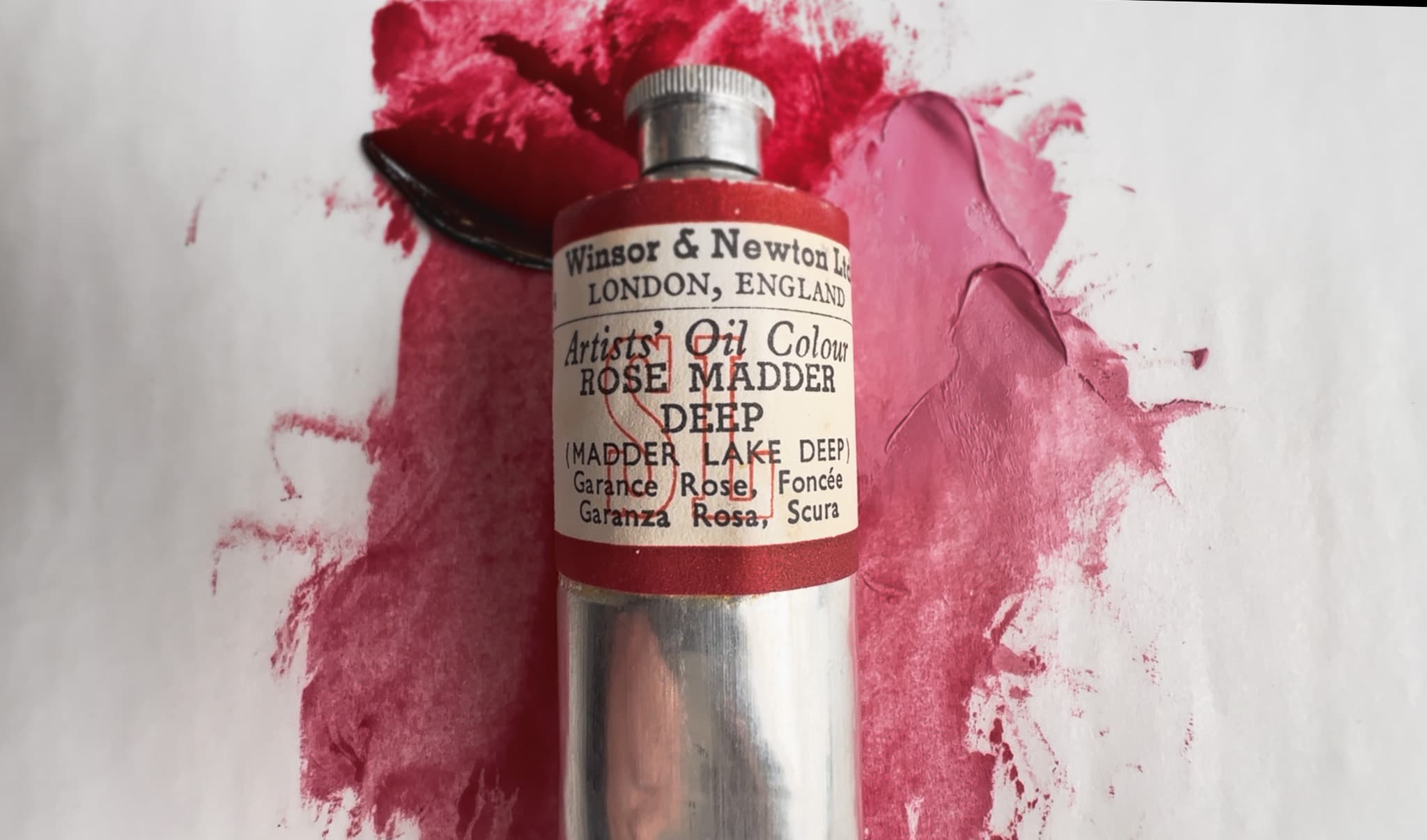
We've been able to find a few tubes of vintage Rose Madder in oils, and its interesting to see how they differ in color. This very old tube of Winsor and Newton is a deeper crimson than some other versions
Slightly lighter Vintage Rose Madder
This 70s-ish version of W&N Rose Madder is a bit pinker than the very vintage version
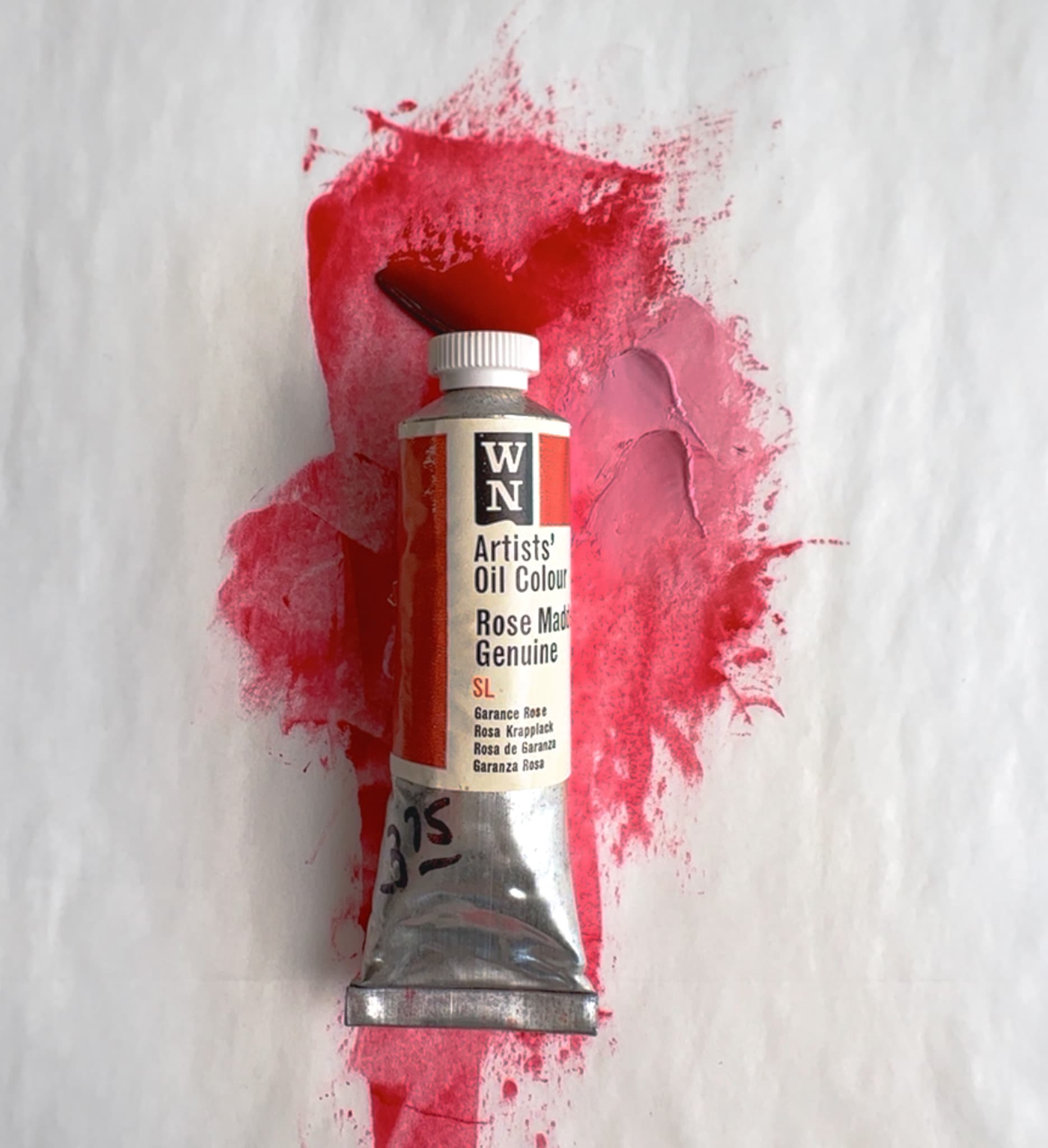
While still vintage, this tube is a little more recent version of Rose Madder Genuine
From an old mysterious tube of Very Vintage Winsor and Newton Rose Madder
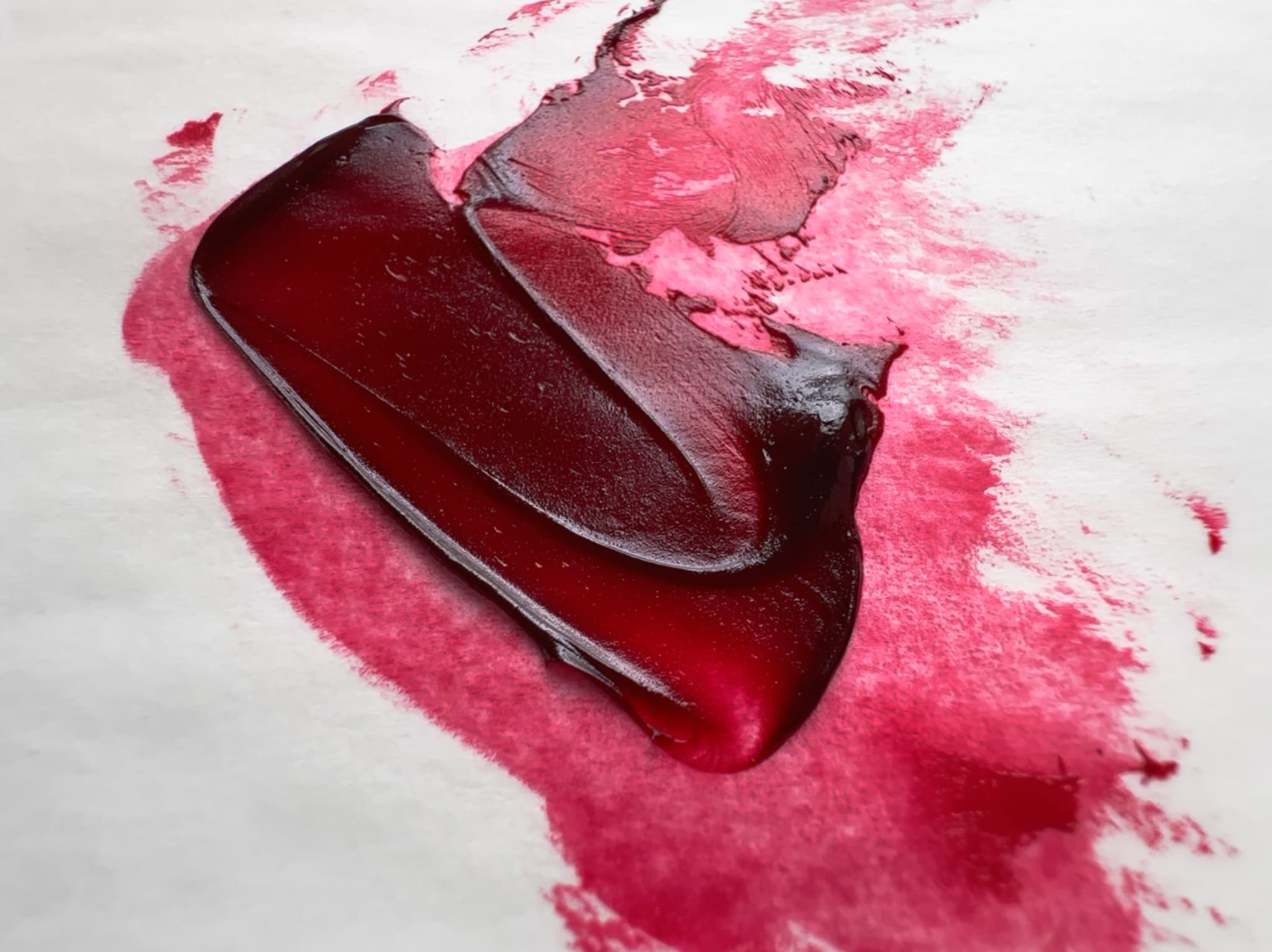
This is one of the deeper versions of Rose Madder we've seen--a deeper crimson-- from a very old tube of paint.
Though this is a lovely historical hue, it isn’t wholeheartedly recommended for use in artist paints due to lightfastness and permanence issues. However in a historical turning-of-tables, in oils, it may actually be more lightfast than the synthetic versions of madder e.g. PR83 which were said to replace it. For more, reference the lightfastness testing done by Virgil Elliott. Interestingly, back in the 1880s, Field seemed to agree, as he wrote, "Not liable to change by the action of light."
Some deeper versions of crimson Genuine Rose Madder yield cooler tints
Very Vintage Rose Madder in Crimson and Cool Pink Tints
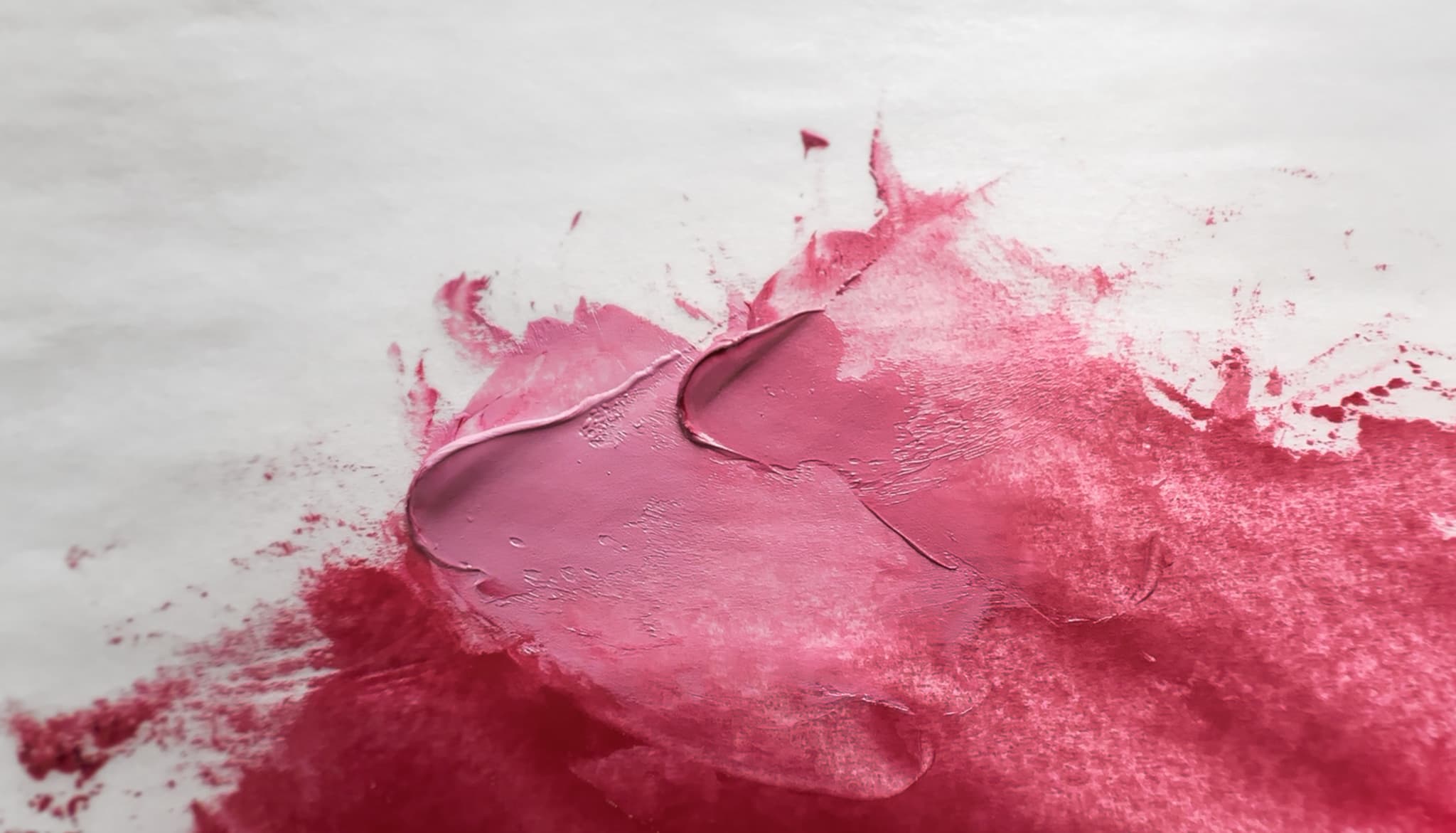
The Very Vintage older version (metal cap era) of Winsor and Newton Rose Madder is a bit deeper than the 70s version
Middle Pink Rose Madder Yields Brighter Pink Tints
A newer (probably 1970s) Winsor and Newton Rose Madder in Tints
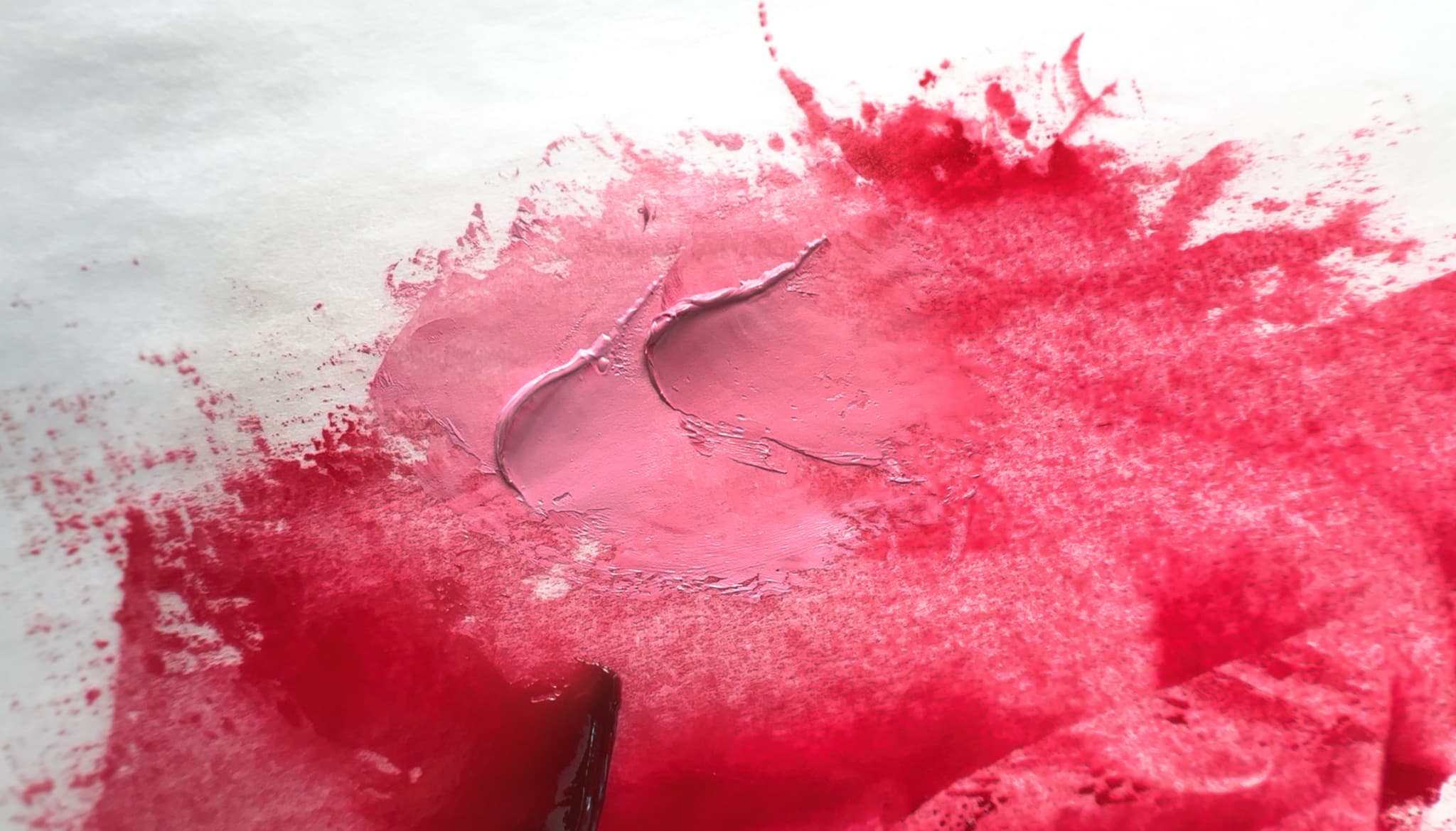
Rose Madder can vary in shade of pink depending on its manufacture. This 70s version of Rose Madder is brighter and pinker in tints and masstone
Once upon a time, we had a vintage tube of oil paint which was the pink variety of Rose Madder made by Winsor and Newton. It had a sort of "glazes only" quality and was unlike any paint we’ve ever seen. It was sometimes streaky but a rather high chroma pink (nothing like PR122). Something like a milky transparency, a transparency in masstone. The light gets around the edges when looking at in masstone, and this pigment shows that filmy note.
Very Vintage Rose Madder
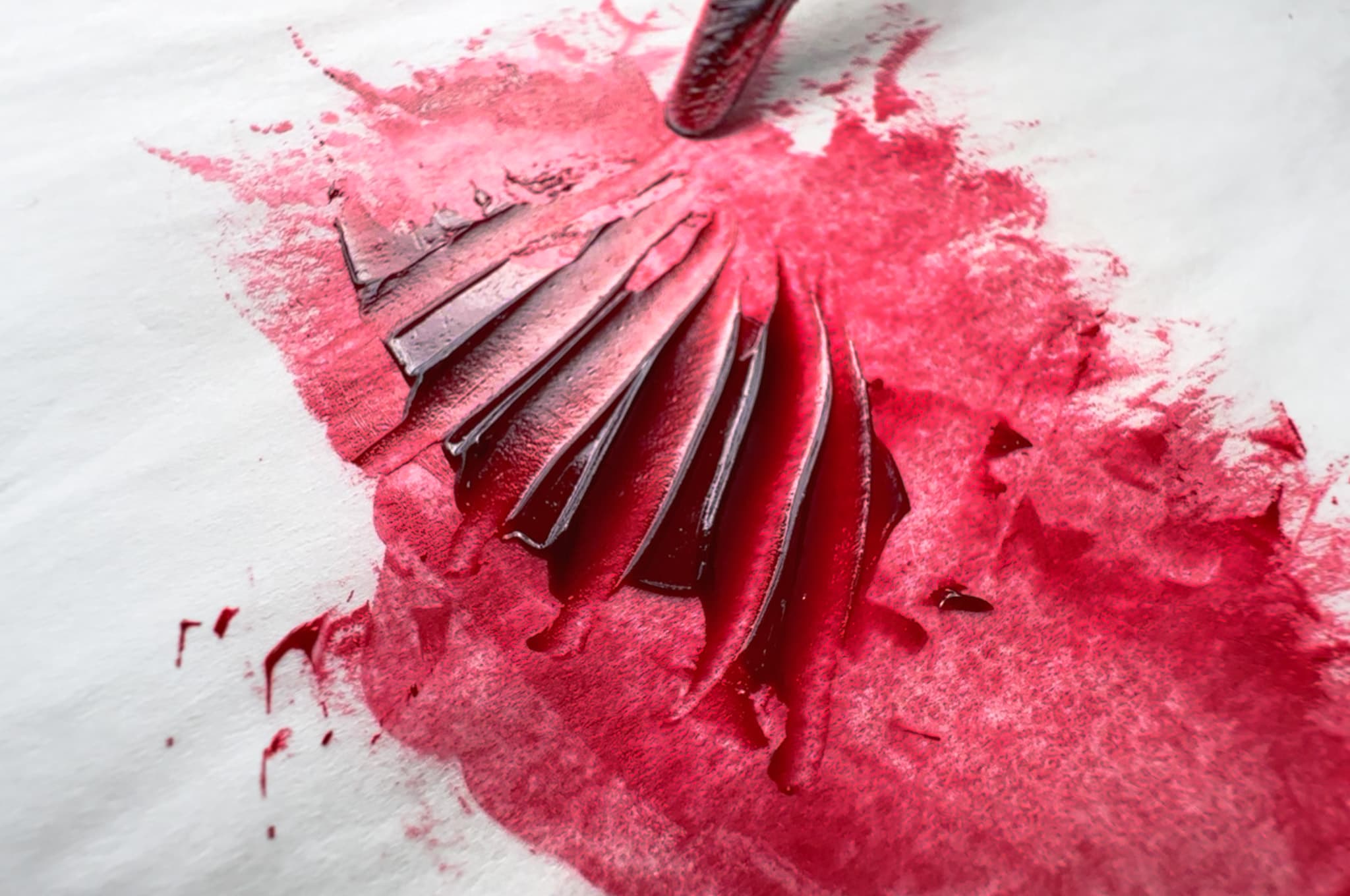
Depending on exactly how it is manufactured, its properties may vary. Cameo tells us that madder may refer to one of several plants of the genus Rubia. Rubia tinctorum L. is the most common but Rubia cordifolia L., and Rubia akane Nagai are used as well.
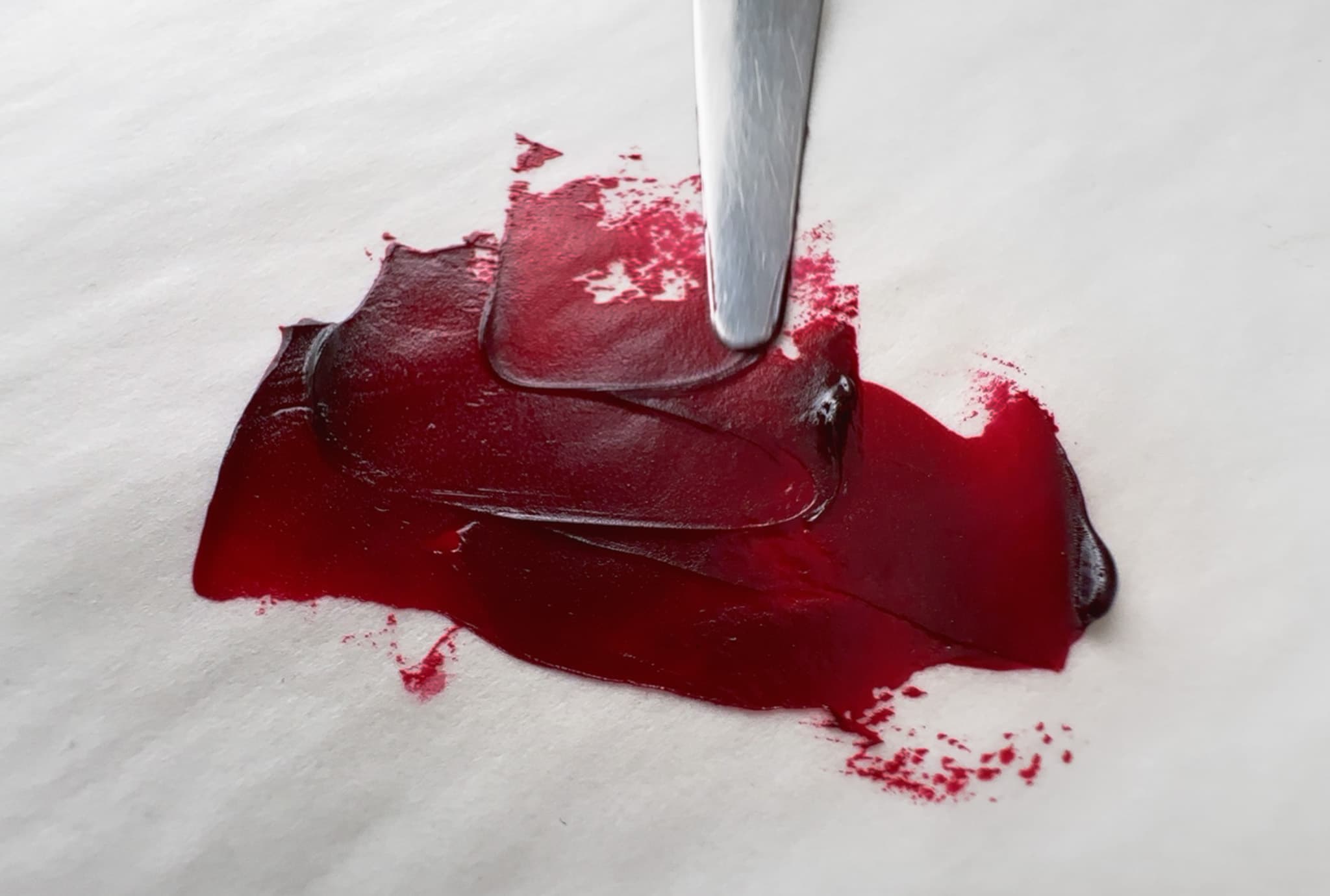
Long paint behavior in oil paint
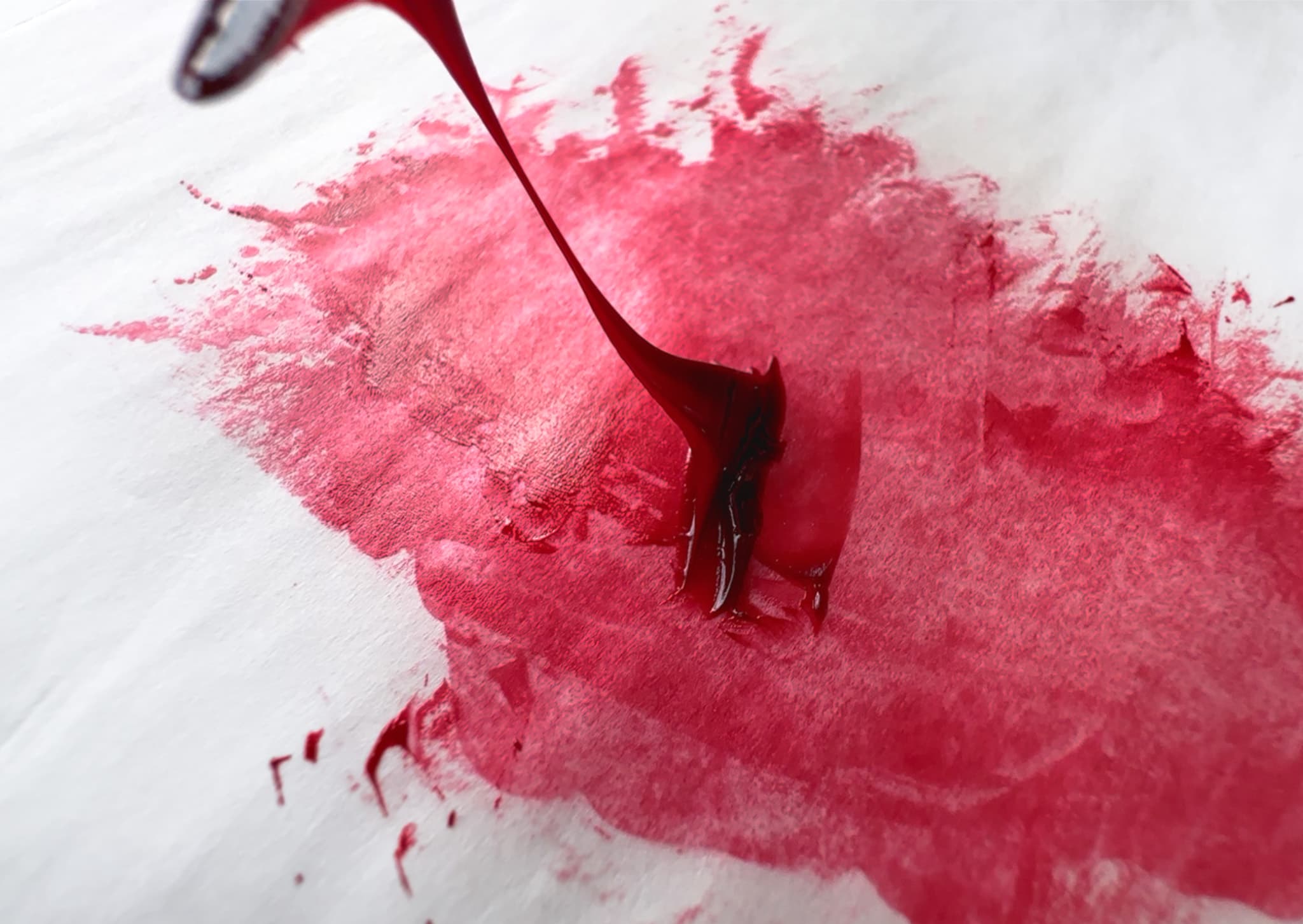
The 70s version of vintage Winsor and Newton Rose Madder pulls into strings when lifting the palette knife
Pigment NR9 is sometimes called Alizarin or Purpurin (genuine Madder Lakes contain both Alizarin and Purpurin), and there is some interesting literature on how the purpurin fades out (weirdly, despite the resemblance to the color name purple, purpurin is an orange color which is fugitive). Cameo states, "The most important constituents are alizarin (red) and Pseudopurpurin from which Purpurin (red) is formed …", and elsewhere in the entry for Rose Madder specifically, they state, "The colorant was extracted from madder roots with an acid, then the precipitate, primarily Pseudopurpurin, was redissolved in alum then precipitated with Calcium carbonate (chalk) to produce a pink lake," citing Artist Pigments vol. 3.
Genuine Rose Madder
The vintage 1970s era version
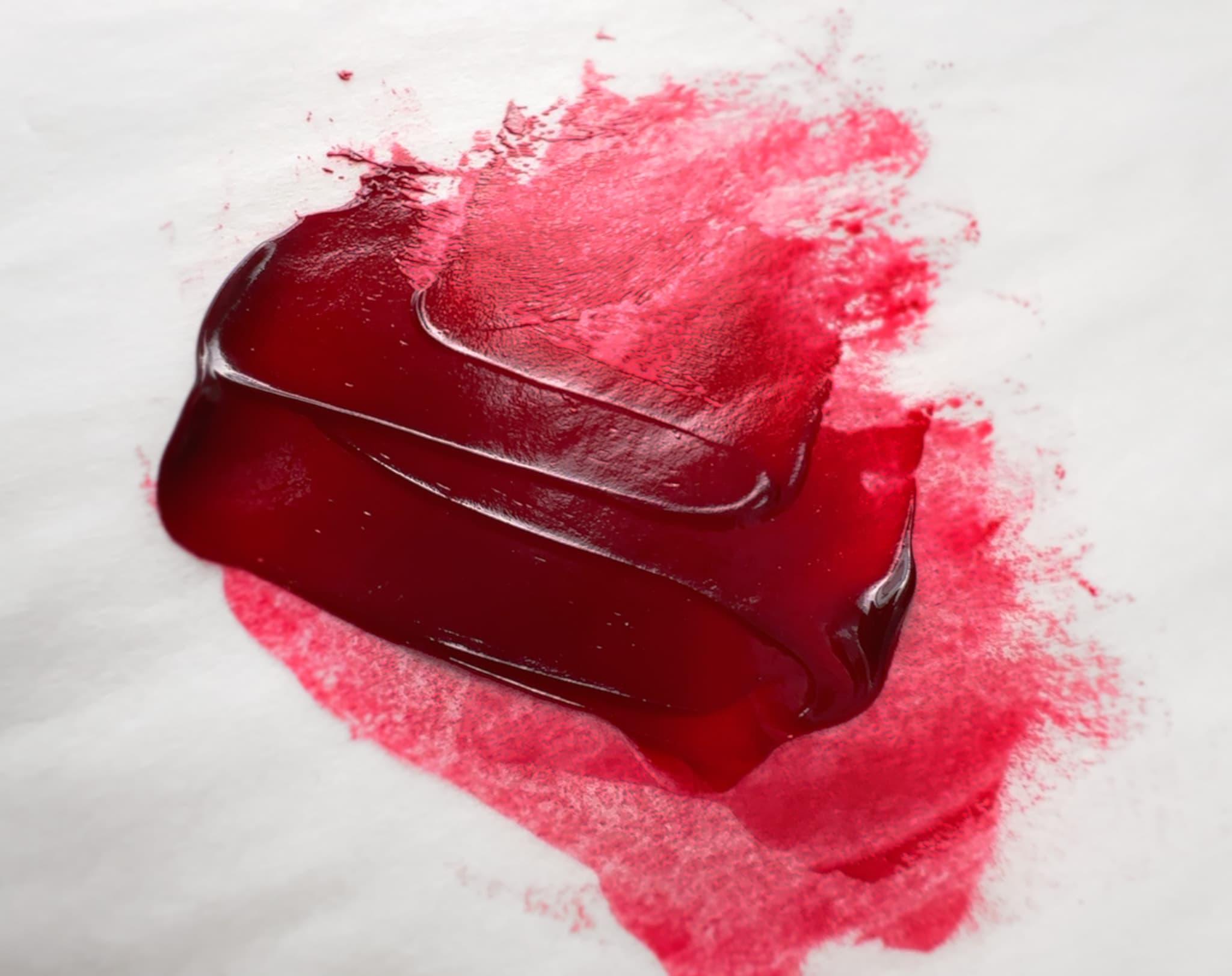
It's no wonder painters are still drawn to genuine Rose Madder. Here the translucency of the paint shines through
Reports on the lightfastness of natural madder in oils vary tremendously. Virgil Elliott reported that Winsor and Newton’s genuine Rose Madder and Rose Madder Deep oil paints were more lightfast than Alizarin Crimson PR83 in his tests. He also noted that the thickness of its application may affect its permanence and that it may fare better unmixed and at full strength rather than a glaze. How this pigment is manufactured as well as the precise process may matter a lot. Some vintage paints in oils from Winsor and Newton are surprisingly beautiful with a filmy/milky pink consistency. However we would not rely on this as a lightfast pigment. Agreement is pretty uniform that genuine Rose Madder fades.
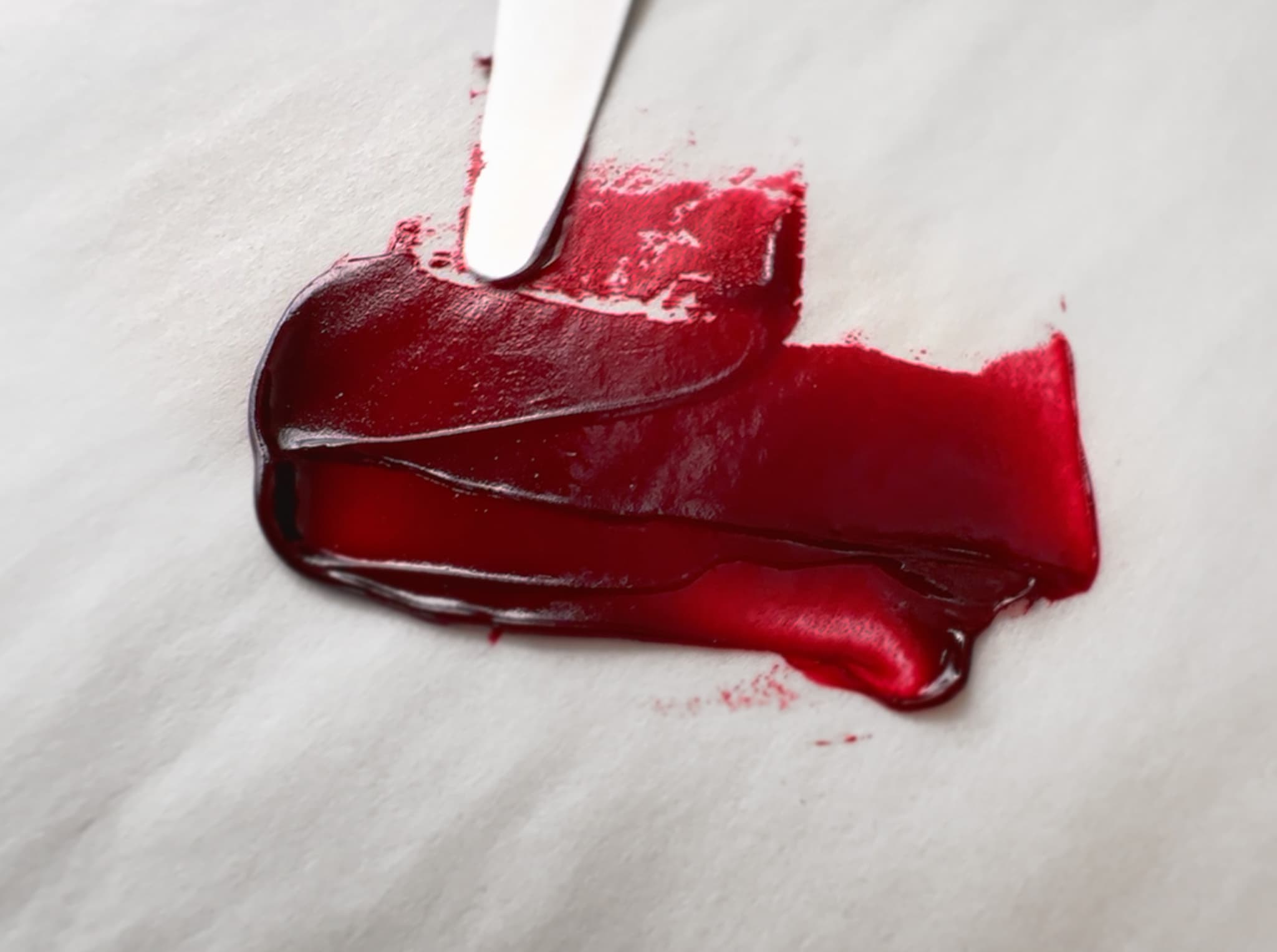
Vintage 70s Rose Madder
Rose Madder requires a high amount of oil to turn it into an oil paint and tends to be a slow drier.
Strangely, this pigment may be closely related to cancer-causing anthraquinones. While acute toxicity is thought to be low, it may also cause allergies. Monona Rossol's pigment data sheets, available through her site, contain more information. Treat all pigments and paints with studio safety protocols.
Resources
Elliott, Virgil. Traditional Oil Painting. Echo Point Books & Media, LLC, 2019. https://amzn.to/4nwIdzq.,
Spurgeon, Tad. Living Craft: A Painter's Process. Mt. Airy, Philadelphia, PA: Zoetrope, 2018. Newer version available here: https://www.thomaskitts.com/page/36804/tad-spurgeons-living-craft,
Rossol, Monona. The Artist's Complete Health and Safety Guide. New York, NY : Allworth Press, 2001. The book is rather dated, updated information is available from her website.
Stats
Lightfastness
Good to Poor
Usually this is considered to have poor lightfastness, and in watercolors it sinks to ASTM IV (poor). However we have read that some preparations of Rose Madder in oils could approach lightfastness II in oil glazes (though they are not for use in tints with white), however this is not considered to be a lightfast pigment. In watercolor the performance is even poorer.
Transparency
Transparent
Toxicity
Previously thought to be in the category of Low Concern, however may be related to cancer-causing anthraquinone
Insofar as it is similar to the synthetic version PR83 it may share some of its hazards. We are not health experts nor are we toxicologists. However this note in Monona Rossol’s datasheet on pigments available here by request caught our eye. The chemical structure is related to a cancer-causing anthraquinone. Treat all pigments and paints with studio safety protocols.
Tinting
Mild
Oil Content
High
May range from medium-high to high by volume.
Chemical Name
natural madder lake, rubia tinctorium l. (or several others from the genus, Rubia) on a substrate. According to Cameo, "Madder forms a bright red color when precipitated on an amorphous hydrated alumina substrate, such as Alumina trihydrate. Tin, chromium, and iron mordants can produce purple, brown, and pink colors, respectively."
DISCLAIMER: Please note that we are not experts in health and safety and we are not toxicologists, please consult the proper experts. We are not liable for any issues that may arise from the use of our website or its contents. The information contained in this site is provided without warranty or guarantee of any kind. We do not necessarily endorse any other website that are linked from our site. For any important pigment specs, please reference the manufacturer details. If you discover errors or omissions, please reach out through our contact form. Thank you.
